Reviewed by PRO MAX HVAC & Appliance Repair technicians, EPA 608 certified
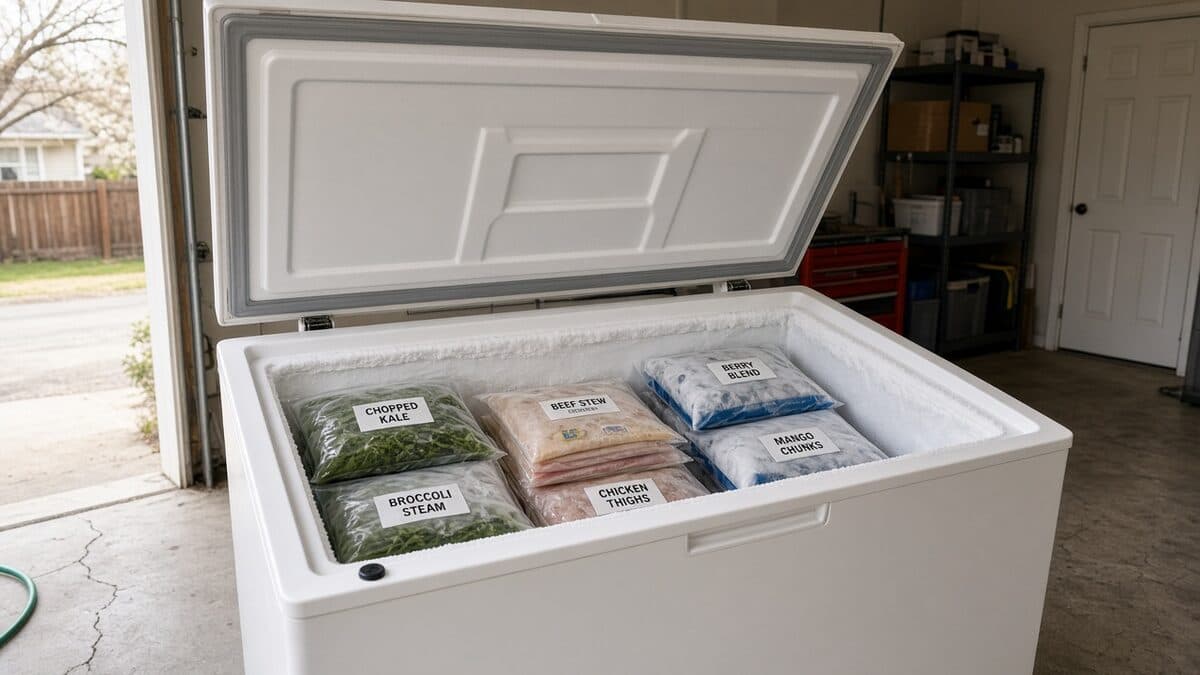
Heavy frost in a garage chest freezer almost always comes from air getting in, not from the freezer working too hard. A worn lid gasket, a lid propped open by food stacked too high, or a freezer that is simply overdue for defrosting covers nearly every case. Fix the seal, defrost it once, and the frost should stay thin for months.
It is worth doing before the holidays fill it up. The U.S. Food and Drug Administration recommends keeping a freezer at 0°F, and a thick layer of frost acts like insulation on the walls. The compressor runs longer to hold that temperature, the usable space shrinks, and packages near the frost start to get freezer burn.
Why Frost Builds Up
Frost forms when moist air reaches the cold walls and freezes there. Every time the lid opens, a little warm air rolls in. That part is normal, and it is why a chest freezer slowly gathers a thin coat over a year.
Heavy frost is different. It means air is getting in all the time, usually through a gap you cannot see. Here is a useful local detail: summer air in the Sacramento Valley is dry, so humid weather is rarely the explanation. If your freezer frosted up badly over a dry summer, look at the seal before you blame the garage.
Frost that collects mostly along one edge of the rim, or in a band just under the lid, points straight to where the gap is.
Check the Lid Gasket
The rubber gasket around the lid is the most common culprit. Over years of opening and closing, it flattens, cracks at the corners, or pulls away from the lid.
Try the dollar bill test. Close the lid on a bill at several spots around the rim and pull it out. You should feel some drag. If the bill slides out easily at any point, the seal is weak there. Look closely at the corners and the hinge side, where gaskets usually fail first. The same test works on a refrigerator door seal.
A gasket that is just dirty or stiff sometimes recovers after you wash it with warm soapy water and dry it well. A torn or flattened one needs replacing. Most are sold by model number, and a new gasket often ends a frost problem for good.
Make Sure the Lid Closes Flat
The second most common cause is simple: something keeps the lid from closing all the way. A bag of ice stacked above the rim, a box leaning on the hinge side, or a basket that sits a little high will hold the lid open a fraction of an inch.
Look at the lid from the side with it closed. It should sit flat and even all the way around. Also check the drain plug inside the freezer floor. If it is loose or missing, warm air can come up through the drain.
Defrost It Properly
Once frost reaches about a quarter inch, defrost it. That is a common manufacturer guideline, and for most households it works out to once or twice a year.
Move the food into coolers with ice packs. Unplug the freezer, prop the lid open, and lay towels around the base. Pull the drain plug and attach the drain hose or set a shallow pan under the outside drain. A pot of hot water set inside speeds things up. Lift away loosened frost with a plastic scraper. Never use a knife or an ice pick, because one slip can puncture the cooling lines in the walls and end the freezer's life.
Dry the inside completely before you plug it back in, put the drain plug back, and let it get cold before reloading.
Garage Heat and Placement
A Sacramento-area garage can run well past 100°F on a summer afternoon. Many chest freezers list an ambient temperature range in the manual, and some are sold as garage-ready for a wider range. Check yours. A freezer rated for a narrower range can struggle, run constantly, or stop cooling properly in a hot garage.
Give it a few inches of space on every side so the warm coils in the walls can shed heat, and keep it out of direct sun from a window or an open door. ENERGY STAR points out that manual-defrost chest freezers are among the most efficient freezer types, which is one more reason to keep yours sealed and defrosted instead of replacing it.
When to Call a Pro
Call a technician when the freezer frosts heavily again within a few weeks of defrosting with a good gasket, when it will not hold 0°F after defrosting, or when it runs nonstop. Those point to a problem in the cooling system rather than the seal.
Our position: replace the gasket and defrost the freezer yourself, because those two jobs fix most frost complaints for little money. Save the service call for a freezer that cannot hold temperature with a good seal.
A typical case in Roseville garages: a freezer that is eight or nine years old, a hinge-side gasket corner that has split, and a band of frost an inch thick under the lid. A new gasket and one defrost put it back to normal.
PRO MAX HVAC & Appliance Repair handles freezer repair and refrigerator service across the Sacramento area. Call us at (916) 234-5925 or book a visit online on our contact page.
How to defrost a garage chest freezer
Empty it
Move the food into coolers with ice packs and keep the coolers closed while you work.
Unplug and open
Unplug the freezer, prop the lid open, and lay towels around the base.
Drain the melt water
Pull the drain plug inside and attach the drain hose or set a shallow pan under the outside drain.
Speed it up safely
Set a pot of hot water inside and lift away loosened frost with a plastic scraper, never a knife or ice pick.
Dry, check and restart
Wipe the inside completely dry, check the lid gasket, replace the drain plug, plug the freezer in and reload once it is cold.
Sources
Need appliance repair in the Sacramento area?
Same-day service, 180-day warranty, all major brands. PRO MAX HVAC & Appliance Repair — Carmichael, CA.