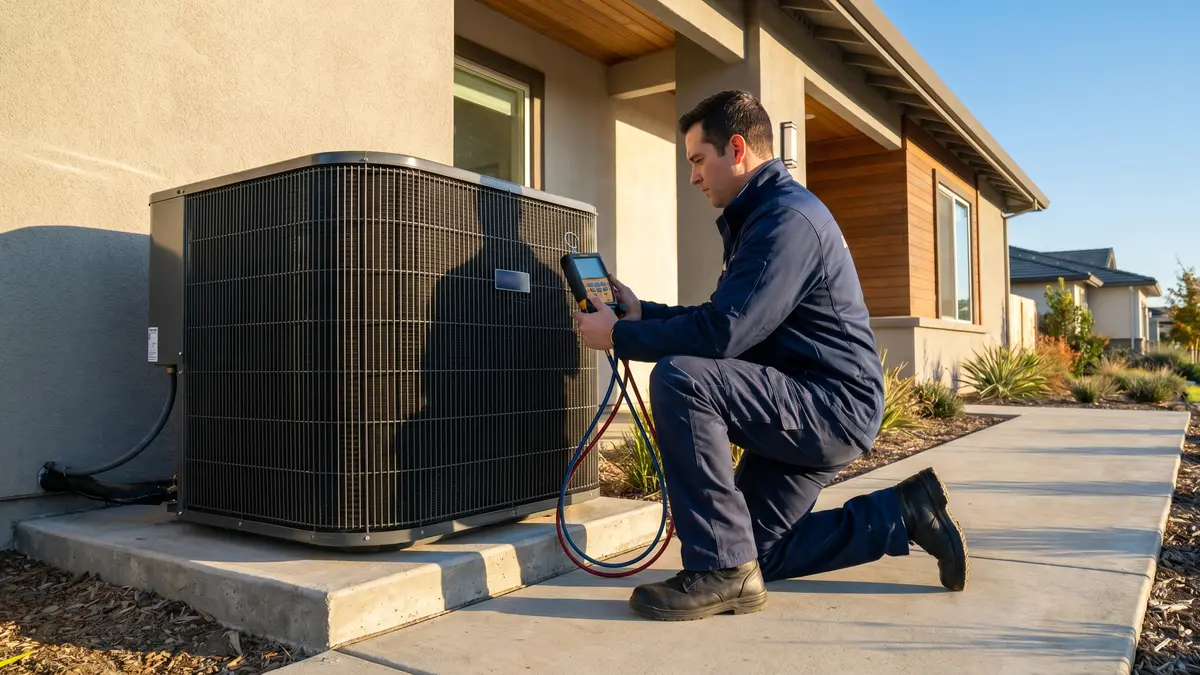
Why heat pumps fit Sacramento
A heat pump is an air conditioner that runs in reverse during cold weather: it pulls heat from the outside air and moves it indoors. The technology has been mature for decades, but it only works efficiently above a certain outdoor temperature — historically around 30°F, and with modern variable-speed inverter compressors, comfortably below 20°F. Sacramento sits firmly in the easy zone. Our coldest winter mornings hover in the mid-30s, and the thermometer crossing 28°F is a once-a-year news event in Carmichael, Folsom, and Roseville. That means a properly sized heat pump in Sacramento can do all of the home's heating work without backup electric resistance heat strips for the vast majority of the year — which is exactly what makes the operating cost competitive with gas.
By contrast, a household running a gas furnace pays for the AC half of the year and gas heat the other half. Replacing both with a single heat pump consolidates the two systems, removes the gas line dependency (a real consideration as PG&E rate increases continue to outpace SMUD), and unlocks rebate stacking that gas systems can't access.
How the rebate math actually works
Three programs stack for Sacramento residents in 2026:
- SMUD Electrification Rebate — currently $3,000 toward replacing a gas furnace with a qualifying heat pump. Requires a participating contractor and proper permitting.
- Federal 25C Tax Credit — 30% of project cost up to $2,000 for a qualifying heat pump. Claimed when filing federal taxes the year following installation.
- TECH Clean California — rebates available through participating contractors for income-qualified households; can stack with SMUD on top of #1.
For a typical 3-ton ducted heat pump installation at $14,000 before incentives:
- SMUD rebate: -$3,000
- 25C credit: -$2,000
- Net: $9,000 out of pocket
For comparison, replacing the same age-equivalent AC alone (without the gas furnace replacement) typically costs $8,000–$10,000 — and doesn't qualify for either incentive. The heat pump path is often the cheaper move once incentives are properly stacked, before counting the ongoing operating savings of consolidating to one electric system.
The catch: you need the right contractor (SMUD-participating), the right equipment (qualifying-list models), and a properly permitted install. PRO MAX handles all three — but more importantly, we'll run the actual numbers for your specific home before recommending a path. There are houses where replacing the AC alone is the right call (an existing high-efficiency furnace with years of life left, for instance). The rebate-stacked heat pump replacement is the answer often, not always.
When to repair vs replace a heat pump
The decision logic is the same as for an AC, but with one extra wrinkle: heat pumps run year-round, accumulating roughly twice the operating hours of a cooling-only system in the same time. That means the 10-year mark is meaningful sooner. Practical rules:
- Capacitor, contactor, defrost board, fan motor, thermostat — repair, even on a 12-year-old unit. These are isolated, inexpensive parts.
- Reversing valve failure — repair if the unit is under 8 years old; the part is meaningful but the labor isn't catastrophic.
- Compressor failure — replace if the unit is 10+ years old. With SMUD rebates available, the replacement equation often beats the repair equation even on younger units.
A failed heat pump in February isn't usually an emergency the way a failed AC in July is — Sacramento winters are mild enough that backup space heating buys time — but if the failure happens during a cold snap with elderly residents in the home, it does jump priority. Same-day diagnostic visits are standard during heating season.
Service area and timing
Heat pump work — both repair and full installation — is available across our entire 16-city service area: Carmichael, Sacramento, Roseville, Citrus Heights, Fair Oaks, Gold River, Rancho Cordova, Rocklin, Granite Bay, Orangevale, El Dorado Hills, Folsom, Auburn, Lincoln, Newcastle, and Elk Grove. Repair calls are typically scheduled same-day or next-day. Full installation projects run two to five business days from sign-off (longer if a panel upgrade is needed first; that gets quoted separately).
The links below jump straight into the relevant service or area page, or into the rebate-detail blog posts when you need the exact dollar figures.