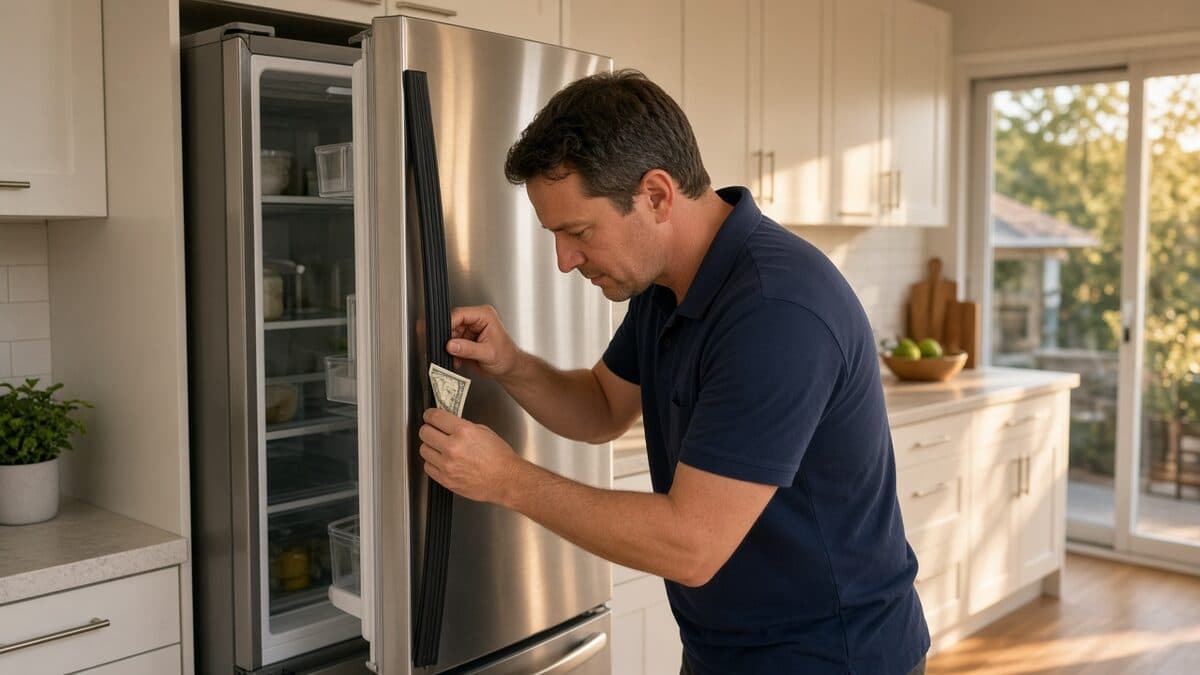
Replacing a refrigerator door gasket in August stops the cold-air leak that forces the compressor to run longer in a Roseville kitchen that already sits well above 100°F. A warped or dirty seal is the usual culprit. The vinyl softens in that heat, loses its square shape, and no longer pulls tight to the cabinet. ENERGY STAR notes a poor seal wastes energy. That wasted cooling shows up as a unit that never seems to shut off and as a higher SMUD bill during peak afternoon windows.
Last August we opened a 2009 French-door unit in a 1970s tract kitchen off the grid of older homes near Roseville. The owner had wiped the gasket once with dish soap. The corners were still cupped. A dollar bill slipped out on three sides. The compressor case was too hot to rest a hand on. The gasket had taken a permanent set from years of a heavy produce drawer hitting the door on the way out. Cleaning was not going to restore suction. We seated a new OEM gasket after checking hinge sag. Runtime dropped the same evening.
Why the seal fails in kitchen heat
August kitchen heat in Roseville and Citrus Heights softens vinyl so the gasket loses shape. Grease, crumbs, and sticky juice also sit in the bellows and keep the door from closing all the way. A torn corner or a hardened, shiny surface will not recover with more wiping. When the refrigerator door won't stay closed, or when you hear the fan cycling almost constantly, treat the gasket as the first check, not the last.
A slightly warm gasket can be normal. Many cabinets use a small anti-sweat heater so condensation does not bead on the vinyl. If the door or the sides feel hot and the unit runs without a break, cold air is leaking and the compressor is dumping that extra heat back into the room. A weak seal plus August indoor temperatures makes that worse.
How to test the gasket before you buy parts
Close a dollar bill in the door. If it slides out easily, cold air is escaping and the compressor is working overtime. Repeat the test on all four sides, including the hinge side people skip. Check the freezer door the same way if it uses a separate gasket.
Wash the gasket with warm water and mild dish soap. Dry it. Press the bellows back into the retainer if they have rolled out. Close the door and listen for the soft suck of a seal. If washing the gasket and checking door alignment do not restore suction in triple-digit weather, plan a full seal change rather than more temporary fixes. Patch kits rarely hold through Sacramento-area heat because any remaining leak still forces the compressor to run longer.
When a gasket needs replacement, not another wipe-down
Replace it when the dollar-bill test fails, the refrigerator door won't stay closed, you see cracks, or mold remains after cleaning. Tears, hardened vinyl, and warped corners need a full new gasket. Minor gaps sometimes improve with cleaning, warming, and reseating the gasket or adjusting the door. That is the real trade-off: spend twenty minutes on soap and alignment first, then stop if suction does not return. More cleaning will not square a corner that has taken a set.
Mold on the seal is almost always leftover moisture in the folds plus food residue. Clean it thoroughly. If black staining remains in cracks, the vinyl is done. Leaving a torn, moldy gasket in place keeps dumping cold air into a room that is already fighting valley heat and a weak Delta breeze after sundown.
How a homeowner swaps the gasket
Unplug the refrigerator. Pull the old gasket from the retainer channel, working a short section at a time so you do not bend the door skin. Warm the new gasket so it flexes (a few minutes in a sunny spot or a brief soak in warm water works). Press it evenly into the track starting at the corners, then the long sides. Recheck the dollar-bill test on all four sides.
If the door still gaps after a correct install, the problem is often hinge alignment or the wrong gasket for the model, not the new part. A technician can confirm both. Do not stretch a universal gasket across a retainer it was not molded for. The corners will lift again within a week of 100°+ indoor spikes.
Skip silicone sprays and petroleum products on the vinyl. They attract dust and can swell some compounds. A clean, dry, correctly seated OEM gasket is the fix that lasts through the rest of summer.
When to Call a Pro
Call when the dollar-bill test still fails after cleaning and reseating, when the door will not stay closed, when you see tears or warped corners, or when mold remains after a real wash. Call if the cabinet or sides stay hot and the compressor never rests. A tech will match the OEM gasket to the model tag, check hinge sag common on older French-door units, and confirm the retainer channel is not bent. That visit is the right move when a DIY seat still leaves a gap. It is the wrong move only if you have not washed the gasket and tried the bill test yet.
PRO MAX HVAC & Appliance Repair handles refrigerator door seal work across the Sacramento area. If August heat has your fridge running without a break, call (916) 234-5925 or book online on the /contact page and we will test the seal, replace it when it has failed, and get the compressor off overtime.
Need appliance repair in the Sacramento area?
Same-day service, 180-day warranty, all major brands. PRO MAX HVAC & Appliance Repair — Carmichael, CA.