Reviewed by PRO MAX HVAC & Appliance Repair technicians, EPA 608 certified
Deciding whether to repair or replace a refrigerator comes down to which part failed, not how big the quote looks. Repair it when the problem is a fan, a defrost part, a thermostat or control, a start relay, a door gasket or the ice maker. Those cover most breakdowns. Replace it when the sealed system fails, meaning a refrigerant leak or a dead compressor, on a fridge more than about 10 years old.
Efficiency belongs in the math too, but less than people expect. ENERGY STAR rates its certified refrigerators at about 9 percent more efficient than the federal minimum standard. That is a real saving over a fridge's life, and it is not, by itself, a reason to throw out a 7-year-old refrigerator that needs an inexpensive part.
Repairs That Are Almost Always Worth It
Most refrigerator failures are a single part wearing out while the rest of the fridge is fine. Fix these without much debate:
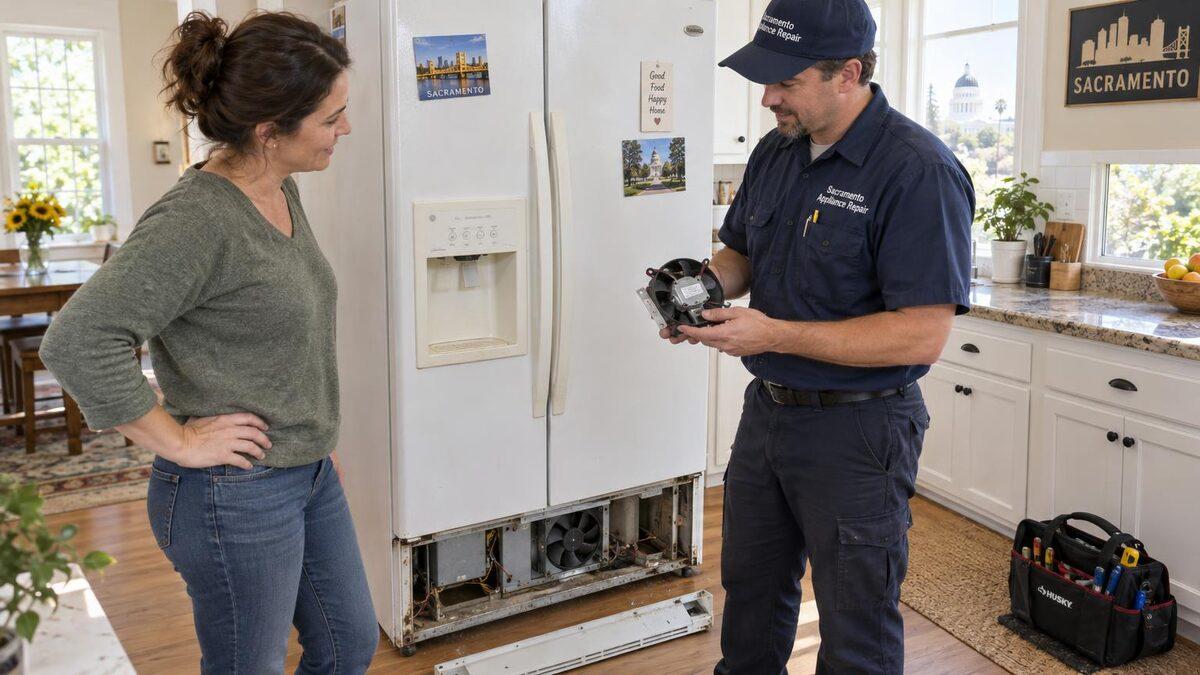
- Evaporator or condenser fan motors. A fridge that warms up while the freezer still feels cold, or one that squeals and grinds, often needs a fan.
- Defrost parts. A failed defrost heater, thermostat or timer lets frost choke the coil until airflow stops. The fix is a part and some time, not a new fridge.
- Start relays and overloads. The clicking-every-few-minutes problem. Inexpensive, quick, and it saves the compressor from cycling to death.
- Door gaskets. A torn or flattened seal makes the compressor work overtime. A refrigerator door gasket replacement costs far less than the electricity a bad seal wastes.
- Water inlet valves and ice makers. Annoying failures, cheap fixes.
Each of these addresses one failed part. Once it is replaced, the refrigerator runs the way it did before.
When Replacement Makes More Sense
Replacement wins when the sealed system fails on an older fridge. The sealed system is the compressor, the condenser and evaporator coils, and the refrigerant tubing between them. A leak there means finding it, repairing it, evacuating the system and recharging it, and a compressor replacement adds a major part on top.
On a standard refrigerator past about 10 years, that work costs close to the price of a basic new model. The rest of the fridge is the same age, too. Spending that much to put a new compressor in a box with an aging control board, tired door hinges and worn fans is a bet that rarely pays.
Our position: on a standard fridge older than 10 years, do not do a sealed-system repair. Put the money toward a new refrigerator.
Rust, cracked liners and broken shelving are the other signs. A fridge that looks worn out inside usually is.
The Half-Price Rule
A simple rule handles most of the gray area, and it is the same one our repair vs. replace guide applies to every appliance. When a repair quote reaches half the price of a comparable new refrigerator, stop repairing and replace it.
That rule bends in both directions. A fridge two years old with a sealed-system failure is often still under the manufacturer's sealed-system warranty, which typically runs longer than the general parts warranty, so check the paperwork before deciding. A high-end built-in, the kind that costs several times a standard fridge to replace and is fitted into the cabinetry, is worth repairing well past the age where a standard model would be replaced.
Age Matters, but Not Alone
Most refrigerators last somewhere around 10 to 15 years. Age by itself is not a reason to replace one; a 12-year-old fridge with a bad fan motor is still a good repair. Age becomes the deciding factor only when it lands on top of an expensive failure.
Here is a typical late-fall call in Carmichael: a 9-year-old French door fridge, fresh food section creeping up to the mid-40s, freezer still cold. The evaporator fan has failed. That is a straightforward repair, and the fridge goes back to normal the same day. The same symptoms with a warm freezer and an oily spot on the tubing behind the kick plate point to a refrigerant leak, and on that fridge the answer changes.
What Happens to the Old Fridge
If you replace it, the old refrigerator's refrigerant has to be recovered before it is scrapped. The U.S. EPA requires that recovery when refrigerators are disposed of, because older refrigerants damage the ozone layer. Most retailers that deliver a new fridge haul the old one away and handle it, and local bulky-item and recycling services in the Sacramento area take appliances too. Ask before delivery day.
When to Call a Pro
Call a technician before deciding, not after. A diagnosis tells you which part failed, and that one fact settles most repair-or-replace questions. Ask for the part name and whether it is part of the sealed system, then apply the half-price rule.
PRO MAX HVAC & Appliance Repair handles refrigerator repair across the Sacramento area and gives a straight answer when a fridge is not worth fixing. Call (916) 234-5925 or book a visit on our contact page.
Sources
Need appliance repair in the Sacramento area?
Same-day service, 180-day warranty, all major brands. PRO MAX HVAC & Appliance Repair — Carmichael, CA.