Reviewed by PRO MAX HVAC & Appliance Repair technicians, EPA 608 certified
When a refrigerator is making a buzzing noise, it is usually doing something normal: the ice maker's water valve is filling, or the compressor and fans are running. The sound worth worrying about is a different one. Clicking every few minutes while the fridge slowly warms up means the compressor is trying to start and failing, and that is a call to make today, not next week.
Most of the rest sorts out in a few minutes once you know where the sound comes from and when it happens. If the clicking does turn out to be a failing compressor on a fridge that is 15 or more years old, weigh replacement: ENERGY STAR rates its certified refrigerators at about 9 percent more efficient than the federal minimum standard, and a new compressor on an old box is a lot of money for a little more life.
Sounds That Are Normal
Normal refrigerator sounds come from parts doing their jobs. A low, steady hum is the compressor. A soft whir is the evaporator fan inside the freezer or the condenser fan underneath.
A short buzz of a few seconds, every few hours, is the water inlet valve opening to refill the ice maker. You hear the same buzz when you press the water dispenser.
Pops, ticks and cracks come from the plastic liner and the cooling coils expanding and contracting as temperatures change, especially during the defrost cycle. A new refrigerator pops more than an old one, and so does any fridge right after a big grocery run loads it with warm food.
Gurgling or trickling is refrigerant moving through the tubing. A sizzle during defrost is water dripping onto the warm defrost heater. Both are normal.
Buzzing Every Few Minutes
A buzz every few minutes from the back of a fridge with an ice maker almost always means the ice maker wants water and is not getting any. The inlet valve opens, buzzes, finds no water, and tries again.
This shows up constantly after a kitchen remodel or a move, and in the Sacramento area it peaks in fall, when a lot of kitchen projects wrap up before the holidays. The supply valve under the sink or behind the fridge gets shut and never reopened, or the ice maker gets switched on in a fridge that was never connected to a water line at all.
Check three things. The supply valve should be fully open. The copper or braided line behind the fridge should not be kinked where the fridge was pushed back. The water filter, if your model has one, should not be months past its change date.
If the fridge is not connected to water, turn the ice maker off. The buzzing stops right away. If the water is on and the valve still buzzes without filling, the inlet valve itself has failed.
Loud Buzzing or Rattling From the Bottom
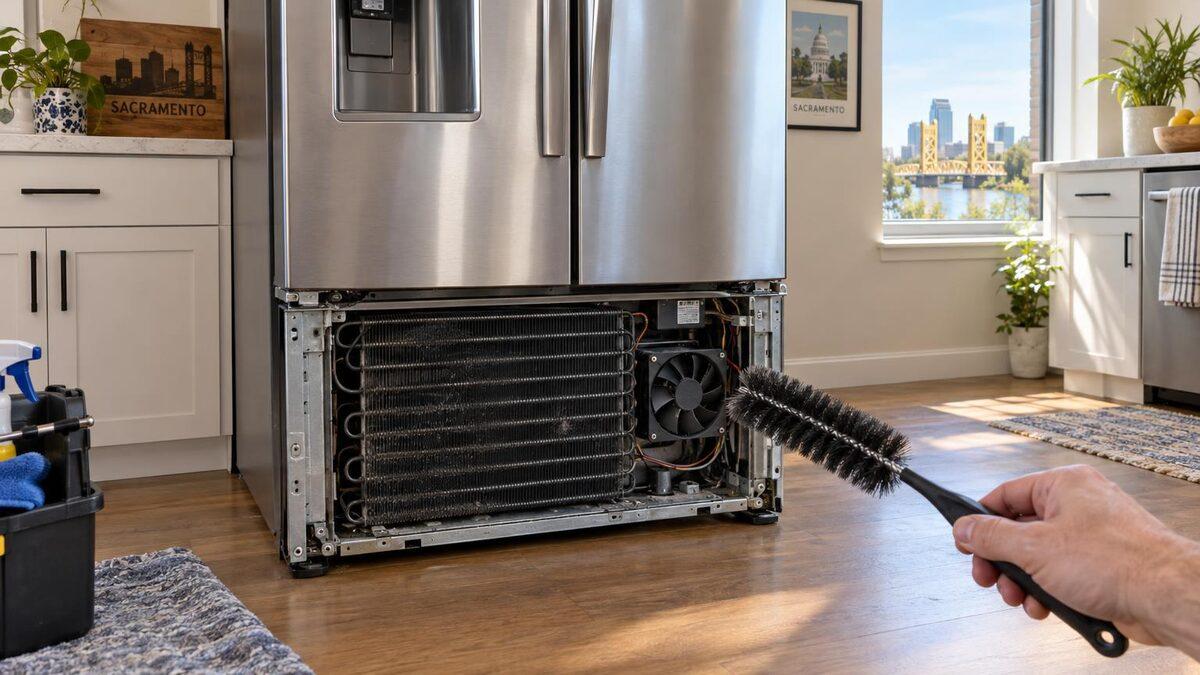
A loud buzz or rattle from the bottom back of the fridge usually comes from the condenser fan. That fan pulls air across the condenser coils, and over a few years it collects a mat of dust and pet hair. The blades catch, wobble, and buzz against their shroud.
Unplug the fridge, take off the kick plate at the bottom front, and vacuum or brush the coils and the fan. On many models you reach the fan from the back panel instead. In Sacramento homes with indoor cats or dogs, we find more fur than dust on those blades.
A fridge that is not level, or one touching the cabinets or the wall, turns normal vibration into a loud buzz. Level it with the front feet and pull it an inch or two away from anything it touches.
Clicking Every Few Minutes
A single click when the fridge starts or stops is normal. That is the thermostat or the control board switching the compressor on and off.
Clicking every few minutes is different. Listen for a click, a short hum lasting a few seconds, then another click and silence. That pattern means the compressor is trying to start and the overload protector is shutting it off. The cause is a failed start relay, a weak overload, or a compressor that is wearing out.
Here is a typical call in the first cool weeks of the season: the fridge feels "a little warm," a thermometer in the fresh food section reads in the mid-40s, and the clicking has been going on for days. On a fridge less than ten years old, a new start relay often fixes it. On a much older fridge with a seized compressor, replacement usually makes more sense than the repair.
Our position: do not wait on repeated clicking. A thermometer in the fresh food section tells you how urgent it is. If it climbs above 40°F, the compressor is not keeping up, and every day of waiting puts the food at risk.
Squealing, Chirping or Grinding
A squeal or chirp that stops when you open the freezer door points to the evaporator fan, because most models switch that fan off when the door opens. A worn fan motor squeals; a fan blade hitting ice grinds. Ice on that fan means a defrost problem, and GE Appliances and other manufacturers list defrost and fan symptoms for their models in their owner support sections.
When to Call a Pro
Call a technician when clicking repeats and the fridge is warming, when a squeal or grind stays after you clean the condenser fan, or when the ice maker valve buzzes with the water supply fully on. Those point to a start relay, fan motor, inlet valve or compressor, and they need the back panel opened and a meter on the parts.
PRO MAX HVAC & Appliance Repair handles refrigerator repair across the Sacramento area. Call (916) 234-5925 or book a visit on our contact page, and we will tell you whether the sound is worth fixing or just part of a normal day for your fridge.
How to track down a refrigerator buzzing or clicking noise
Note when it happens
Listen for whether the sound comes with ice making, water dispensing, the compressor starting, or only with the door open or closed.
Check the ice maker water supply
If it buzzes every few minutes and no ice drops, make sure the water supply valve is open, or switch the ice maker off until it is connected.
Clean the condenser area
Unplug the fridge, remove the kick plate and brush or vacuum the coils and the fan blades, then plug it back in.
Check level and clearance
Level the fridge with its front feet and pull it an inch or two away from cabinets or walls it touches.
Watch for clicking with a warm fridge
Put a thermometer in the fresh food section. Clicking every few minutes while it climbs above 40°F means the compressor needs service now.
Sources
Need appliance repair in the Sacramento area?
Same-day service, 180-day warranty, all major brands. PRO MAX HVAC & Appliance Repair — Carmichael, CA.