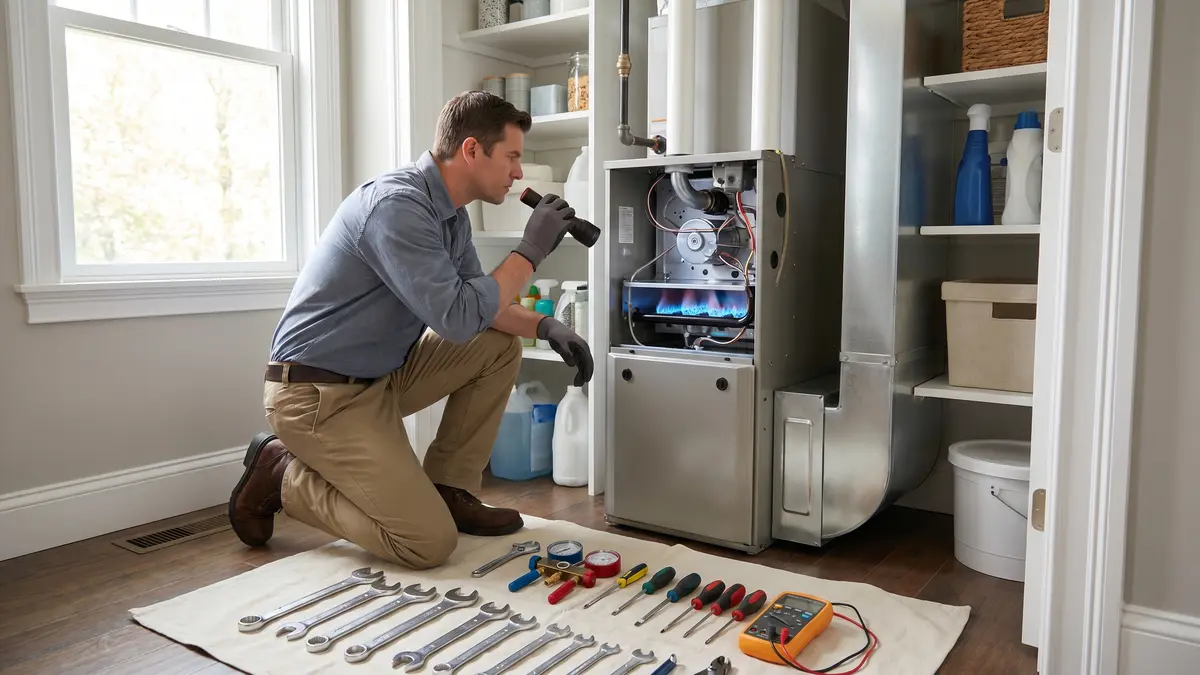
Why Sacramento furnaces fail the way they do
Sacramento's heating season is short but spiky. November through February brings overnight lows in the 30s and the occasional pre-dawn dip into the high 20s — enough to make a long-idle furnace work hard the first cold week, then settle into intermittent runtime for the rest of the season. That cycling pattern is hard on three components specifically: the igniter (every cold-start cycle wears its surface), the flame sensor (oxidation builds during the off-season and trips the unit on first ignition attempt), and the inducer motor (cycles thermal-stress its bearings over time).
The single most common no-heat call we run in November and December isn't dramatic. It's a dirty flame sensor that hasn't been cleaned in three to five years. The unit fires, runs for 8–15 seconds, the controller reports "no flame detected," and the gas valve closes. Three more identical attempts and the unit locks out. A 5-minute sensor wipe with fine emery cloth restores ignition immediately — until the next 3–5 year cycle.
What "same-day service" actually means in winter
Heating failures during a Sacramento cold snap don't have the same urgency profile as a July AC outage, but they do jump priority when there are infants, elderly residents, or anyone with a respiratory condition in the home. PRO MAX prioritizes:
- No-heat calls in homes with vulnerable residents — same-day target, regardless of time of arrival.
- Standard no-heat calls — same-day for morning bookings, next-morning for afternoon bookings during peak weeks.
- Maintenance and tune-up appointments — scheduled normally; we don't bump these for non-emergency repair calls.
Carmichael, Sacramento, Citrus Heights, Fair Oaks, and Rancho Cordova are reached fastest because they're inside our 15-minute drive radius. The outer ring (Auburn, Lincoln, El Dorado Hills) is typically 60–90 minutes during the season's busy first week.
Repair vs. replace at the 12-year mark
Furnaces built between 2010 and 2014 are clustering failures right now in the Sacramento area. The decision logic:
- Igniter, flame sensor, thermocouple, gas valve — repair, even on a 15-year-old unit. These are isolated, inexpensive parts ($150–$300 installed).
- Inducer motor, blower motor, control board — repair if under 10 years old, replace if 12+. These run $400–$700 each, and once one fails on an older unit the others typically follow within a heating season or two.
- Heat exchanger crack — replace, full stop. This is a carbon-monoxide risk; we shut the unit down on the spot and quote replacement options.
The 2026 question for most Sacramento homeowners isn't "gas or electric furnace?" — it's "should I be replacing this with a heat pump instead?" SMUD's electrification rebate can still bring a heat pump replacement below the cost of a like-for-like gas furnace install when the existing AC is also at end-of-life. The federal 25C tax credit does not apply to 2026 installs. Our heat pump cluster guide walks through the live rebate math.
Service area and timing
Furnace work — both repair and full installation — is available across our entire 16-city service area. Repair calls during the November–February heating season are typically scheduled same-day or next-morning. Full installation projects run two to five business days from sign-off. The links below jump straight into the relevant service, area, or related guide.