Reviewed by PRO MAX HVAC & Appliance Repair technicians, EPA 608 certified
When your ice maker is not making ice, it is almost always short on water or sitting in a freezer that is too warm, not broken. The U.S. Food and Drug Administration recommends keeping a freezer at 0°F, and that number matters here: most built-in ice makers wait for the mold to get cold enough before they dump a batch and refill. A freezer drifting into the teens will make ice slowly or not at all.
So before you price out parts, work through the cheap checks in order. Most of them take no tools.
Is the Ice Maker Actually Turned On?
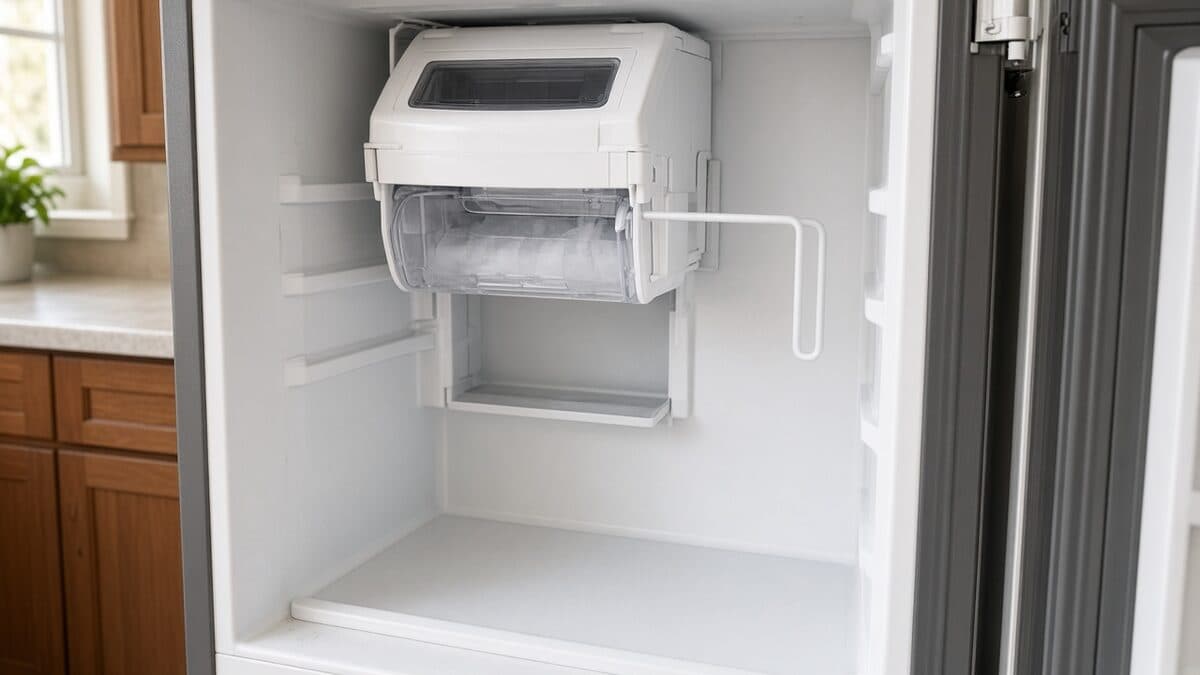
Often it is not: a raised shutoff arm or a switched-off ice maker is the most common cause and the easiest to miss. Older ice makers have a wire arm on the side. When the arm is raised, the ice maker stops. A bag of frozen peas or a tall ice cream carton can push it up, and nobody notices until the bin is empty.
Newer models use a switch on the ice maker itself or a setting on the control panel. Some refrigerators turn the ice maker off during a sabbath mode or after a power outage. Check the manual for your model and make sure it is on.
Check the Freezer Temperature
If the ice maker is on, put a thermometer in the freezer overnight. The door display tells you what the freezer is set to, not what it is actually doing.
A reading well above 0°F points at the refrigerator, not the ice maker. Dirty condenser coils, a door that does not seal, or a unit that spends the afternoon fighting a hot kitchen all push the freezer temperature up. ENERGY STAR recommends 35 to 38°F for the fresh food side and 0°F for the freezer, and an ice maker needs that freezer number to cycle properly.
Late September in the Sacramento area is a good example. After a summer of 100°F streaks, the coils under the fridge are often matted with dust and pet hair, and the freezer creeps up a few degrees at a time. Ice production drops first. Everything else looks fine.
Replace an Old Water Filter
A clogged filter is the most common reason an ice maker is not filling with water. Most refrigerator makers call for a new one about every six months, and a busy household that drinks a lot of filtered water through a hot summer can clog one sooner.
The sign is slow flow. If a glass of water from the door takes noticeably longer than it used to, the filter is restricting everything behind it, and the ice maker gets whatever trickle is left. Replace it, then run a few glasses through the dispenser to flush air out of the line.
Look at the Water Line Behind the Fridge
If the filter is new and ice still is not coming, pull the refrigerator out and look at the ice maker water line. Check two things: the supply valve on the wall or under the sink is fully open, and the line is not kinked, crushed or pinched.
A lot of these problems start after a move or a floor cleaning. A typical call goes like this: the homeowner mopped the kitchen, pushed the fridge back against the wall, and the ice stopped two days later. The thin plastic line had folded flat behind the compressor compartment. Straightening it fixed the whole thing. If your line is plastic and more than a few years old, replace it with a braided stainless line while the fridge is out: close the supply valve first, swap the line, then reopen the valve and check both ends for drips before you push the fridge back. Plastic lines get brittle and crack, and a cracked line behind a refrigerator leaks for weeks before anyone sees it.
Thaw a Frozen Fill Tube
If the ice maker is on, the freezer is cold and water reaches the refrigerator, check the fill tube. It is the short tube that carries water into the back of the ice maker, and it runs right through the coldest part of the freezer.
It freezes when water drips into it slowly, usually from low water pressure, a leaking inlet valve, or a freezer door left open that let humid air in. Once it plugs with ice, nothing gets through.
Unplug the refrigerator first. Then hold a towel soaked in warm, not boiling, water against the tube, and re-soak it as it cools. Skip the hair dryer: it puts a plugged-in appliance next to melting ice, and concentrated heat can warp the plastic liner. Keep going until no ice is left in the tube; with the power off the valve cannot push water through, so a clear tube, not running water, is the sign it is done. Then plug the refrigerator back in and check that the ice maker fills on its next cycle, which can take a few hours, and give it a day to fill the bin. If the tube freezes again within a week and the door is sealing, a dripping inlet valve or low water pressure is the usual cause, and that is worth a technician's visit.
When Water Works but Ice Does Not
If the door dispenser pours water fine but the bin stays empty, the supply is good. The problem is past the point where the water splits. The water inlet valve has separate sides for the dispenser and the ice maker, and one side can fail while the other keeps working.
That leaves three likely causes: a frozen fill tube, a failed ice maker side of the inlet valve, or a dead ice maker module. A freezer that is too warm can also stop the harvest even when water is available. Check the fill tube and the freezer temperature first, because both are free.
When to Call a Pro
Call a technician when the filter is new, the line is straight, the tube is clear, the freezer holds 0°F, and the ice maker still does not fill. At that point the inlet valve or the module has usually failed, and both need testing with a meter to tell which one.
Also call if the fill tube keeps freezing, if you see water pooling under the refrigerator, or if the freezer will not come down to temperature at all. That last one is a sealed-system or defrost problem, not an ice maker problem.
Our position: do the filter, the line and the fill tube yourself. They cost little and fix most of these calls. Leave the inlet valve and module to someone who can test them, because guessing wrong means buying a part you did not need.
PRO MAX HVAC & Appliance Repair handles ice maker and refrigerator repair across Sacramento and Roseville. Call us at (916) 234-5925 or book a visit online on our contact page.
How to get an ice maker making ice again
Check the shutoff arm or switch
Make sure the wire arm is down or the ice maker switch is on. A bag of frozen food can push the arm up without anyone noticing.
Set the freezer to 0°F
Put a thermometer in the freezer overnight. If it reads well above 0°F, the ice maker will not cycle until the freezer cools down.
Replace an old water filter
If the filter is more than about six months old, replace it and run a few glasses of water through the dispenser.
Check the water line
Pull the refrigerator out and make sure the supply valve is fully open and the line is not kinked or crushed.
Thaw a frozen fill tube
Unplug the refrigerator and hold a towel soaked in warm water against the fill tube behind the ice maker, re-soaking it as it cools, until no ice is left in the tube. Then plug the refrigerator back in and check that the ice maker fills on its next cycle.
Sources
Need appliance repair in the Sacramento area?
Same-day service, 180-day warranty, all major brands. PRO MAX HVAC & Appliance Repair — Carmichael, CA.