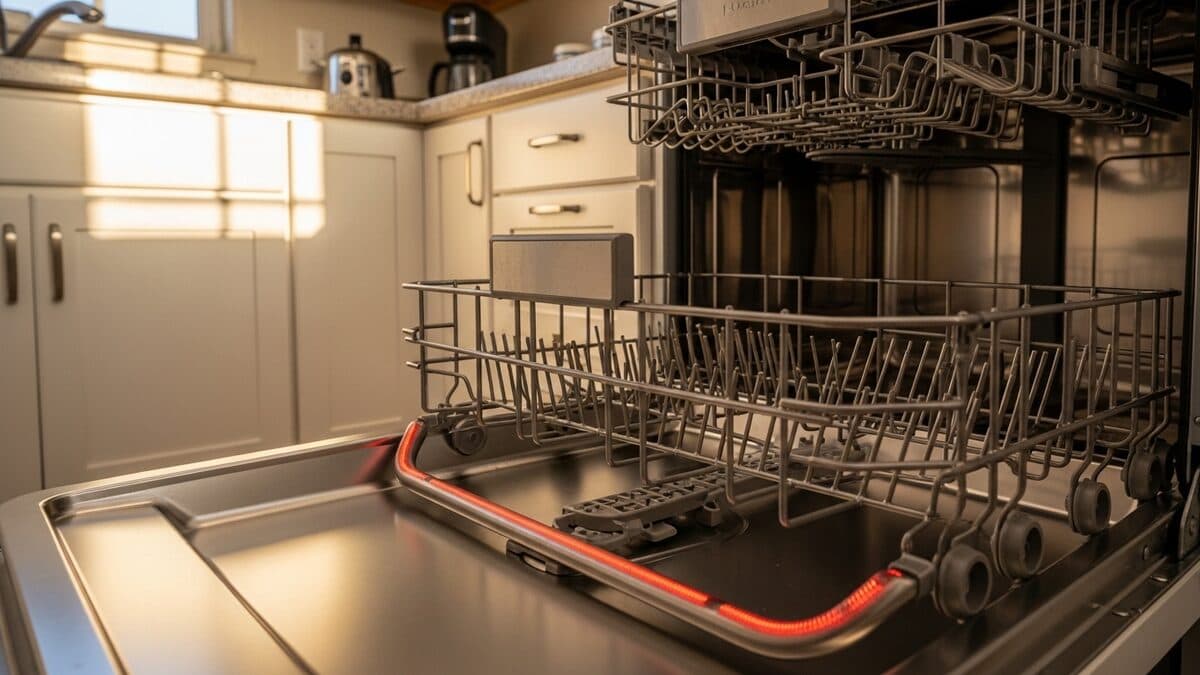
Why does my dishwasher smell like burning plastic? Nine times out of ten, a plastic utensil, lid, or food container slipped through the rack and landed on the heating element at the bottom of the tub. That smell is alarming, but it is usually harmless once you remove the melted item — and it is rarely an emergency. The trick is knowing how to tell a simple plastic melt from a genuine electrical fault, because the second one is dangerous. Dishwashers and other appliances are not minor contributors to home fires: the U.S. Fire Administration reports that clothes dryers and washing machines alone account for thousands of residential fires annually, and dishwashers belong to the same category of high-power, heat-and-water appliances worth taking seriously.
This guide walks Sacramento-area homeowners through identifying the cause, deciding whether it is safe to keep running, and knowing when to stop the cycle immediately.
The Most Common Cause: Something Melted on the Element
A plastic object resting against the heating element is the leading reason a dishwasher smells like burning. The exposed coil at the bottom of most dishwashers reaches temperatures high enough to soften and melt plastic during the heated-dry portion of the cycle. A measuring cup, a yogurt lid, a baby-bottle ring, or a flimsy spatula that tipped off the upper rack lands on the element and starts to smoke.
To confirm this is your culprit, stop the cycle, let the tub cool for 20 to 30 minutes, then open the door and inspect the heating element closely. Look for melted residue, scorch streaks, or a deformed plastic item stuck to the coil. Carefully peel off any melted plastic once everything is cool — never while the element is still hot. Wipe the area clean, run an empty rinse cycle, and the odor should clear. This kind of one-time plastic-melt smell is generally safe to run again afterward.
Why This Happens More in Summer
Summer increases the odds of a burning plastic smell for two reasons, and neither involves your dishwasher overheating from the weather. First, households run dishwashers more often during summer — more entertaining, more cold drinks, more reusable cups and lids in rotation — so there are simply more chances for a plastic item to fall onto the element.
Second, Sacramento summers regularly push past 100°F, and that ambient heat softens cheaper plastics before they ever go in the machine. Thin lids, flexible storage containers, and low-quality utensils warp more easily in a hot kitchen, which makes them more prone to slipping through the rack and making contact mid-cycle. The heat does not damage your dishwasher's electronics or wiring — it just creates conditions where plastic melts more readily. So a dishwasher burning smell in summer is real, but the season is an indirect factor, not a malfunction.
When the Smell Is NOT Just Melted Plastic
A burning smell with no plastic item present points to an electrical or mechanical problem, and that changes everything. Once you have confirmed nothing is touching the element and the odor still appears, you are likely dealing with a failing heating element, a worn motor, or degrading wiring insulation. Each of these produces a burning or scorched odor as components overheat.
Watch for these warning signs that signal a dishwasher safety emergency:
- Visible sparking or arcing inside the tub or near the control panel
- Smoke coming from the appliance
- A circuit breaker that trips when the dishwasher runs
- Scorch marks or blistering on or around the heating element
- A control panel behaving erratically — lights flickering, buttons unresponsive, cycles changing on their own
Any one of these means stop immediately. Open the door to halt the cycle, and do not restart the dishwasher until a qualified technician inspects the wiring and motor.
How to Tell If Your Heating Element Is Failing
A failing heating element produces a persistent burning smell even when no plastic is present. Beyond the odor, the clearest sign is dishes that come out wet or cold after a heated-dry cycle — the element can no longer regulate temperature properly. You may also notice visible cracks or blistering on the element itself, or error codes related to water temperature on the display.
A failing element can also run longer than it should, generating excessive internal heat. A blocked drain that forces the element to keep cycling, or a deteriorating thermal fuse, produces the same scorched-smell symptom. These are the real causes behind a dishwasher overheating — not the June weather. Confirming a bad element requires testing continuity with a multimeter; a reading of zero or infinity typically means the element needs replacement.
What to Do Right Now
Follow this sequence the moment you notice a burning plastic smell. First, stop the cycle and open the door. Second, let the tub cool completely before reaching inside. Third, inspect the heating element for melted plastic and remove anything you find. Fourth, run an empty rinse cycle to clear the odor.
If the smell is gone and nothing was scorched, you are clear to keep using the machine. If the smell returns with nothing touching the element, or you saw any sparking, smoke, scorching, or a tripped breaker, leave it off and call for service.
When to Call a Pro
Call a technician the moment a burning smell persists after you have removed any melted plastic. This is the dividing line between a nuisance and a hazard. You should also call when you see scorch marks, smoke, sparks, a breaker that trips during a cycle, or a control panel acting strangely. Those symptoms point to wiring, motor, or heating-element faults that require a multimeter test and qualified hands — not a DIY fix.
Knowing when to call an appliance repair technician protects both your home and your warranty. Our team serves homeowners across Carmichael, Sacramento, Roseville, Citrus Heights, Fair Oaks, Gold River, Rancho Cordova, and Rocklin, and we diagnose burning-smell complaints quickly and safely.
If your dishwasher smells like burning and the odor won't clear, don't gamble on it. Call PRO MAX HVAC & Appliance Repair at (916) 234-5925 or book online on our /contact page, and we'll get a technician out to inspect it.
Need appliance repair in the Sacramento area?
Same-day service, 180-day warranty, all major brands. PRO MAX HVAC & Appliance Repair — Carmichael, CA.