Why Your Window AC Is Leaking Water Inside During a Heat Wave
Water is leaking inside from your window air conditioner because the condensation it produces cannot drain to the outside — the drain path is blocked, the unit is tilted the wrong way, or a frozen coil is thawing faster than the pan can handle. During a Sacramento heat wave, your unit runs nearly nonstop, pulling humidity out of the indoor air and turning it into water. A properly installed window AC channels that water outside, but when something interrupts the drainage, the water backs up onto your windowsill or floor instead. According to the ENERGY STAR, room air conditioners remove both heat and moisture from the air, and that moisture has to go somewhere. When triple-digit July temperatures hit Carmichael, Fair Oaks, and the rest of the Sacramento area, the volume of condensation your unit generates spikes — magnifying any small drainage flaw into a visible indoor leak.
Below is exactly what causes the leak and what to do about it right now, before moisture damages your window frame or floor.
The Three Most Common Causes of an Indoor Leak
A clogged drain pan, a frozen evaporator coil, or a wrongly tilted unit causes nearly every indoor window AC leak. Each one produces the same symptom — water on your sill or floor — but the fix is different.
A clogged or overflowing drain pan is the most frequent culprit. The pan at the base of the unit collects condensation and sends it out small drain holes at the back. Dust, algae, and debris plug those holes, so water rises in the pan until it spills toward the room.
A frozen evaporator coil creates a delayed flood. When the coil ices over and you shut the unit off, that ice melts all at once — far faster than the pan can drain. Coil icing usually starts with a dirty air filter or restricted airflow, which is common when a unit runs hard through a long Sacramento heat wave.
A unit tilted toward the room sends water the wrong direction. A window AC should slope slightly downward at the back so gravity pulls condensation outside. If the front sits lower than the rear, water pools inside and drips onto your sill.
Stop the Water Damage First
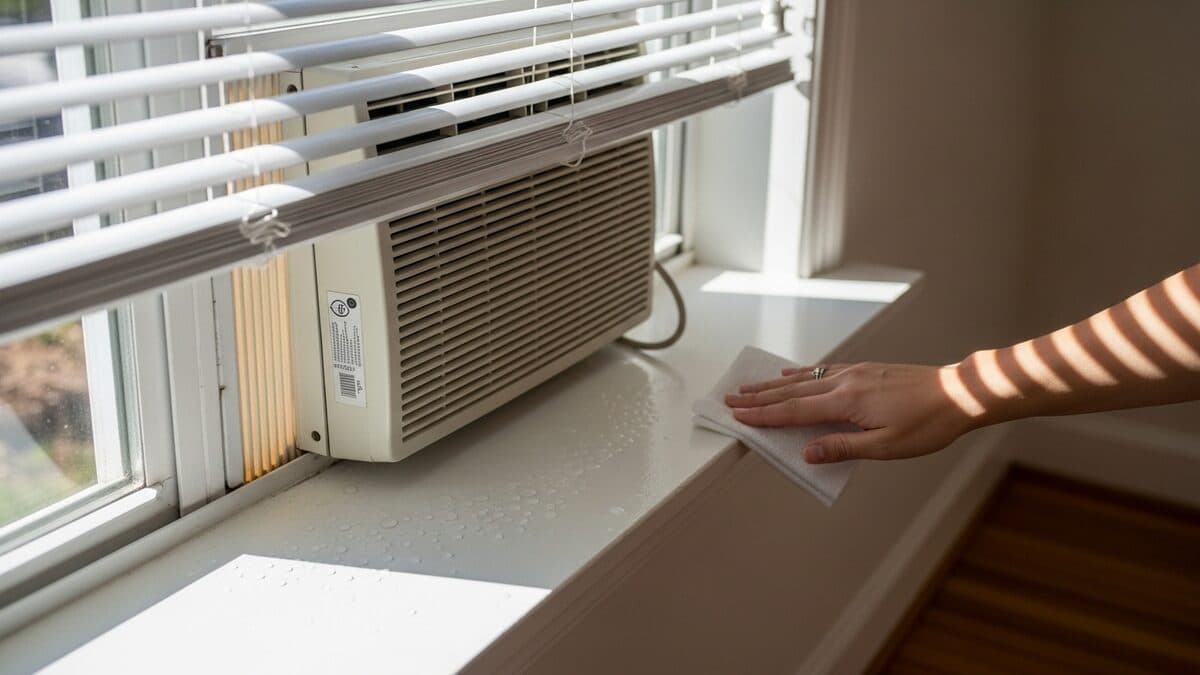
Wipe up every drop of standing water immediately and dry the windowsill thoroughly. Moisture sitting on wood, drywall, or carpet in 90-plus-degree air is exactly the condition mold needs, and mold can begin forming within 24 to 48 hours. Do not wait until you have diagnosed the leak — dry the area first, then troubleshoot.
Pull any towels, rugs, or curtains away from the wet zone. Check the wall and window frame below the unit for dampness, since water often travels down before you notice it. If you smell a musty odor near the unit, that points to moisture that has been sitting longer than you realized, and you should treat the situation as urgent.
How to Fix a Window AC Leaking Water Inside
Turn the unit off first and let any ice on the coil melt completely before you do anything else. This can take one to three hours depending on how heavily the coil is frozen. Running the unit before the ice clears only pushes more water into an already overflowing pan.
Once the unit is off and thawed, work through these steps in order:
- Clear the drain holes. Locate the small drain openings at the back of the unit and run a thin wire or pipe cleaner through each one to remove buildup. Debris here is the single most common cause of an indoor leak.
- Check the tilt. The unit should slope slightly outward — about a quarter-inch lower at the rear than at the front. Use a level. If the front is low, adjust the mounting so water drains outside.
- Clean or replace the air filter. A clogged filter starves the coil of airflow and causes it to freeze, which leads to the thaw-flood cycle. Wash a reusable filter or install a new one, and plan to check it every few weeks during heat-wave season.
- Confirm normal exterior dripping. After you restart the unit, some dripping from the rear exterior is completely normal and expected. That means condensation is draining where it should.
If the water stops after these steps, the problem is solved. If it returns, the cause is deeper than routine maintenance.
Why Heat Waves Make This Worse
Extreme heat forces your window AC to run longer cycles, which produces dramatically more condensation than mild weather. When outdoor temperatures in Roseville, Citrus Heights, or Rancho Cordova climb past 100°F, the unit rarely shuts off, so the drain system never gets a rest to clear itself. A drain hole that drips fine on a mild day gets overwhelmed under continuous load.
Heat waves also strain a marginal filter. As the unit runs harder, restricted airflow drops the coil temperature faster, tipping a borderline unit into a full freeze-up. This is why leaks that never appeared in spring suddenly show up in July.
When to Call a Pro
Call a technician when the leak returns after you have cleared the drain, corrected the tilt, and replaced the filter. A recurring leak means the problem is mechanical, not maintenance.
Contact a pro immediately in these situations:
- You see or smell mold inside the unit or around the window frame.
- The evaporator coil keeps refreezing within a few hours of restarting.
- The unit is making unusual noises — grinding, rattling, or buzzing.
- Water continues to pool inside despite clear drain holes and a correct tilt.
Refrigerant problems, a cracked drain pan, and a failed blower motor all require professional diagnosis and repair. These are not safe DIY jobs, and attempting them can damage the unit or leave a hidden moisture problem behind the wall.
Get It Fixed Before Mold Sets In
Don't let a leaking window AC ruin your windowsill or invite mold during Sacramento's hottest weeks. If the water keeps coming back or you spot any warning sign above, the team at PRO MAX HVAC & Appliance Repair can diagnose and fix it fast across Carmichael, Roseville, Gold River, Rocklin, and the surrounding Sacramento area. Call us at (916) 234-5925 or book online on our /contact page — we'll help you stay cool and dry through the heat wave.
Need appliance repair in the Sacramento area?
Same-day service, 180-day warranty, all major brands. PRO MAX HVAC & Appliance Repair — Carmichael, CA.