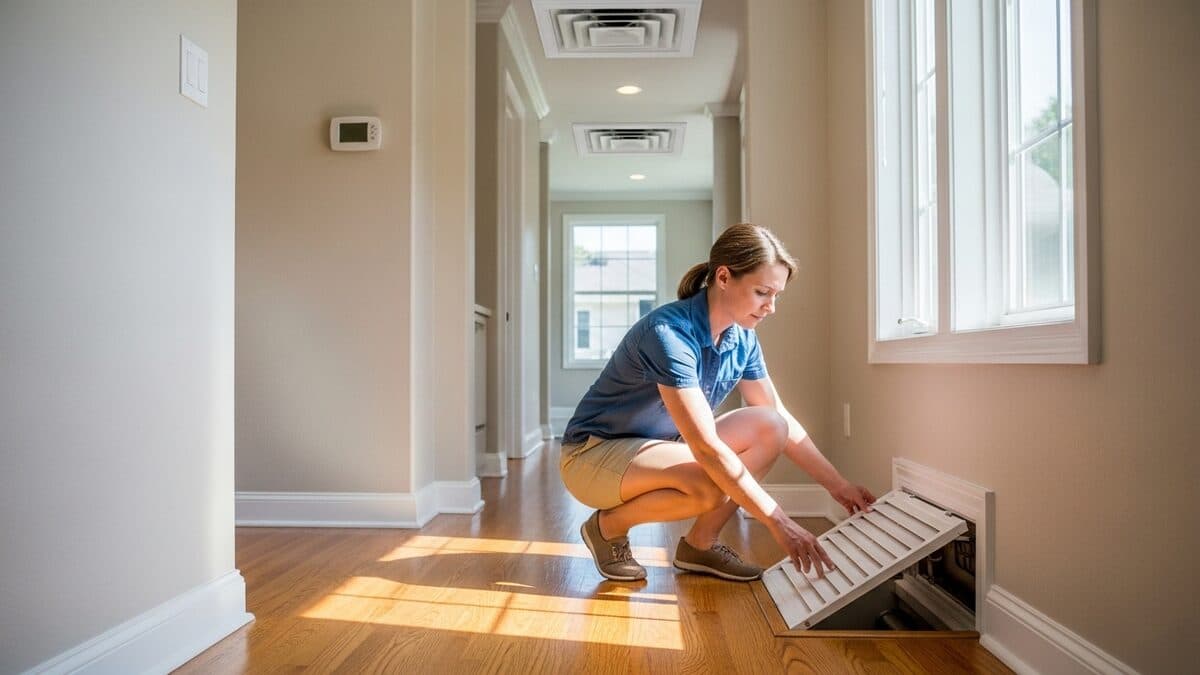
Why is my HVAC not cooling certain rooms is one of the most common summer complaints we hear from Sacramento homeowners — and in almost every case, the system itself isn't broken. The real problem is airflow distribution. According to ENERGY STAR, the average home loses 20–30% of conditioned air through duct leaks, meaning your equipment may be working fine while a significant portion of the cold air you're paying for never reaches the rooms that need it most.
In June, when Sacramento temperatures push into the triple digits, a room that's 10°F warmer than the rest of the house feels miserable fast. Before you start pricing out a full system replacement — which can run $8,000–$15,000 or more — it's worth understanding that targeted fixes costing a fraction of that almost always solve the problem.
The Most Common Reasons Some Rooms Stay Hot
Uneven cooling in a Sacramento home typically comes down to four factors: duct leaks, blocked or closed registers, poor return-air placement, and room-specific heat loads.
Duct leaks are the single biggest offender. In homes across Citrus Heights, Rancho Cordova, and Fair Oaks — many built in the 1970s through 1990s — ductwork runs through attics that can hit 150°F in summer. A small leak in that environment means cold air dumps into the attic instead of your bedroom. The room at the end of the run gets almost nothing.
Blocked or closed registers are an easy fix people overlook. Furniture pushed against a supply vent, a register that's been accidentally closed, or a duct damper stuck in the wrong position can starve a room of airflow without any equipment failure at all.
Return-air problems matter just as much as supply. If a bedroom door is closed and there's no return vent in that room, the supply air pressurizes the space and can't circulate. The room heats up because conditioned air stops flowing in.
Room-specific heat loads explain why some spaces are always harder to cool. A west-facing bedroom in Carmichael gets hammered by afternoon sun. A room above a garage in Roseville has almost no insulation between it and a 130°F attic floor. These spaces need more airflow, not just equal airflow.
Low-Cost Fixes to Try First
Start with manual duct dampers — these are the levers or handles on your duct branches, usually accessible in the attic or crawlspace. Adjust them to reduce flow to overcooled rooms and increase it to hot spots. This takes under an hour and costs nothing if you do it yourself.
Next, partially close supply registers in rooms that are already comfortable. Reducing airflow in a cool room builds pressure in the duct system and pushes more air toward the rooms at the end of the line. Open every register in the problem rooms fully and make sure nothing is blocking them.
Check your return-air pathways. If closed doors are cutting off rooms from returns, door undercuts of at least 3/4 inch or transfer grilles between rooms solve the problem without structural changes.
Finally, check and replace your air filter. A clogged filter restricts total system airflow, which magnifies any existing imbalance. For Sacramento's dusty summers, checking the filter monthly is solid HVAC maintenance practice.
When You Need a Zoning Upgrade
If basic adjustments don't solve the problem, the duct layout itself may not have been designed to serve your home's current configuration. This is especially common in homes with additions, converted garages, or two-story layouts in neighborhoods like Gold River and Fair Oaks.
A zoning control system adds motorized dampers and individual thermostats to separate areas of your home, letting your HVAC deliver more or less conditioned air to each zone on demand. Zoning upgrades typically run $2,500–$5,000 depending on the number of zones and complexity of the ductwork — significantly less than replacing the entire system.
A ductless mini-split is the most targeted solution for a single problem room. A mini-split adds direct cooling capacity to one space without touching the existing duct system. Installation in the Sacramento area runs roughly $1,500–$4,000 for a single-zone unit. For a west-facing master bedroom or a room above a garage in Rocklin that's always been uncomfortable, a mini-split often solves the problem permanently.
Duct sealing and testing is worth doing before any zoning upgrade. A technician uses a blower door or duct pressurization test to locate leaks, then seals them with mastic or foil tape. Sealing ducts in a Sacramento attic can meaningfully improve whole-house comfort and lower energy bills at the same time.
When to Call a Pro
Call a licensed HVAC technician when the basic steps above don't move the needle, when you suspect significant duct leaks in the attic, or when the system is running constantly but still can't hit the thermostat setpoint.
Some situations also point to equipment issues rather than distribution problems. If your HVAC is not blowing cold air at all — not just unevenly — you may have a refrigerant issue, a failing compressor, or a frozen evaporator coil. Those require professional diagnosis. Similarly, if your system is over 15 years old and repair estimates are approaching half the cost to replace HVAC equipment, it's worth getting an honest assessment of whether repairs make financial sense versus a new, more efficient system.
For Sacramento homeowners with newer equipment that's otherwise performing well, the conversation should almost always start with duct work and zoning — not replacement. The best HVAC system for your home is the one that's already installed and correctly balanced, not necessarily a brand-new one.
If you're dealing with hot spots this summer in Sacramento, Carmichael, Citrus Heights, Rancho Cordova, Roseville, or anywhere else in our service area, PRO MAX HVAC & Appliance Repair can diagnose your airflow problem and give you a straight answer on whether a duct fix, zoning upgrade, or mini-split is the right move. Call us at (916) 234-5925 or book an appointment online at our contact page — we're scheduling now for summer service calls.
Need appliance repair in the Sacramento area?
Same-day service, 180-day warranty, all major brands. PRO MAX HVAC & Appliance Repair — Carmichael, CA.