Why Your AC Isn't Cooling the House — And Why It Smells Musty During a Heat Wave
That musty smell from your air conditioner during a Sacramento heat wave means mold or bacteria has colonized a wet surface inside your system — usually the evaporator coil, the condensate drain pan, or the ductwork. When temperatures hit 103°F and your AC runs nearly around the clock, the blower pushes large volumes of air across those contaminated surfaces and spreads the odor through every room. The smell is a symptom of moisture that isn't draining or drying the way it should, and according to the EPA, mold exposure can trigger asthma attacks, allergic reactions, and respiratory irritation — which is why this is worth solving fast, not living with.
Why Your AC Suddenly Smells Musty When It Runs All Day
The smell shows up now because light spring use let mold and bacteria grow quietly on your coil and drain pan without moving enough air to make it noticeable. During cooler months, your system cycled on and off, and the evaporator coil had time to dry between runs. Once a Sacramento heat wave forces the AC to run continuously, two things happen: the coil stays wet far longer, and the blower moves enough air across those colonized surfaces to broadcast the odor throughout the house. Homeowners in Carmichael, Fair Oaks, and Citrus Heights notice it most on the first hard-running day of a heat spike, when the system that smelled fine in May suddenly fills the home with a damp, sour, gym-locker smell.
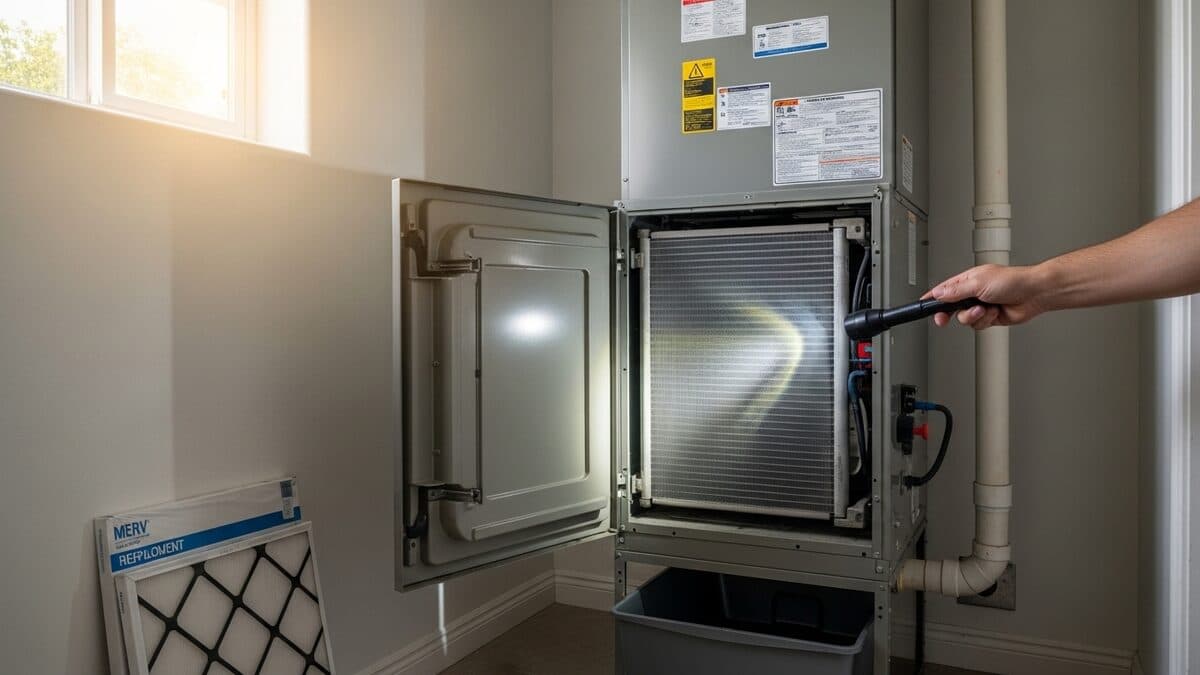
The source almost always comes down to one of three surfaces. Mold on the evaporator coil is the most common. A clogged or slimy condensate drain pan sitting in standing water is the second. Mold inside the ductwork is the third and most serious, because it distributes spores through every supply vent.
Why Your HVAC Isn't Cooling the House During a Heat Wave
Your HVAC struggles to cool the house during a heat wave when airflow is restricted or the coil has frozen — and both problems tie directly back to that musty smell. A clogged filter chokes airflow across the evaporator coil, which drops the coil temperature below freezing even on a 103°F day in Rancho Cordova. When ice forms on the coil, your AC stops blowing cold air, cooling drops off, and the house never reaches the thermostat setpoint no matter how long the system runs.
Here's the connection homeowners miss: a coil that freezes and then thaws stays wet far longer than a normally operating coil. That extended wetness is exactly what mold and bacteria need to multiply. So the same restricted airflow that leaves your home warm and stuffy also feeds the musty smell. If your HVAC is not blowing cold air and smells damp at the same time, you're likely dealing with one root cause, not two separate problems.
Low refrigerant charge is the other main reason a coil freezes. That requires a technician to diagnose and repair, because refrigerant is a sealed system.
Why Your HVAC Filter Is Wet or Leaking Water
A wet filter almost always means your condensate drain is clogged or the drain pan is overflowing. When your AC runs continuously in Sacramento's summer heat, it pulls an enormous amount of moisture out of your indoor air — sometimes several gallons a day. That water is supposed to collect in the drain pan and flow out through a condensate line. When that line clogs with the same algae and biofilm that causes the musty smell, the water has nowhere to go. It backs up, soaks the filter, and can spill onto your ceiling, into a wall, or across the floor near your indoor unit.
A wet filter is a warning sign you should not ignore. Standing water in the drain pan is a breeding ground for the exact bacteria producing the odor, and the overflow can cause real water damage in homes throughout Gold River, Roseville, and Rocklin. If you find your HVAC leaking water or a soggy filter, shut the system off and clear the drain before running it again.
What You Can Do Right Now
Replace your filter first, because it's the cheapest fix and often the fastest way to improve both cooling and smell. During a Sacramento heat wave when your system runs nearly 24 hours a day, check the filter every two to three weeks and swap it when it looks gray and clogged. A dirty filter restricts airflow, keeps the coil colder and wetter than it should be, and lets existing mold spores recirculate more easily.
Next, confirm all your supply vents are open. Closed vents restrict airflow the same way a dirty filter does and can push the coil toward freezing. Then check the area around your indoor unit for standing water or a wet filter, which points to a clogged drain.
These steps address airflow and surface moisture. They will not remove mold already established on the coil or inside your ducts.
When to Call a Pro
Call a professional when the musty smell persists after you've replaced the filter, or when you find standing water, ice on the coil, or an AC that won't cool the house. Mold on the evaporator coil means spores are being distributed through every vent — a genuine concern for households with asthma, allergies, or young children, which is common in the tightly sealed energy-efficient homes across Roseville and Rancho Cordova. Mold inside the ductwork is more serious and requires professional remediation, not a DIY spray-and-wipe.
A technician will inspect the coil, flush the condensate drain, verify refrigerant charge if the coil is freezing, and confirm whether the odor traces to the coil, the drain pan, or the ducts. That diagnosis matters, because the fix is different for each surface, and treating the wrong one wastes your money while the smell keeps coming back.
Don't run a system that's leaking water, freezing up, or filling your home with mold spores through a Sacramento heat wave. Call PRO MAX HVAC & Appliance Repair at (916) 234-5925, or book online on our /contact page, and we'll get your air clean and cold again fast.
Need appliance repair in the Sacramento area?
Same-day service, 180-day warranty, all major brands. PRO MAX HVAC & Appliance Repair — Carmichael, CA.