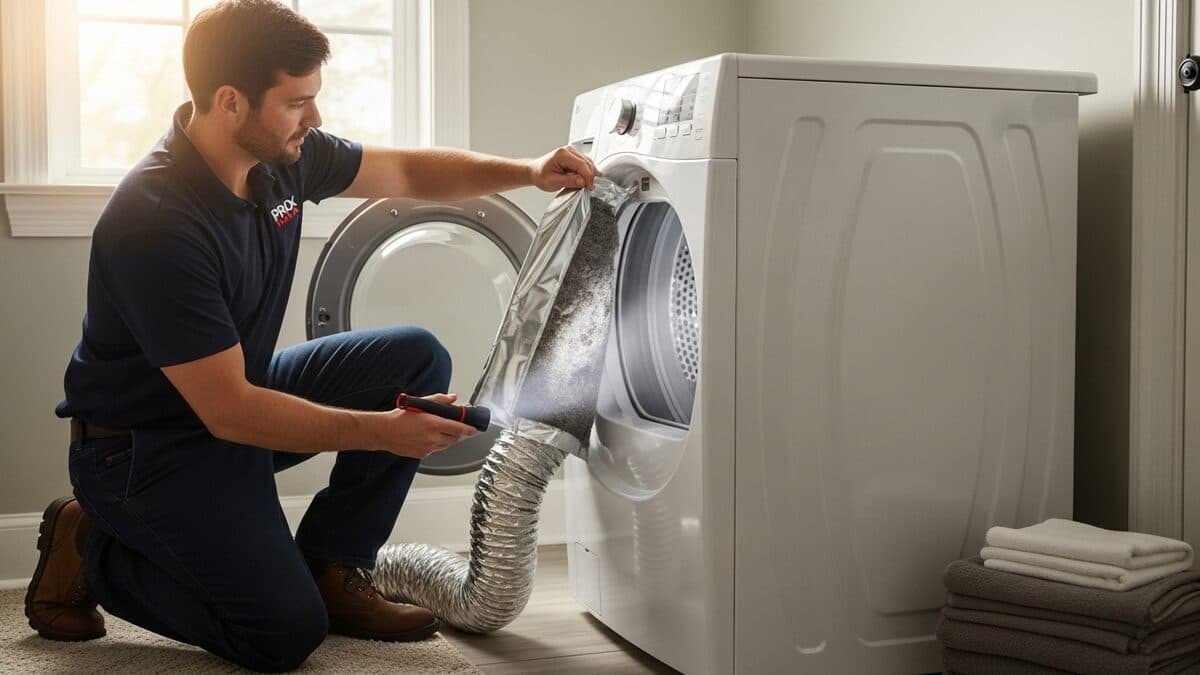
If your dryer takes two cycles to dry clothes, a clogged exhaust vent is almost always why — and Sacramento's summer heat makes the problem worse. When lint chokes the duct, hot, moist air can't escape, so your clothes stay damp no matter how long the machine runs. This isn't just an inconvenience: clothes dryers cause roughly 15,000 home structure fires every year, according to the U.S. Consumer Product Safety Commission, with failure to clean the vent cited as the leading contributing factor. A dryer running two full cycles in August is telling you something is wrong right now.
Why a Clogged Vent Forces Two Cycles
Restricted exhaust airflow is the number one cause of a dryer that needs two cycles to finish one load. Your dryer works by heating air, tumbling it through wet clothes, and pushing that hot, moisture-laden air out through the vent duct. When lint builds up inside that duct, the moist air has nowhere to go. It circulates back through the drum, clothes reabsorb humidity, and the machine keeps running without ever drying the load.
A secondary cause can be a failing heating element or a worn moisture sensor, but a clogged vent is the first thing to rule out — it's the most common culprit and the easiest to check. Before you assume a part has failed, inspect the airflow.
Why Summer Makes It Worse in Sacramento
Summer turns a mild vent restriction into a two-cycle ordeal. Dryers pull moisture out of clothes by relying on a temperature difference between the hot drum air and the cooler exhaust path. When Sacramento temperatures climb above 100°F — a routine event in Carmichael, Roseville, and Rancho Cordova in August — that temperature differential shrinks. Exhaust airflow slows, and any existing lint blockage hits much harder.
Summer laundry also gets heavier. Beach towels, extra bedding, and sweaty workout clothes hold far more water than a typical winter load, and they demand more airflow to dry. A vent that barely kept up in January becomes a serious bottleneck by July. That's why so many homeowners in Citrus Heights and Fair Oaks first notice the problem in the middle of summer.
How to Inspect and Clear Your Vent
Start by unplugging the dryer and pulling it away from the wall. Safety comes first — disconnect the power before you touch anything behind the machine.
Follow these steps to check and clear the exhaust path:
- Disconnect the flexible duct from the back of the dryer. Look inside for packed lint, and check the wall opening too.
- Inspect the full duct run. Feel for soft, crushed sections in flexible foil ducting, which trap lint and choke airflow.
- Clear the lint using a dryer vent brush kit. Push the brush through the duct and pull the loosened lint out from both ends.
- Check the exterior vent hood. Go outside and confirm the flap opens freely. Lint, bird nests, and debris commonly block the outdoor termination.
- Run the dryer with the outside vent visible. You should feel strong, warm airflow at the exterior hood. Weak airflow means the duct is still restricted.
While you're back there, confirm the duct is rigid or semi-rigid metal rather than plastic or foil. Metal ducting resists crushing and doesn't trap lint the way ribbed plastic does.
How Often to Clean the Vent
Clean your full dryer exhaust duct at least once a year. That's the baseline recommendation from the U.S. Consumer Product Safety Commission, and it applies to every household.
Some homes need it more often. If you live in Carmichael, Citrus Heights, or Rancho Cordova with a longer duct run — common in two-story homes and houses where the laundry room sits far from an exterior wall — clean the vent every six months. The same goes for households running more than five loads per week. Longer runs and heavier use both accelerate lint accumulation, and both raise fire risk.
Cleaning the lint trap screen after every load is separate and essential, but it doesn't clear the duct behind the machine. A clean screen and a clogged duct can exist at the same time — which is exactly why so many people are surprised their dryer struggles despite emptying the trap religiously.
The Fire Risk You Can't Ignore
Lint is highly flammable, and a blocked duct traps heat directly against it. That combination creates genuine ignition risk. When hot exhaust can't escape, temperatures inside the duct climb, and the lint packed along the walls becomes fuel waiting for a spark.
Warning signs go beyond long dry times. A hot exterior on the dryer, a burning smell during a cycle, or the top of the machine becoming too hot to touch all point to trapped heat. If you notice any of these in your Gold River or Rocklin home, stop using the dryer until the vent is cleared and inspected.
When to Call a Pro
Call a professional if clearing the visible lint doesn't restore normal dry times. A stubborn two-cycle problem after cleaning points to a blockage deep in the duct run, a crushed section inside a wall, or a failing component like the heating element or moisture sensor.
Professional dryer vent cleaning typically runs $80–$175, depending on duct length and accessibility. If a worn heating element or moisture sensor is also contributing, parts and labor add to that total. A service call is the fastest way to get an accurate diagnosis and a firm quote — rather than guessing at parts or spending an afternoon fighting a duct you can't reach. A technician has the tools to clear long runs, inspect hidden sections, and confirm airflow is fully restored.
If your dryer takes two cycles to dry clothes this summer, don't wait for the problem to get worse — or more dangerous. Call PRO MAX HVAC & Appliance Repair at (916) 234-5925, or book online on our /contact page. We serve homeowners across the Sacramento area and will get your dryer running safely and efficiently again.
Need appliance repair in the Sacramento area?
Same-day service, 180-day warranty, all major brands. PRO MAX HVAC & Appliance Repair — Carmichael, CA.