Reviewed by PRO MAX HVAC & Appliance Repair technicians, EPA 608 certified
A dryer squeaking while it spins almost always has a worn part in the system that holds and turns the drum. The four usual suspects are the rear drum rollers, the idler pulley, the drum belt and the front glides. The sound itself tells you which one, and all four are inexpensive parts, so most squeaky dryers are worth fixing.
Fixing it soon also saves money later. A worn pulley or roller makes the motor work harder and can take the belt with it, turning one cheap part into three. And when replacement does come, ENERGY STAR says certified dryers use about 20 percent less energy than conventional models, so it is worth knowing which way you are headed.
Match the Sound to the Part
The sound is the best clue, so start by listening. Empty the drum and run the dryer on air fluff, so you hear the machine instead of the load.
A high, steady squeal that starts right away usually means the idler pulley. A rhythmic thump or rumble that keeps time with the drum points to the rollers. A scraping or grinding at the front points to the glides. A squeal with the drum barely turning means the belt is slipping, and a quiet motor hum with no tumbling at all means it has broken.
Run it empty once more and feel the top of the cabinet. Vibration you can feel on the back half points to the rear rollers, and a scrape you can hear near the door points to the front.
Rear Drum Rollers: Thumping and Rumbling
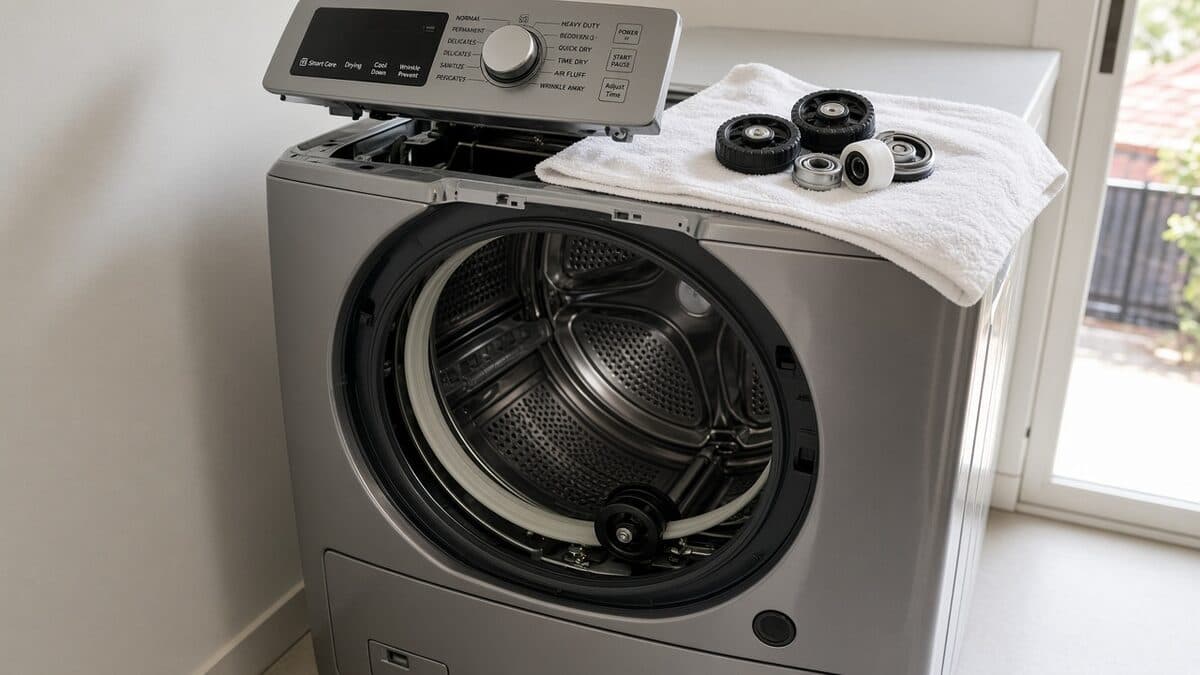
Most dryers rest the back of the drum on two rubber or plastic rollers. Over years, the wheels wear down or develop flat spots, and the axles dry out. The result is a thump-thump in time with the drum, or a low rumble that gets louder through the cycle.
Flat spots are common on a dryer that sat unused for a while, then went back into daily service. Garage laundry rooms around Sacramento add to the wear: summer garage heat dries out roller and pulley bearings faster than an indoor laundry closet does. A thump that shows up after a move, or after a laundry room was closed up for a few months, often fades for a few loads and then returns for good.
Rollers are usually sold in pairs with new axles or clips. Replace both at once.
Idler Pulley: The High Squeal
The idler pulley is a small wheel on an arm that presses against the belt to keep it tight. Its bearing wears out and dries, and it starts to squeal. Many people notice it first as a squeak at the start of each load that quiets as the dryer warms up. Over time the squeal lasts longer, and a worn pulley can eventually seize and wear through the belt.
With the dryer unplugged and the panel off, spin the pulley by hand. It should turn freely and quietly with no wobble.
Drum Belt: Squeaking and Not Spinning
If the motor runs and you hear a squeal but the drum barely turns, or not at all, look at the belt. A belt that has stretched or glazed slips on the motor pulley and squeals. A broken belt lets the motor run with a quiet, empty hum and no tumbling.
Belts are among the cheapest dryer parts. Replace a frayed, cracked or shiny-glazed belt rather than reusing it.
Front Glides and Drum Felt: Scraping
The front of the drum rides on plastic glides or a felt seal, depending on the model. When the glides wear through, the drum rubs metal on metal near the door, and you hear a scrape or grind. Worn felt can also let small items slip behind the drum.
While you are there, check the drum seal and the lint screen housing for coins, bobby pins or buttons. A loose item caught in the seal makes an intermittent squeak or tick that sounds like a bad part but costs nothing to fix.
Repair or Replace?
For most dryers, repair. Rollers, an idler pulley, a belt and glides are all low-cost parts, and many technicians replace rollers, pulley and belt together because they wear at the same rate. Doing all of them at once usually costs far less than a new dryer and resets the clock on the whole drum system.
Replacement makes more sense when the drum noise comes with other problems: a dryer that also no longer heats, a cabinet with rust, or a motor that hums and struggles even with a new belt. Before you buy parts, check the U.S. Consumer Product Safety Commission site for recalls on your model.
When to Call a Pro
Call a technician when the noise continues after you have cleared loose items, when you do not want to take the cabinet apart, or when the drum will not turn at all. Opening a dryer means removing panels, unhooking the belt and lifting the drum out, and putting it back together with the belt routed correctly around the idler pulley is the step most people get stuck on.
Replace the rollers, pulley and belt as a set rather than one part at a time, because they wear together and the labor to open the dryer is the same.
A typical case in Rancho Cordova laundry rooms: a dryer around ten years old, a squeal for the first few minutes of every load, and a thump that started after a move. A roller kit, an idler pulley and a new belt make it quiet again in one visit.
PRO MAX HVAC & Appliance Repair handles dryer repair across the Sacramento area. Call us at (916) 234-5925 or book a visit online on our contact page.
How to narrow down a squeaking dryer
Empty the drum and listen
Run the dryer empty on air fluff and note whether the sound is a squeal, a thump or a scrape.
Check for loose items
Feel along the drum seal and lint screen housing for coins, pins or buttons that can squeak or rattle.
Spin the drum by hand
Unplug the dryer and turn the drum slowly by hand; roughness or a catch points to rollers or glides.
Inspect the belt and pulley
With the dryer unplugged and the panel open, look for a frayed or glazed belt and an idler pulley that wobbles or does not spin freely.
Replace worn parts together
Replace rollers, pulley and belt as a set if they are worn, or call a technician to do it.
Sources
Need appliance repair in the Sacramento area?
Same-day service, 180-day warranty, all major brands. PRO MAX HVAC & Appliance Repair — Carmichael, CA.