Reviewed by PRO MAX HVAC & Appliance Repair technicians, EPA 608 certified
A washing machine shaking violently on spin almost always has an unbalanced load, uneven leveling feet, or, on a new front loader, shipping bolts that were never removed. Fix those first; they cover most calls and cost nothing. If a balanced, level washer still bangs or walks across the floor, the shock absorbers, springs or drum bearings are worn and need a technician.
Modern washers shake harder than old ones for a reason. ENERGY STAR certified washers use about 20 percent less energy and about 30 percent less water than standard models, and they also spin faster to wring more water out before the clothes reach the dryer. A drum spinning at over 1,000 RPM magnifies any imbalance, so a load an old top loader would have shrugged off can rock a new front loader across the room.
Start With the Load
An unbalanced load is the most common cause by far. One heavy item, such as a comforter, a bath mat or a pair of jeans wrapped around a load of light shirts, lands on one side of the drum and throws the whole washer off center.
Pause the cycle, open the door once the drum stops, and spread the clothes evenly around the drum. Add a couple of towels to balance a single bulky item. Most washers sense imbalance and slow the spin or stop to redistribute, but they cannot fix a comforter that has balled up on one side.
Fall is when this shows up. The first loads of flannel sheets, heavy blankets and winter bedding come out of storage, and they are exactly the items that knot up and pull the drum off center.
Level the Washer
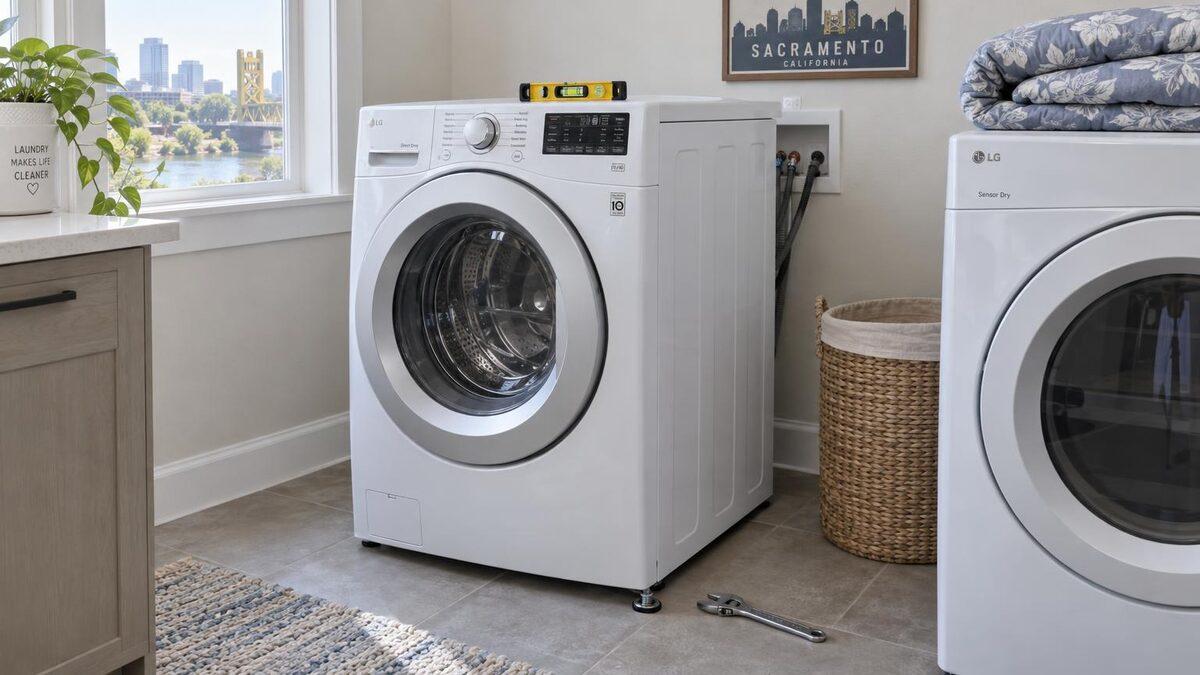
A washer that walks across the floor is usually not level, or one foot is not touching the floor. Unplug the washer before you tip it or work under it. Set a level on top, front to back and side to side, then press down on each corner. A corner that rocks has a foot that is not carrying its share.
Most washers have adjustable front feet with a lock nut. Turn the foot until the washer sits level and all four corners touch, then tighten the lock nut up against the cabinet so the foot cannot creep. Some models have self-adjusting rear feet that settle when you tilt the washer forward and set it back down.
Our position: on a smooth tile or vinyl laundry floor, a set of rubber anti-vibration pads is worth the small cost, but only after the washer is level. Pads under an unlevel washer just hide the problem.
Shipping Bolts on a New Washer
A front loader that shook violently from its very first load usually still has its shipping bolts in. Manufacturers lock the drum in place for delivery with long bolts through the back panel, and the installer is supposed to remove them and cap the holes. Left in, they hold the drum rigid so the suspension cannot absorb anything, and the whole cabinet takes the hit.
Look at the back panel for three or four large bolts or plastic spacers. Your manual shows where they are and how to remove them; keep them in case you move.
The Floor
Upstairs laundry rooms and older raised wood floors flex. A washer that is level and balanced can still bounce on a floor that moves. In Sacramento-area homes with a second-floor laundry, or an older house on a raised wood floor, a soft spot under the washer amplifies every spin. Moving the washer a few inches toward a wall, where the joists are stiffer, sometimes makes a surprising difference.
A typical case looks like this: a front loader in a hall laundry closet begins walking a few inches every spin cycle after someone pulls it out to clean behind it. One front foot has backed out during the move and no longer touches the floor. Leveling the feet and tightening the lock nuts is the whole fix.
When the Suspension Is Worn
If the load is balanced, the washer is level and the shipping bolts are out, but it still bangs harder than it used to, the suspension is wearing out. Front loaders use shock absorbers, sometimes called dampers, under the drum, and top loaders use springs or suspension rods. They lose their damping over years of spins, and the drum starts slamming into the cabinet.
A rumble or grinding sound that gets louder with spin speed points to worn drum bearings instead, a bigger repair. Either way, stop using the washer at high spin until it is checked, because a loose drum can damage the cabinet and hoses.
When to Call a Pro
Call when a balanced, level washer still shakes or walks, when you hear grinding during spin, when the drum knocks against the cabinet, or when the washer stops mid-spin with an imbalance code on every load. A worn suspension costs you in a quieter way too: the washer cuts its spin short to protect itself, and the U.S. Department of Energy notes that a faster final spin removes more water and shortens drying time, so wetter clothes mean longer dryer runs.
PRO MAX HVAC & Appliance Repair handles washer repair across the Sacramento area, including Citrus Heights and Roseville. Call (916) 234-5925 or book through our online booking page.
Stop a washing machine from shaking during spin
Rebalance the load
Pause the cycle, spread the clothes evenly around the drum, and split a single heavy item with a few towels before running spin again.
Unplug and check level
Unplug the washer, set a level on top front to back and side to side, and press each corner to find a foot that rocks.
Adjust the feet
Turn the front feet until the washer sits level and all four corners touch the floor, then tighten the lock nuts against the cabinet.
Check for shipping bolts
On a front loader that shook from day one, look at the back panel for transit bolts that should have been removed at install.
Test with a normal load
Run a medium mixed load; if a level washer with a balanced load still bangs, book a repair for the suspension.
Sources
Need appliance repair in the Sacramento area?
Same-day service, 180-day warranty, all major brands. PRO MAX HVAC & Appliance Repair — Carmichael, CA.