Reviewed by PRO MAX HVAC & Appliance Repair technicians, EPA 608 certified
Thermostat short cycling is usually a setup problem, not a broken furnace. The thermostat ends each heat call too soon because a cycle-rate or differential setting is too tight, the wrong equipment type was chosen during setup, something warms the thermostat faster than the rest of the house, or a smart thermostat keeps losing power. Each of those is quick to check, and most cost nothing to fix.
Short cycling costs more than comfort. Every start is the least efficient minute of a furnace's run, and a system that starts a dozen times an hour never settles into steady heat. The U.S. Department of Energy notes that turning a thermostat back 7 to 10 degrees for eight hours a day can save as much as 10 percent a year on heating and cooling. A thermostat that cuts every cycle short undercuts settings like that before they can help.
Thermostat or Furnace: Watch Which Stops First
Before touching any setting, find out which side is ending the cycle. Stand where you can see the thermostat and hear the furnace, and watch one short cycle from start to finish.
If the thermostat's heat indicator turns off and then the furnace winds down, the thermostat ended the call. The rest of this article is for you.
If the furnace shuts its burners off while the thermostat still shows it is calling for heat, the furnace is stopping itself on a safety control. That points to a tripping limit switch from poor airflow, a dirty flame sensor or an ignition fault, and it is a furnace repair visit, not a thermostat setting.
Check the Installer Settings
Most digital thermostats have an installer or advanced menu, and two settings there drive short cycling.
The first is equipment type. A thermostat set up for a heat pump or electric heat behaves differently from one set for a gas furnace, and the wrong choice changes how often it cycles. Confirm the menu matches what you actually have.
The second is the cycle rate or temperature differential. Some thermostats count cycles per hour; others start and stop heat based on how far the room drifts from the setting, often in fractions of a degree. A setting tuned too tight turns the furnace on and off over tiny swings. The thermostat's manual lists the recommended value for a gas furnace, and it is usually a single change.
Older thermostats with a dial or a mercury switch use a heat anticipator, a small adjustable lever inside the cover. Set too low, it ends cycles early. Those thermostats are rare now, and replacing one is usually a better use of money than tuning it.
Check Where the Thermostat Sits
A thermostat reads the air around itself, not the house. If something warms that spot, it thinks the job is done and shuts the heat off early.
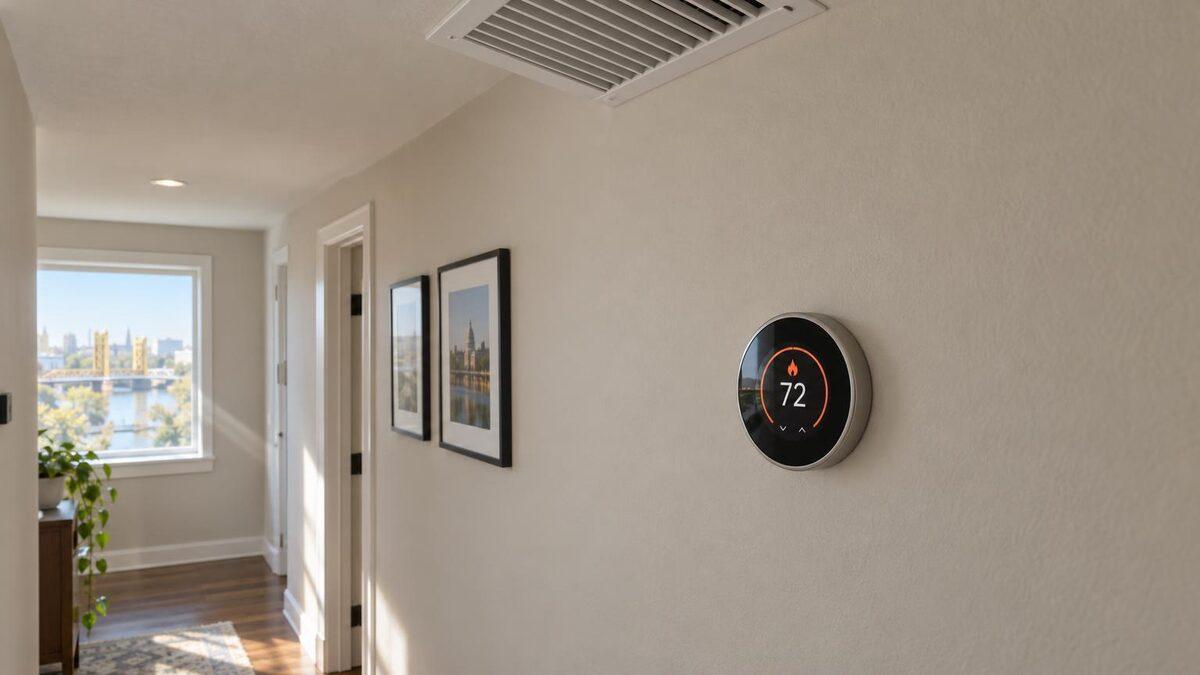
Look for a supply register blowing toward it, afternoon sun on the wall, a lamp or television just below it, or a kitchen doorway beside it. In a lot of tract homes around Sacramento the thermostat sits in a hallway right under a ceiling supply vent, and that one register warms the wall long before the bedrooms catch up.
If the thermostat is in a bad spot, a technician can relocate it or add a remote sensor in a room that better represents the house. Either one is a short thermostat installation job.
Check Power on a Smart Thermostat
A smart thermostat that reboots, goes blank or drops its Wi-Fi connection can cut the heat call mid-cycle every time it restarts. The usual reason is power: many smart thermostats need a common wire, and without one they borrow power through the heating circuit, which can make the furnace start and stop unexpectedly.
Adding a common wire is a small HVAC fix, and our guide to it covers how to tell whether you need one. If your thermostat's screen shows a low-power warning or restarts on its own, start there.
A Typical Short-Cycling Call
A typical first-cold-week call from a Citrus Heights ranch house goes like this: a new smart thermostat installed by the homeowner, a furnace that runs about three minutes, rests five and starts again, and a house that never feels warm. The furnace itself checks out. The burners stay lit as long as the thermostat calls.
The thermostat sits on the hallway wall a few feet below a ceiling supply register, and its equipment setting was left on the default during setup. Changing the equipment type to a gas furnace and adding a remote sensor in the living room gives the furnace full cycles again.
When to Call a Pro
Call a pro when the furnace shuts off while the thermostat is still calling for heat, when the settings and placement check out and the cycling continues, or when the thermostat needs a new wire or a new location. In California, paid furnace and HVAC control work belongs to a contractor with a C-20 heating and air-conditioning license, which you can verify on the Contractors State License Board site.
PRO MAX HVAC & Appliance Repair diagnoses short cycling across the Sacramento area, from thermostat setup to furnace controls. Call (916) 234-5925 or book a visit on our contact page to get full, steady heating cycles back.
Sources
Need appliance repair in the Sacramento area?
Same-day service, 180-day warranty, all major brands. PRO MAX HVAC & Appliance Repair — Carmichael, CA.