Reviewed by PRO MAX HVAC & Appliance Repair technicians, EPA 608 certified
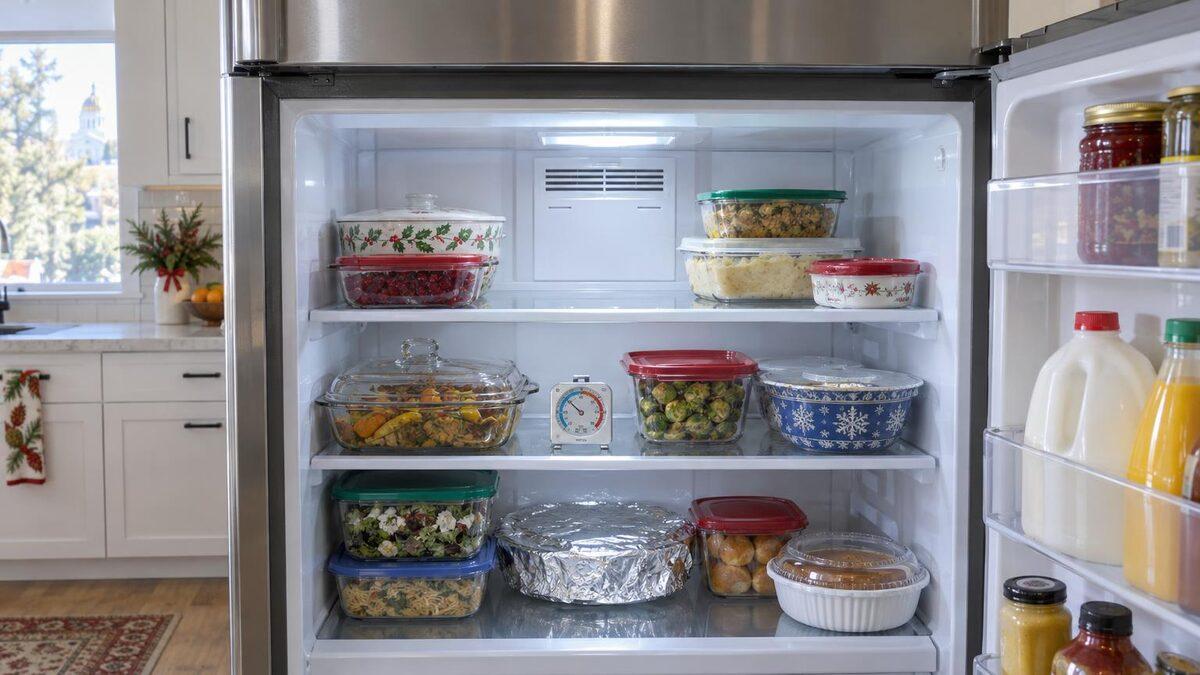
A packed refrigerator warms up for a simple reason: in most fridges the fresh-food side has no cooling coil of its own. A small fan blows cold air in from the freezer through a few vents, and a holiday load stacked against those vents traps the cold where it cannot reach the shelves. Clear the vents, leave gaps, and the fridge holds temperature again.
The number to hold is 40°F or below in the fresh-food section and 0°F in the freezer, the storage temperatures the U.S. Food and Drug Administration recommends. A fridge that has crept to 44°F the morning after a big meal is not always broken. Most of the time it is just smothered. Any perishables that sat above 40°F for more than two hours should be handled the way the USDA's food safety guidance directs before you troubleshoot the fridge.
How Cold Air Gets From the Freezer to the Shelves
Most top-freezer, bottom-freezer and side-by-side refrigerators share one cooling coil, the evaporator, and it lives behind the freezer wall. A fan pulls air across that coil and pushes it into the freezer. A share of that air goes through a duct and a damper into the fresh-food side.
On a top-freezer model, that cold air usually enters through a vent at the back of the top shelf. On a bottom-freezer, look along the back wall near the top of the fresh-food section. Side-by-sides often run a vent column down the shared wall. A return vent, lower down or in the freezer floor, lets the warmer air flow back to the coil.
Block the inlet and the fresh-food side warms. Block the return and the whole loop slows.
Why a Holiday Load Blocks the Vents
A crowded refrigerator fails in a few predictable ways. A sheet pan of stuffing slid onto the top shelf covers the inlet vent. A tall stockpot pushed against the back wall seals it. Drinks lined up shoulder to shoulder on every shelf leave no path for the air to travel, so the top shelf gets cold and the bottom drawers do not.
Warm food adds to it. A pot of soup at room temperature asks the fridge to remove a lot of heat at once, and with the vents half blocked it cannot do that quickly.
Then there is the door. A holiday kitchen opens the fridge again and again, and every opening dumps cold air on the floor.
How to Load a Refrigerator for a Holiday
Start by finding your vents before the groceries come home. Look at the back of the top shelf and along the back wall, and check the owner's manual if you cannot spot them. Leave a few inches clear in front of each one.
Then load for airflow, not just space:
- Keep containers off the back wall. A finger's width of gap behind every shelf lets air move top to bottom.
- Leave gaps between items so no shelf is a solid wall of food.
- Do not line shelves with foil or towels. Wire and glass shelves are designed to let air pass.
- Divide big batches into shallow containers so they cool faster and do not tower over the vents.
- Move drinks out to a cooler on the porch or in the garage, which saves a lot of door openings.
The USDA Food Safety and Inspection Service advises refrigerating leftovers within two hours of cooking, and shallow containers are the practical way to get a big meal cold inside that window.
A freezer is the opposite of the fridge here. It holds temperature better when packed full, as long as its own vent on the back or side wall stays clear.
Check the Temperature Yourself
The dial in most refrigerators is a setting, not a reading. Put an inexpensive appliance thermometer on the middle shelf, in a glass of water if you want a steadier number, and read it the next morning.
Do this before you book refrigerator repair, since a warm reading the morning after a big load is common. Turn the dial colder only after the vents are clear. Turning it colder with the vents blocked mostly makes the freezer colder, because the cold air still cannot get through.
A Typical Day-After Call
A typical call the day after a holiday meal from a Roseville kitchen goes like this: the fridge is a bottom-freezer about eight years old, the fresh-food side reads 45°F, and the owner assumes the compressor is going. The freezer is fine, which is the first clue.
On the back wall near the top sits a full roasting pan, pressed right against the inlet vent. Moving it and a row of bottles off the back wall brings the fresh-food side back under 40°F within a few hours. No part, no repair.
That is the pattern worth knowing. A cold freezer with a warm fridge, right after a big load, is airflow until proven otherwise.
When It Is Not the Load
Give the refrigerator a few hours with the vents clear. If the fresh-food side still runs warm, the problem is no longer the packing. Frost on the back wall of the freezer points to a defrost failure, a quiet freezer with no fan noise points to the evaporator fan, and a damper stuck closed starves the fresh-food side even with an empty shelf. Those are refrigerator repair jobs, and they are common on fridges past the seven-year mark. For an appliance repair visit, the technician will start by checking the vents you already cleared, so tell them what you found.
When to Call a Pro
Call a pro when the fresh-food side stays above 40°F a few hours after you clear the vents and thin out the shelves, or when any of the signs above show up. Mention what you already moved and what the thermometer read, because it lets the technician skip straight to the fan, the defrost system or the damper.
PRO MAX HVAC & Appliance Repair fixes refrigerators that will not hold temperature across the Sacramento area. Call (916) 234-5925 or book a visit on our contact page to get your fridge back under 40°F before the leftovers pile up.
Sources
Need appliance repair in the Sacramento area?
Same-day service, 180-day warranty, all major brands. PRO MAX HVAC & Appliance Repair — Carmichael, CA.