Reviewed by PRO MAX HVAC & Appliance Repair technicians, EPA 608 certified
Leaky ducts in a hot, unconditioned attic dump cooled air before it reaches your rooms, so uneven temperatures and long runtimes are common in a Roseville heat wave. Sealing and insulating flex duct recovers that air far better than cranking the thermostat down. Attic supply and return leaks both make central air work harder.
ENERGY STAR reports that about 20 to 30 percent of the air moving through a typical home’s duct system is lost to leaks, holes, and poorly connected joints. That loss is worse when the runs sit in an unconditioned attic baking through a 100°+ stretch. Cool air never reaches the living space. The compressor keeps running. Upstairs bedrooms stay warm anyway.
September in the Sacramento area still brings valley heat after the worst of summer. Attics stay hotter than the street. Flex that is crushed, disconnected, or stripped of insulation dumps supply air into that oven. Returns that leak pull attic air back into the unit. Neither problem is a thermostat setting.
Why rooms stay hot when the thermostat is already low
Cool air lost in the attic never cools the house, so a lower setpoint only lengthens runtime and still leaves hot rooms. Supply leaks dump already-cooled air into space that runs far hotter than outdoor air. Far bedrooms and upstairs never catch up. You feel the air handler working. You do not feel the rooms even out.
A 1970s tract house with a 2009 condenser is a common job. Flex in the attic had pulled off a supply boot over a hallway. Insulation jacket was missing on two long runs. The filter had not been changed since the last owner. The thermostat was already in the mid-70s. Dropping it another two degrees would have done nothing useful. Reconnecting the boot, sealing the joints, and wrapping the bare flex put cooled air back into the rooms.
Do that work before you fight SMUD peak windows with a colder setpoint. Lost air is lost money and comfort. The equipment cannot invent capacity you dumped into the attic.
How leaky HVAC ducts show up in a Roseville attic
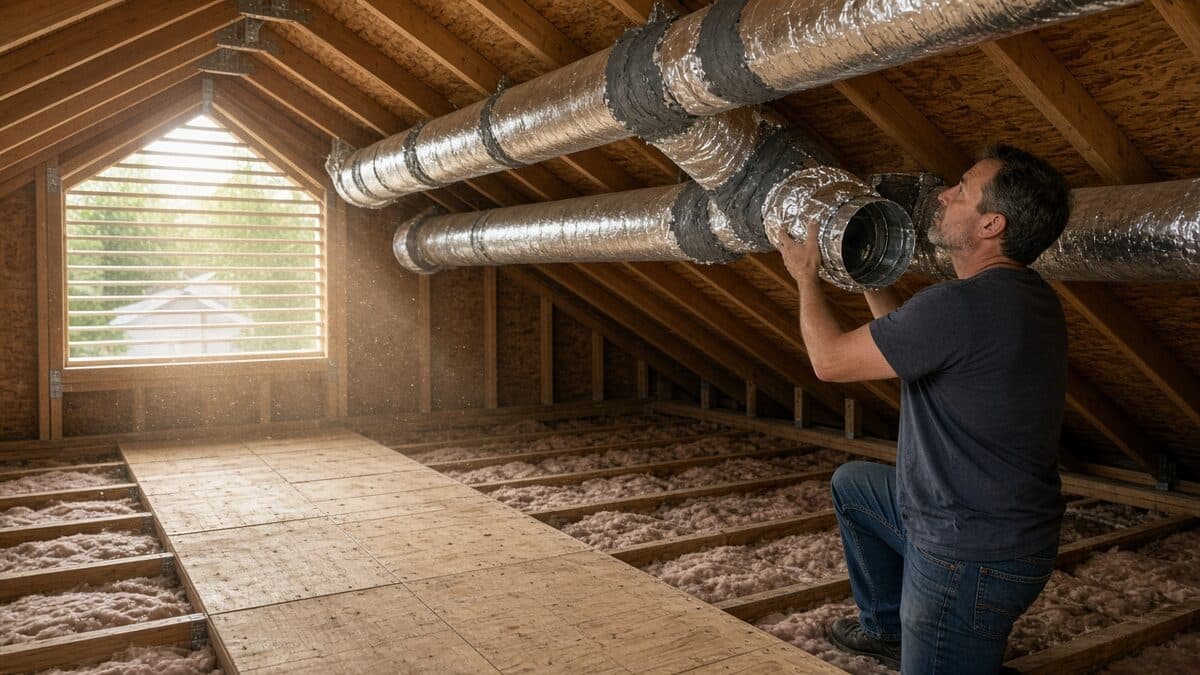
Watch for rooms that never catch up, hissing near boots, dusty streaks at joints, or a return that feels weak at the grille. Flex that is crushed, disconnected, or missing insulation is a frequent attic clue. Pressure testing confirms leaks. Guessing from the thermostat does not.
Walk the attic with a light. Look for disconnected collars, torn outer jackets, and kinks where someone stepped on a run. Feel the return grille while the system is on. Weak pull plus dusty streaks at metal joints usually means leaking ducts on central air, not a “lazy” compressor.
Skip annual duct cleaning unless you have had rodents or a remodel. Cleaning rarely changes airflow enough to notice. Sealing and insulating the actual holes does.
Why sealing beats dropping the setpoint
Sealing first is smarter than dropping the setpoint because cool air lost in a baking attic never cools the house. Addressing leaky HVAC ducts and insulation before peak heat keeps more cooled air in the living space. A colder thermostat only makes the unit run longer.
Mastic and UL-listed tape at joints, plus insulation restored over flex, recover supply air. That is the trade-off: a few hours of attic work versus weeks of long cycles and uneven rooms. Turning the stat down is cheaper today and more expensive every afternoon after that.
Seal leaky ducts on both supply and return. Supply leaks waste cooled air. Return leaks contaminate the mix. Insulation on the runs keeps that air from picking up attic heat on the way to the registers.
Leaky return ducts and longer runtimes
They can make the AC run longer. Leaky return ducts in a hot attic pull attic air into the system, warming the mix the evaporator must cool. The equipment then runs longer to hit the same setpoint and may never even out distant rooms. Tight, insulated returns keep the air the unit sees closer to indoor conditions.
That extra heat load is not a refrigerant problem. It is attic air riding the return. Fix the return path and the evaporator sees indoor air again. Runtime drops because the unit is no longer cooling the attic by accident.
Repair leaking ducts in the attic as soon as you notice uneven cooling, rising summer bills, or visible gaps, tears, or uninsulated flex. Waiting through a heat wave only wastes more cooled air.
When to Call a Pro
Call a licensed HVAC contractor when you see gaps, tears, crushed flex, or rooms that will not catch up, rather than covering the problem with a colder thermostat. A technician can pressure-test, reconnect boots, seal joints, and insulate attic runs. Homeowners can change filters and look for obvious disconnects. Do not crawl a 130° attic with mastic and hope.
Have the work done before the next 100° streak, not after you have already spent a week fighting hot bedrooms. PRO MAX HVAC & Appliance Repair seals and insulates attic ductwork for homes in Roseville and across the Sacramento area. Call (916) 234-5925 or book online at /contact.
Sources
Need appliance repair in the Sacramento area?
Same-day service, 180-day warranty, all major brands. PRO MAX HVAC & Appliance Repair — Carmichael, CA.