Reviewed by PRO MAX HVAC & Appliance Repair technicians, EPA 608 certified
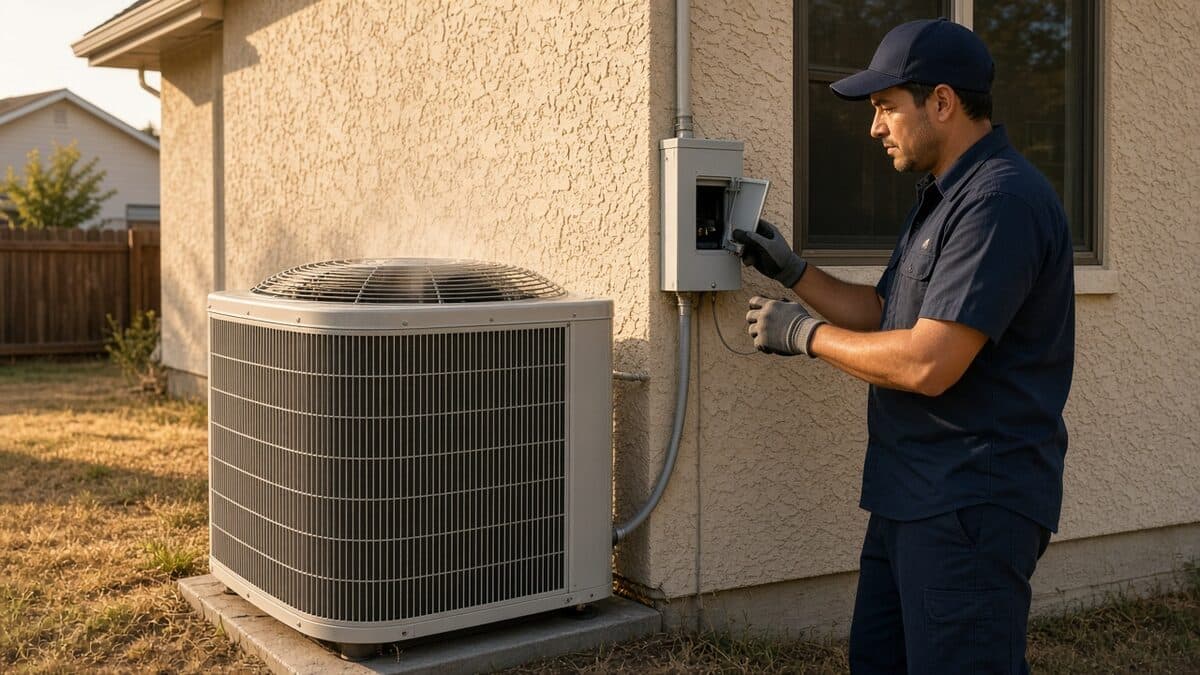
A humming outdoor condenser fan that will not turn is usually a failed run capacitor or a stuck contactor, not a breaker that needs one more reset. After weeks of Sacramento heat, both parts fail from repeated starts and high outdoor temperatures. Stop the unit, leave the capacitor alone, and book same-week service before another restart burns the fan motor.
That pattern shows up every September. The valley is still in summer, daytime highs still push past 100°F, and condensers on south and west walls never really cool off between cycles. SMUD’s Time-of-Day rate sets the weekday peak at 5 p.m. to 8 p.m. from June through September. A dead outdoor fan in that window means the house soaks heat right when the rate is highest and the Delta breeze has not shown up yet.
Capacitor or Contactor
A weak run capacitor is the most common reason the outdoor fan hums and stays still; a pitted or stuck contactor is the other. The capacitor gives the fan motor a short boost so it can break inertia and start spinning. Heat and short on-off cycles cook that part. The top of a failed dual capacitor often bulges or weeps oil. Once it is outside the manufacturer’s tolerance, the motor hums, the blade does not move, and the compressor may try to start on the same weak part.
The contactor is the heavy switch that passes line power to the fan and compressor when the thermostat calls. After a long heat streak the points pit, weld, or chatter. A welded contactor can keep the outdoor unit powered when it should be off. A contactor that will not pull in cleanly leaves the fan without solid voltage. From the yard both failures look the same: a hum, a still blade, warm air at the registers.
We see both on the same call more often than homeowners expect. As a hypothetical, picture an older condenser behind a ranch house in Carmichael that has already been reset several times over a weekend. The dual capacitor is swollen on top. The contactor points are black and cratered. If the fan motor still turns freely once power is locked out, the motor does not need replacement—but one more restart can cook it. A filter that has not been changed in years makes the system run longer and start more often. In that pattern, the parts that fail are the capacitor and the contactor, not a breaker that needs another flip.
Skip guessing from the sound alone. A hum with a still fan means the outdoor unit is getting power and the fan motor is not turning. It does not tell you which part failed. If the breaker already stayed on, the breaker is not the problem.
Why Another Restart Is the Wrong Move
Another restart is the wrong move because a fan that cannot start sits stalled and overheats its own windings. Each attempt dumps heat into the motor. Whatever life is left in the capacitor takes another hit. A contactor with pitted points arcs again. After long Sacramento heat waves, capacitors and contactors fail first because they cycle hardest. A motor that has already overheated from a stalled start may need replacement too, which is why another restart is a bad gamble.
Do not push the blade by hand. Do not open the electrical panel. A weak capacitor can let the motor catch and come up to speed if someone shoves the blade, and that blade will take a finger. A welded contactor can leave the unit live even with the thermostat off. A run capacitor also stores energy and can shock you after the disconnect is off. The U.S. Consumer Product Safety Commission warns that capacitors hold a dangerous charge after power is removed.
Resetting the breaker does not recharge a dead capacitor or clean burned contacts. If the breaker already held and the fan still will not turn, shut the system off.
What You Can Do Before the Truck Arrives
Turn the thermostat off and leave the outdoor disconnect off. That is the whole safe homeowner step. Clear leaves and cottonwood fluff from the outside of the coil only if you can do it without removing the top or touching wires. A blocked blade can stop a fan, but most of these September calls are electrical, not a stick in the cage. If you have to pull the fan top to see the blade, stop. That is where the capacitor lives.
Do not buy a capacitor and match it by looks. The microfarad rating and voltage have to match the label on the old part and the motor, and a capacitor that has already failed once should not go back in. Do not test it by shorting the terminals with a screwdriver. That burns people, and a dead short across a live circuit can weld a contactor that was still usable.
Leave the indoor fan off too once the outdoor unit is shut down. Moving air with no cooling just stirs the heat and makes the house feel worse by evening, right into that 5 p.m. to 8 p.m. peak.
When to Call a Pro
Call a pro the same week if the outdoor fan hums and will not spin, the breaker has already stayed on, or you can see a swollen capacitor through the grille. Age plus repeated hot-weather starts shortens capacitor life even when the unit still cooled on milder days in June. September is late to gamble on one more start. A seized fan motor or a jammed blade can stop the fan too. Only a meter and a locked-out inspection separate those from a bad capacitor.
Hire a licensed contractor. In California this work belongs under a C-20 license, which you can confirm through the Contractors State License Board. An unlicensed swap that puts in a capacitor and leaves a pitted contactor will be back, or you will, when the motor fails.
On the visit the technician should measure the capacitor, inspect the contactor, and check whether the fan motor is still usable before the system runs again. Replace the capacitor when it tests outside the manufacturer’s tolerance, looks swollen or leaking, or the outdoor fan hums and will not start. Replace the contactor when the points are pitted, welded, or will not pull in cleanly. Replace the fan motor only if it is seized, grounded, or already overheated from stalled starts. Changing a motor that still spins free wastes your money. Leaving a burned contactor next to a new capacitor is the expensive version of the same mistake.
If the house has been without cooling through a 100°F afternoon, book the repair before you keep cycling the breaker overnight. The fan motor does not get a second set of windings.
PRO MAX HVAC & Appliance Repair handles this call across the Sacramento area, including Carmichael. Call (916) 234-5925 or book online on our contact page. We will test the capacitor and the contactor, tell you if the fan motor is still good, and get the condenser running without another blind restart.
Sources
Need appliance repair in the Sacramento area?
Same-day service, 180-day warranty, all major brands. PRO MAX HVAC & Appliance Repair — Carmichael, CA.