Reviewed by PRO MAX HVAC & Appliance Repair technicians, EPA 608 certified
An AC refrigerant leak at the indoor coil is never fixed by a recharge alone, because the new refrigerant leaks out the same hole. Find the leak, then decide: braze a single accessible spot, replace the coil if it is corroded or still under warranty, or replace the whole system if it runs on R-22. That last group is shrinking fast. The U.S. EPA ended production and import of R-22 on January 1, 2020, so every pound that goes into an older system now comes from recovered or stockpiled supply. Pouring scarce refrigerant into a leaking coil just buys a few weeks.
In a heat wave like the one pushing the Sacramento area past 100°F this week, a low charge shows up fast. The system runs all afternoon and the house never quite cools.
Symptoms of a Refrigerant Leak
The clearest signs are weak cooling and long run times. Your system moves heat by circulating refrigerant, and with less of it in the loop, it moves less heat per hour of running.
Other signs follow from that. Ice forms on the large insulated copper line at the outdoor condenser or on the indoor coil, because the coil gets colder than it should when the charge drops. You can hear a faint hiss or bubbling near the coil on a larger leak. And refrigerant carries compressor oil with it, so a leak often leaves an oily, dust-caked spot on the coil or at a fitting.
If your electric bill jumped this summer without a matching jump in use, that fits too.
Why Indoor Coils Leak
Most indoor coil leaks come from corrosion of the thin copper tubing, not from damage. The common culprit is formicary corrosion: organic acids from household cleaners, adhesives, paints and building materials react with copper and eat tiny tunnels through the tube wall. The leaks are pinholes, often several at once, and they show up anywhere from a few years to many years into a coil's life.
Vibration is the other big cause. A tube that rubs against a bracket or another tube wears through over time. Loose flare fittings and service valves can leak too, and those are the cheap ones to fix.
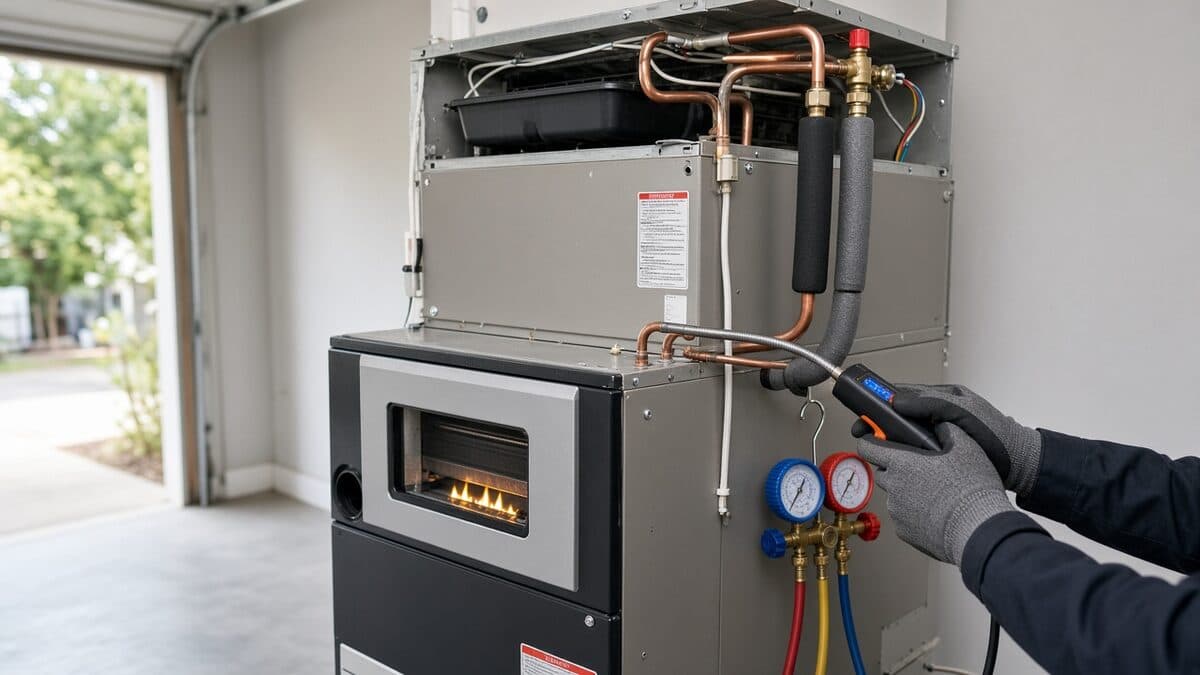
The coil sits on top of your furnace, often in a garage or hall closet, and it shares that space with whatever else is stored there. A garage with paint cans, pool chemicals and cleaning supplies stacked around the furnace is a rough place for a copper coil.
How a Technician Finds the Leak
A leak search comes before any repair decision. A technician uses an electronic leak detector, bubble solution on fittings, or a nitrogen pressure test that isolates the indoor and outdoor sides to see which one loses pressure. Some add UV dye and come back later with a light.
This matters because the coil is not always the problem. A leaking service valve at the condenser or a loose flare fitting costs far less to fix, and replacing a coil when the leak is somewhere else wastes the money entirely.
Only an EPA-certified technician can legally handle refrigerant, and intentionally venting it is illegal under Section 608 of the Clean Air Act. Ask to see the technician's certification if you are not sure.
Repair the Leak or Replace the Coil
Repair the leak when it is a single spot the technician can reach and braze, such as a fitting, a return bend or a line connection. That is a solid, lasting AC repair.
Replace the coil when the leak is in the middle of the coil face or when there are multiple pinholes. Patching one pinhole on a corroded coil just moves you to the next one. Check the warranty first: many manufacturers cover the coil as a part for years when the equipment was registered, which takes most of the sting out. Labor and refrigerant are usually extra.
Some replacement coils use aluminum tubing, which resists formicary corrosion. Ask about it.
When to Replace the Whole System
Replace the system instead of the coil when it runs on R-22, when the outdoor condenser is near the end of its life, or when this is the second coil. Putting a new coil on a fifteen-year-old system leaves the compressor, fan motor and furnace as old as they were.
New systems today ship with lower-impact refrigerants like R-454B or R-32 under EPA rules, and those need matched equipment, so a coil swap is not an upgrade path to them. If you go that route, look for ENERGY STAR certified equipment.
Skip the Leak Sealer
Leak sealer is sold as a cheap fix, and we do not recommend it on a home system. It works only on very small leaks, if at all, and it can coat valves and metering devices from the inside. It can also contaminate a technician's recovery equipment, so many contractors will not work on a system that contains it. On an indoor coil, it only delays the real repair.
When to Call a Pro
Call a technician as soon as you see ice on the lines, oily spots on the coil, or a system that runs for hours without cooling the house. Turn the AC off if you find ice, and let it thaw before running it again, because running a low charge can overheat the compressor.
Our position: never pay for a recharge without a leak search. Braze single, reachable leaks, replace corroded coils, and replace R-22 systems instead of feeding them.
A typical heat-wave call looks like this: a fifteen-year-old system in a Fair Oaks garage, a recharge last summer and another the summer before, and an indoor coil with oily corrosion along the bottom bends. That is a coil or system replacement, not a third recharge.
PRO MAX HVAC & Appliance Repair handles refrigerant leak searches and coil replacements across the Sacramento area. Call us at (916) 234-5925 or book a visit online on our contact page.
Sources
Need appliance repair in the Sacramento area?
Same-day service, 180-day warranty, all major brands. PRO MAX HVAC & Appliance Repair — Carmichael, CA.