Reviewed by PRO MAX HVAC & Appliance Repair technicians, EPA 608 certified
A gas pack unit that will not heat, or that blows cold air, is usually stopped by one of five things: the thermostat setting, a clogged filter at the indoor return grille, a tripped outdoor disconnect, debris around the cabinet, or an ignition fault. The first four you can check in about fifteen minutes. The fifth needs a technician.
The filter is where most of these calls end. ENERGY STAR maintenance guidance is to check the filter every month and change it at least every three months, and owners of package units miss it more than anyone, because the filter is not where they expect it to be.
How a Gas Pack Unit Heats Your Home
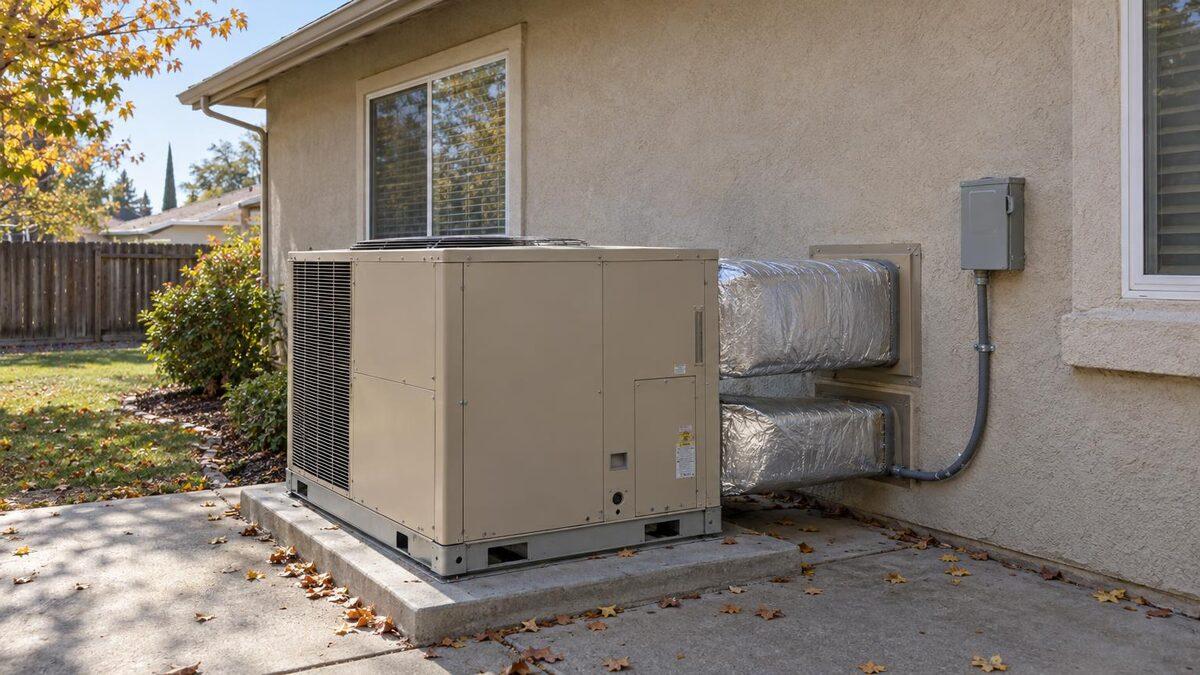
A gas pack is a gas furnace and a central air conditioner built into one outdoor cabinet. The burners, heat exchanger, compressor, coils and the blower that serves both all sit together, on the roof or on a concrete slab beside the house. Two large ducts, one supply and one return, run through the wall or roof into the duct system.
Nothing heats the house from a closet or the garage. That is the first thing that confuses new owners, and package units are common on single-story tract homes around Sacramento.
In heat mode the sequence is the same as an indoor furnace. The thermostat calls for heat, a small inducer fan clears the burner compartment, the igniter lights the burners, a flame sensor proves the flame, and after a short delay the main blower pushes warm air into the house.
When any step fails, the board shuts the burners off. If the blower keeps running, you feel cold air.
Start With the Thermostat and the Filter
Check the thermostat first. It should be on Heat, the fan on Auto, and the setting at least five degrees above the room temperature. A fan set to On runs the blower nonstop, so between heating cycles it pushes room-temperature air through the vents and the house feels like the heat is broken.
Then find the filter. On most gas pack units it lives inside the house, behind the return air grille, which is usually a large louvered panel in a hallway ceiling or wall. It swings down on hinges or comes off with two clips.
A gray, matted filter starves the unit of air. The heat exchanger overheats, the high-limit switch opens, the burners shut off and the blower keeps running to cool things down. That is the classic "warm for two minutes, then cold" complaint.
Some package units also have a filter rack inside the cabinet. Ask your technician whether yours has a second one, so you are not changing one filter while another stays clogged.
Check the Outdoor Disconnect and Breaker
The power check is outside. A gas pack has an electrical disconnect box mounted on the wall near the unit, and the pull-out block or lever inside it has to be fully seated. Gardeners and painters bump these more often than you would think.
Then check the breaker in your main panel. Switch it fully off and back on if it looks even slightly out of line with the others.
Clear Around the Cabinet
A gas pack lives outdoors year-round, and fall in the valley fills the space around it with leaves, pine needles and whatever got stored against the side of the house over summer. Clear at least a couple of feet around the cabinet and keep the vent hood on the side of the unit, where exhaust leaves, free of leaves and branches.
Do this from the outside only. Leave the burner compartment and the panels closed; anything behind them belongs to a licensed technician.
Look for signs of animals too. Wasps, birds and rodents like the shelter of a package unit, and a nest in the wrong spot blocks airflow or chews wiring.
A Typical No-Heat Gas Pack Call
A typical first-cold-week call from a Citrus Heights ranch house goes like this: the gas pack sits on a slab in the side yard, the heat runs for a minute or two, and then the vents blow cold for the rest of the cycle. The owners moved in last spring and have been changing a filter they found in the garage, for a furnace they do not have.
The real filter is behind a ceiling grille in the hallway, and it has not been changed in a long time. The limit switch has been tripping on every cycle. A new filter fixes the heat that afternoon.
That one is common enough that we check the return grille before we open the unit.
Ignition Problems Look the Same From Inside
From inside the house, an ignition fault and a limit trip feel identical: the blower runs and the air is cold. The difference is in the cabinet. A dirty flame sensor lets the burners light and then shuts them off after a few seconds. A cracked igniter never lights them at all. A pressure switch problem stops the sequence before ignition starts.
The control board keeps a fault code, and a technician reads it from the status light inside the cabinet. Outdoor units add their own causes, such as a rusted burner or a wet control board after a storm, which an indoor furnace never sees. All of it is furnace repair work, even on a unit that sits outside.
When to Call a Pro
Call a pro when the thermostat is right, the return filter is clean, the disconnect and breaker are on, and the gas pack unit still blows cold or does nothing. Call sooner if it short cycles, clicks without lighting, or trips the breaker again after one reset. In California, heating work belongs to a contractor with a C-20 license, which you can confirm in under a minute on the Contractors State License Board site.
PRO MAX HVAC & Appliance Repair handles furnace repair on gas pack and package units across the Sacramento area. Call (916) 234-5925 or book a visit on our contact page to get the heat back on.
How to check a gas pack unit that is not heating
Check the thermostat
Set the thermostat to Heat, the fan to Auto and the temperature at least five degrees above the room reading.
Replace the return filter
Find the filter behind the return grille inside the house, usually in a hallway ceiling or wall, and replace it if it is gray or matted.
Check the disconnect and breaker
Make sure the outdoor disconnect next to the unit is seated and the breaker in the panel is fully on.
Clear around the cabinet
Remove leaves, branches and stored items from around the unit and its vent hood without opening any panels.
Watch one heating cycle
Wait a few minutes after the call for heat and note whether the unit's fan starts, whether warm air reaches the vents and how long it runs.
Sources
Need appliance repair in the Sacramento area?
Same-day service, 180-day warranty, all major brands. PRO MAX HVAC & Appliance Repair — Carmichael, CA.