Reviewed by PRO MAX HVAC & Appliance Repair technicians, EPA 608 certified
A furnace leaking water when the heat is on is almost always a high-efficiency furnace whose condensate is not making it to the drain. The fix is usually small: a clogged drain line, a condensate pump that quit, or a hose that slipped off its fitting. Move fast anyway. The U.S. EPA advises drying water-damaged materials within 24 to 48 hours to keep mold from growing, and a slow drip under a furnace in a closet or garage soaks drywall and subfloor long before anyone sees it.
Sacramento furnaces sit idle from May to October. The first cold mornings of November are when a drain that dried out, collected dust or grew algae over the summer finally gets tested.
Why a Furnace Makes Water at All
A high-efficiency furnace makes water because it pulls so much heat out of its exhaust that the water vapor in the flue gas condenses into liquid. That is by design. Any gas furnace rated 90% efficient or higher is a condensing furnace, every model that carries the ENERGY STAR label for gas furnaces is one of them, and on a cold day one can produce a few gallons of water.
That condensate collects in a trap on the side of the cabinet, then flows out through a drain tube to a floor drain, an outside line or a condensate pump.
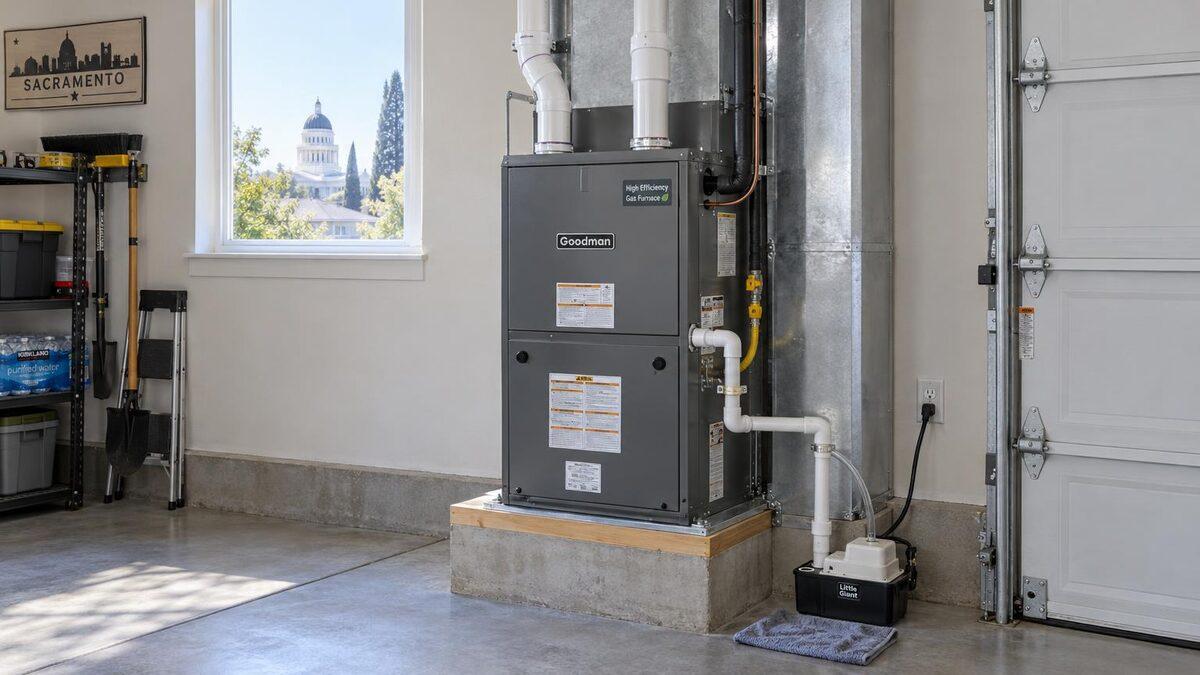
You can tell which kind of furnace you have in ten seconds. White PVC pipes coming out of the top or side mean a condensing furnace. A single metal flue pipe means a standard furnace, and a standard furnace should stay dry.
If a standard furnace is leaking, the water is coming from somewhere else: the AC coil sitting on top of it, a whole-house humidifier, or rain getting down the vent. Those are different problems with different fixes.
Find Where the Water Starts
The quickest way to find a furnace condensate leak is to dry everything and watch it come back. Wipe the floor and the bottom of the cabinet with a towel, turn the heat up a few degrees and give it 20 minutes.
Then look at the joints. Condensate drips at a rubber hose connection, water running down the outside of the PVC pipe, a wet spot under the pump, or water seeping from the cabinet seam each point to a different part.
A flashlight and a dry paper towel pressed against each joint will find it faster than staring at the puddle.
Here is a typical first-cold-week call. The furnace is in a hall closet of a 1970s single-story house in Citrus Heights, carpet edge damp, homeowner sure the furnace is "broken." The furnace runs fine. The drain tube behind it has a kink where someone pushed a storage bin against it in summer, water backs up, and it spills out of the trap's overflow. Straighten the tube, add a support clip, done in a few minutes.
Not every call is that easy, but that is the pattern: condensate follows the path of least resistance, and the furnace itself is rarely the thing that failed.
When the Furnace Condensate Drain Is Clogged
A clogged condensate drain line is the most common cause of a furnace drain leaking in winter. Algae and slime grow in the line over summer, especially when the AC coil drains through the same tube. Dust from a dirty filter adds to it.
Trace the drain tube to where it ends. If it runs outside, look for a blocked or buried end, a mud dauber nest, or a line that sags and holds water in a low spot. If it empties into a floor drain or laundry standpipe, check that the end has not slipped out.
Flushing the outside end and fixing a sag is reasonable homeowner work. Leave the furnace's internal trap and the hoses inside the cabinet alone. Those connect to the inducer and pressure switch, and a trap that is drained, removed or reinstalled wrong can keep the furnace from lighting at all.
Our take: if the line clogs every fall, stop flushing it every year and have the slope corrected. A line with steady fall to its exit rarely clogs. A line with a belly in it always will.
When the Condensate Pump Stops Pumping
A failed condensate pump is the second big cause of a high-efficiency furnace leaking water. Furnaces in garages and closets often cannot drain downhill, so a small condensate pump lifts it out.
To test one, pour a cup of water into the reservoir. The motor should kick on within seconds and empty it. If it hums without pumping, stays silent, or the reservoir fills to the brim, the pump or its float switch has failed.
Pumps are cheap and wear out. Once a pump is several years old and starting to stick, replace it rather than cleaning it again.
Water That Is Not From the Furnace
Some leaks blamed on the furnace start above it. In most homes around here the AC evaporator coil sits right on top of the furnace and shares its drain. A cracked coil drain pan, or a pan still full from summer, can drip through the furnace cabinet when the blower starts.
A humidifier on the supply duct has its own water line and drain. If the drip shows up near the duct instead of the cabinet bottom, check that first.
When to Call a Pro
Call a technician when the water is coming from inside the cabinet, when the furnace keeps shutting off or will not light, or when the leak returns after you clear the drain. Those point to the internal trap, a cracked hose, a blocked port on the pressure switch, or a coil pan, and they need the cabinet opened.
Shut the furnace off at the thermostat if water is pooling or reaching the controls; a soaked control board turns an inexpensive repair into an expensive one.
PRO MAX HVAC & Appliance Repair handles furnace repair across the Sacramento area. Call (916) 234-5925 or book a visit on our contact page and we will find where the water is coming from before it damages the floor.
How to find where a furnace water leak is coming from
Check the furnace type
Look at the vent pipes. White PVC pipes mean a high-efficiency condensing furnace that makes water; a metal flue means a standard furnace that should stay dry.
Find the wet spot
Dry the floor with a towel, run the heat for 20 minutes and see where the drip starts: a hose joint, the pump, the cabinet bottom or the coil above the furnace.
Follow the drain line
Trace the drain tubing to where it empties, such as a floor drain, a pump or an outside line, and look for kinks, sags or a slow or blocked end.
Test the condensate pump
If there is a pump, pour a cup of water into its reservoir. The motor should start and empty it; if it hums, stays silent or overflows, the pump or its float has failed.
Call a technician for the rest
Leave the furnace trap, internal hoses and the coil to a technician, and shut the furnace off at the thermostat if water reaches the controls.
Sources
Need appliance repair in the Sacramento area?
Same-day service, 180-day warranty, all major brands. PRO MAX HVAC & Appliance Repair — Carmichael, CA.