Reviewed by PRO MAX HVAC & Appliance Repair technicians, EPA 608 certified
Yes. After weeks of September cooling, a condensate drain line that has clogged is a common reason a Fair Oaks AC shuts off. Long runtimes fill the pan, algae plugs the line, and the float switch cuts power so water does not spill into the ceiling. The house goes warm. That shutdown is protection, not a dead compressor.
The U.S. EPA tells homeowners to keep indoor relative humidity below 60 percent, and ideally between 30 and 50 percent, because excess moisture feeds mold (Indoor Air Quality). A drain pan sitting full of condensate is the opposite of that guidance. In a Fair Oaks ranch with the air handler in the attic, the water’s next stop is the drywall.
September in the Sacramento area still stacks 100-degree afternoons. The Delta breeze often holds off until evening, so the system runs for hours while the valley cooks. A short spring cycle barely wets the trap. Three weeks of continuous cooling leaves a film of slime.
Why does the drain clog after weeks of September cooling?
Algae, dust, and insulation debris are what plug the line after long cooling runs. The clog sits in the drain path, not in a failed compressor.
Warm, wet PVC is a good home for that jelly-like growth. It starts in the trap, where water is supposed to stand as a seal, then creeps down the horizontal run. A dirty filter adds particles to the wet film. Insulation fibers from a sloppy attic install do the same job.
Last September we opened a 2009 air handler in a 1970s Fair Oaks tract house off a street of similar ranches. The filter was the one the previous owner left, gray and collapsed. The trap was packed. The pan sat about an inch from the lip. The hallway ceiling was still clean. The float switch had already opened, which is why the thermostat showed a call for cool and the blower never came on.
That pattern is the one to expect after a hot September, not a mystery refrigerant leak. More water through a neglected trap equals a plug. Skip the urge to blame the outdoor unit first.
What happens when the float switch trips?
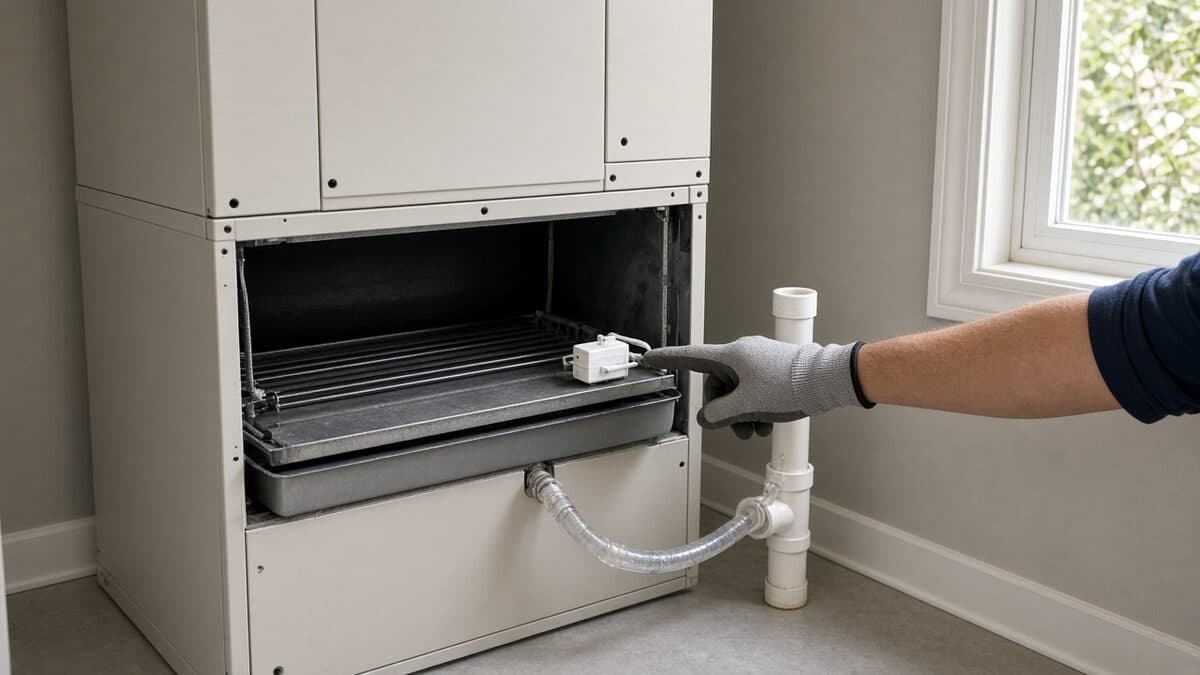
The float switch opens and shuts the system off once a clogged condensate drain pan fills, before water spills. Many central air handlers put that switch in the pan or in the secondary port on the line. Rising water lifts the float. Contacts open. Power to the cooling circuit drops.
Resetting the breaker without clearing the line brings the AC back for a short run, then it trips again. If the switch has stuck closed, the same reset lets the pan overflow. That is how a “dead AC” turns into a ceiling stain over a bedroom or a garage ceiling under an attic unit. Bypassing the switch to “get through the weekend” is the move that allows the leak. We replace a stuck switch. We do not jump it out.
A cracked pan does the same harm on a slower schedule. Water leaves through the crack instead of the drain, the switch never sees a full pan, and the stain shows up first. That pan gets replaced, not patched with tape.
What should you do before the ceiling stains?
Turn the AC off at the thermostat and at the breaker before you touch the drain. If the outdoor termination is easy to reach, clear it with a wet/dry vacuum, then flush with plain water. Skip harsh chemical mixes. They do not fix a packed trap, and some of them attack plastic pans and older fittings.
Stop if water will not flow or the pan is already full. Forcing a flush into a blocked attic line pushes water out the pan lip and into the ceiling you were trying to save. A shop vac on the outdoor end only works when the clog is near that end and the line is open enough to pull. A slime plug at the trap, twenty feet upstream, will not move.
Do not pour a pitcher of water into a full pan to “see if it drains.” You already have the answer. Leave the system off. A warm house for an afternoon is cheaper than drywall, insulation, and a stained texture ceiling.
A new filter is worth installing once the line is open. It will not clear the clog that is already there. Annual duct cleaning is a separate job and a poor substitute here. The restriction is in a half-inch or three-quarter-inch drain, not in the supply trunks.
What does a proper repair include?
Fixing the line means clearing the blockage, confirming the pan drains, and testing the float switch so the AC can run again. A licensed tech should also confirm the line pitches toward the termination and that the trap is open, not flattened or glued in backward.
On a straightforward clear, the work often falls in a typical service-call range, commonly about $150 to $300 in the Sacramento area. Access and how packed the line is change the time. An attic unit over a finished ceiling, a termination buried in shrubs, or a trap full of solid growth takes longer than a garage air handler with a clean outdoor stub. Replacing a stuck float switch or a damaged drain pan costs more. Get a written estimate before approving extra parts.
We pull the clog, flush until the water runs clear, and watch the pan empty under a real cooling call. Then we lift the float by hand and confirm the system shuts off. A switch that does not open is not “close enough.” It is the part that failed to protect the ceiling.
Pitch matters. A line that sags between hangers holds a puddle, and that puddle grows the next plug. We rehang those sections. We do not leave a low spot and call it done because the vacuum pulled water once.
When to Call a Pro
Call when the pan is full, water will not move, the ceiling is soft or stained, or the AC trips again after a reset. Those are not DIY leftovers. They are the point where a flush becomes a leak.
Call the same day if you smell musty air from the return after the system has been off, or if the secondary pan under the unit has water in it. That secondary pan is the last catch before the drywall. Water in it means the primary drain already failed.
A licensed technician clears the line, tests the switch, and tells you whether the pan or the switch needs replacement before you approve the work. Resetting power on a full pan is how a protected shutdown becomes water damage.
PRO MAX HVAC & Appliance Repair handles this shutoff across Fair Oaks and the Sacramento area, including attic units in older tract houses. Call (916) 234-5925 or book online on our contact page.
Sources
Need appliance repair in the Sacramento area?
Same-day service, 180-day warranty, all major brands. PRO MAX HVAC & Appliance Repair — Carmichael, CA.