Reviewed by PRO MAX HVAC & Appliance Repair technicians, EPA 608 certified
A furnace not reaching set temperature is almost always losing heat on the way to your rooms, not failing to make it. The usual suspects are a clogged filter, leaky or crushed ducts in the attic, and a thermostat that reads the wrong air. Ducts matter more than most people think: ENERGY STAR estimates that a typical duct system loses 20 to 30 percent of the air moving through it to leaks, holes and poor connections.
That loss hardly shows on a mild night. On the first nights in the 30s, it is the difference between 68°F and a house that stalls at 65°F with the furnace running nonstop.
Start With the Filter
A dirty filter is the most common reason a furnace stops short of the thermostat setting, and it is the cheapest to fix. A loaded filter starves the furnace of air. The heat exchanger runs hot, the high-limit switch shuts the burners off early to protect it, and the blower runs on without them.
So the furnace sounds like it is working. Air still comes out of the registers. It just is not very warm, and the house never catches up.
Pull the filter and hold it up to a light. If you cannot see through it, replace it with the correct size, arrow pointing toward the furnace. Many Sacramento homes ran the same filter through a smoky summer, and a filter that handled light AC loads in September is often loaded by the first cold week of November.
Check Where the Thermostat Sits
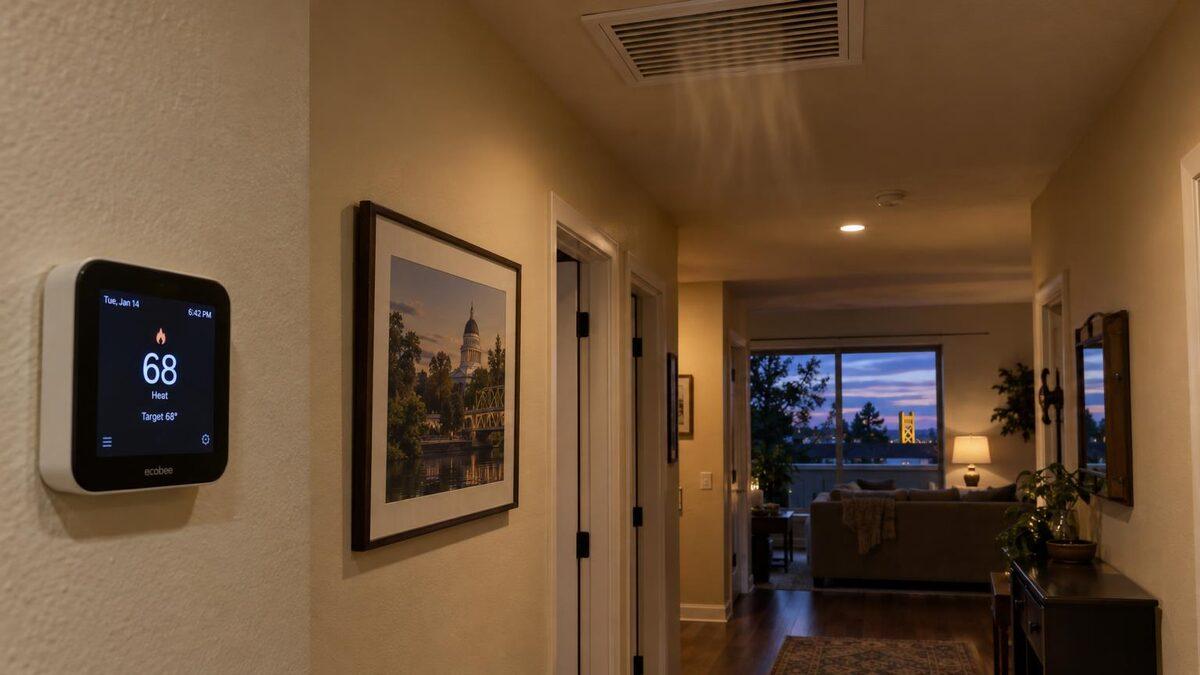
A thermostat that reads the wrong air will stop the furnace early or make the house feel colder than the display says. Check three things.
Look for direct afternoon sun on it, a supply register blowing at it, or an exterior wall or front door nearby that lets in cold drafts.
A thermostat warmed by sun or register air shuts the furnace off before the rest of the house is warm. One on a cold exterior wall does the opposite and runs the furnace long while the hallway feels fine. Confirm it is set to Heat with the fan setting on Auto, too. A fan left on "On" blows room-temperature air between cycles and makes every register feel cool.
Leaky or Crushed Attic Ducts
Leaky ducts are the biggest hidden cause of a furnace not reaching thermostat temperature in Sacramento-area homes. Most single-story houses here run their ducts through a vented attic, and in winter that attic is nearly as cold as outside.
Every leak, every loose joint and every flex duct that got stepped on during a cable install sends warm air into that cold space. The rooms at the end of the longest runs, usually the far bedrooms, feel it first.
Here is an easy comparison. Run the heat for 15 minutes, then hold your hand at the register closest to the furnace and at the farthest one. A strong, warm flow at the first and a weak, lukewarm one at the second points to a leaking, kinked or disconnected duct somewhere between them.
A typical cold-snap call looks like this: a 1970s ranch in Citrus Heights, two back bedrooms stuck at 62°F, the furnace itself in good shape. In the attic, one flex run has come off its collar at the trunk and has been heating the attic for who knows how long. Reattaching and sealing it puts warm air back in those rooms the same evening.
Our position: before anyone quotes you a bigger furnace, get the ducts inspected. Sealing and repairing ducts costs a fraction of a new furnace and fixes the actual problem.
Is the Furnace Too Small?
A furnace that is truly too small is the least likely cause in this climate. Sacramento winters are mild, and most furnaces here were sized generously, sometimes far bigger than the house needs.
Undersizing does happen after an addition, a garage conversion or a remodel that opened the floor plan without anyone revisiting the heating. The only honest way to know is a load calculation using the ACCA Manual J method, which works out how much heat the house loses on a design-cold night based on its insulation, windows and square footage. A rule of thumb based on square footage alone is not a load calculation.
A furnace with a burner or gas-valve problem can also fall short of its rated output. That shows up as a low temperature rise across the furnace, which a technician measures with two thermometers in a few minutes.
When to Call a Pro
Call a technician when a fresh filter, an open set of registers and a well-placed thermostat still leave the house short of the setting. A good visit measures the temperature rise across the furnace and the static pressure in the ducts, and checks the burners and the attic duct runs. Those numbers tell you whether the furnace, the ducts or the house is the problem, instead of guessing.
PRO MAX HVAC & Appliance Repair handles furnace repair and duct inspections across the Sacramento area. Call (916) 234-5925 or book a visit on our contact page before the coldest nights of the year arrive.
How to find why a furnace is not reaching set temperature
Check the thermostat
Confirm it is set to Heat with the fan on Auto, and make sure it is not in direct sun, over a supply register or on a drafty exterior wall.
Replace the filter
Swap in a fresh filter of the correct size; a loaded filter cuts airflow and makes the furnace shut down its burners early.
Open every register and return
Walk the house and open supply registers and clear furniture or rugs off the return grilles.
Compare air at the registers
Feel the air at the register nearest the furnace and the farthest one; a big difference points to a leaking or crushed duct between them.
Call for a load and duct check
If the house still stalls, have a technician measure temperature rise and static pressure and inspect the attic ducts.
Sources
Need appliance repair in the Sacramento area?
Same-day service, 180-day warranty, all major brands. PRO MAX HVAC & Appliance Repair — Carmichael, CA.