Reviewed by PRO MAX HVAC & Appliance Repair technicians, EPA 608 certified
When a furnace lights then shuts off within a few seconds, the flame sensor is almost always the reason. It is a thin metal rod that sits in the burner flame and tells the control board the fire is lit. When a coating builds up on it, the board cannot confirm the flame, so it closes the gas valve as a safety step and tries again. Cleaning that rod fixes most of these calls.
It also makes the case for a fall checkup. The U.S. Consumer Product Safety Commission recommends having fuel-burning heating equipment inspected by a professional once a year, and a dirty flame sensor is exactly the kind of thing that inspection catches before the first chilly night.
What You See and Hear
The pattern is distinctive. The inducer fan starts, the igniter glows or clicks, the burners light with a soft whoomp, and then three to ten seconds later the flames go out. The inducer keeps running for a moment, and then the whole sequence repeats.
If the furnace never tries to light at all, check that the thermostat is set to heat and has power before you go further. After a few tries, most furnaces stop trying and lock out. Many control boards reset on their own after about an hour. You may also see a blinking light through the small window on the lower door. That code, decoded with the chart printed inside the door, often reads as a flame sense or ignition failure.
Why the Flame Sensor Gets Dirty
The sensor works by sending a tiny current through the flame. A clean rod passes enough current for the board to see. Over months of burning, a thin layer of oxide and residue forms on the metal and weakens that signal until it falls below what the board needs.
It shows up most often the first time the heat runs each fall, after months of dust settling inside the furnace. In the Sacramento area, where furnaces sit idle from May through October and often live in dusty garages or hall closets, the first heat call is when a marginal sensor finally fails.
How to Clean the Flame Sensor
This is a reasonable homeowner job if you are comfortable opening the furnace door.
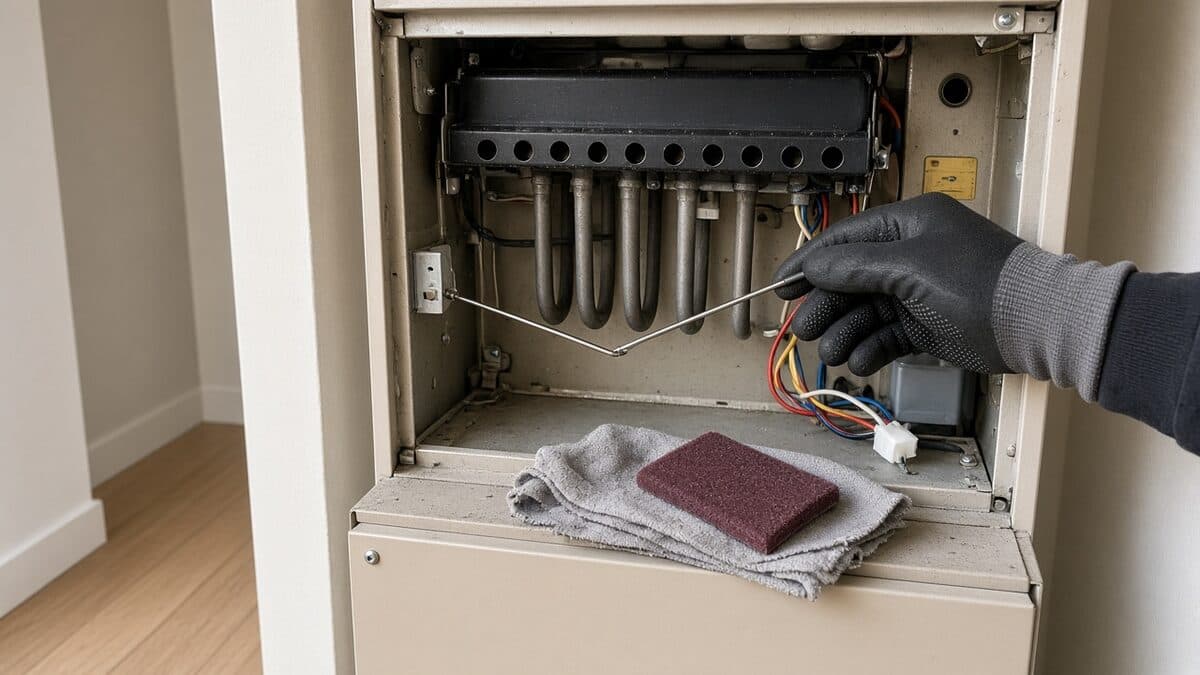
Turn off power first with the light-style service toggle next to the furnace, or at the breaker, and wait for the blower to stop. Remove the upper door. Look in front of the burners for a thin, bent metal rod with a white porcelain base, held by a single screw. That is the sensor. The igniter looks different: it is usually flat or a coil and fragile, so leave it alone.
Remove the screw and slide the sensor out. Gently rub the metal rod with a fine abrasive pad until it looks bright. Keep the pad off the porcelain, since a crack there causes the same symptom you are trying to fix. Wipe the dust off, slide the sensor back into exactly the same position, and replace the screw and door.
Restore power and set the thermostat to heat. Watch a full cycle. If the burners stay lit and the blower comes on, you are done.
When a Clean Sensor Does Not Fix It
If the furnace still lights then shuts off, the problem is somewhere else in the same safety chain. The usual suspects are a poor ground, where the sensor's signal has no good return path through the furnace chassis; a cracked porcelain insulator; a flame that lifts off the sensor because gas pressure is low or the burners are dirty; or a failing control board.
A blocked flue or a failing pressure switch can also shut a furnace down, though that usually stops it before ignition rather than a few seconds after.
These need testing. A technician measures the flame signal in microamps, checks gas pressure with a manometer, and confirms the ground. Guessing here means swapping parts that were never the problem.
A Typical First-Heat Call
The typical case in Carmichael homes: a fifteen-year-old furnace in a hall closet, a thermostat set to heat for the first time on a cool October evening, and burners that light and quit three times before the furnace locks out. The sensor rod is dull and gray. A few minutes with an abrasive pad and the furnace runs normally.
Our position is simple: clean the sensor before you call, because it is the most common cause and costs nothing. But do not keep resetting a furnace that keeps locking out. Each failed attempt is the furnace telling you a safety check failed.
When to Call a Pro
Call a technician if cleaning the sensor does not fix it, if the furnace locks out more than once after cleaning, or if you see a lazy, yellow, flickering flame instead of a steady blue one. A yellow flame points to a combustion problem that needs attention before the furnace runs much more. ENERGY STAR also recommends a heating checkup each fall, and a technician can clean the sensor, check the burners and test for safe venting in the same visit.
If you smell gas at any point, stop. Leave the house, then call PG&E from outside before you call anyone else.
PRO MAX HVAC & Appliance Repair handles furnace repair and fall heating checkups across the Sacramento area. Call us at (916) 234-5925 or book a visit online on our contact page.
How to clean a furnace flame sensor
Shut off power
Turn off the furnace's light-style service switch or its breaker and wait for the blower to stop.
Open the burner compartment
Remove the upper furnace door and find the thin metal rod with a white porcelain base sitting in front of one burner.
Remove the sensor
Take out the single screw holding the sensor bracket and slide the sensor out, leaving its wire attached if possible.
Clean the rod
Rub the metal rod gently with a fine abrasive pad until it is bright, keeping off the porcelain, and wipe away the dust.
Reinstall and test
Put the sensor back in the same position, replace the door, restore power and set the thermostat to heat to watch a full cycle.
Sources
Need appliance repair in the Sacramento area?
Same-day service, 180-day warranty, all major brands. PRO MAX HVAC & Appliance Repair — Carmichael, CA.