Reviewed by PRO MAX HVAC & Appliance Repair technicians, EPA 608 certified
A gas oven that is slow to preheat almost always has a weak igniter. The glow bar under the oven floor has to get hot enough to open the gas valve, and as it ages it takes longer to get there, so the burner lights late on the first heat-up and again every time it cycles. You can confirm it at home with a timer and an oven thermometer in about twenty minutes.
The timing matters before the holidays. The USDA Food Safety and Inspection Service advises roasting a turkey at an oven temperature no lower than 325°F and cooking it to 165°F inside. An oven that sags below its dial setting turns a four-hour bird into a five-hour one, with the side dishes waiting behind it.
How a Gas Oven Lights Its Burner
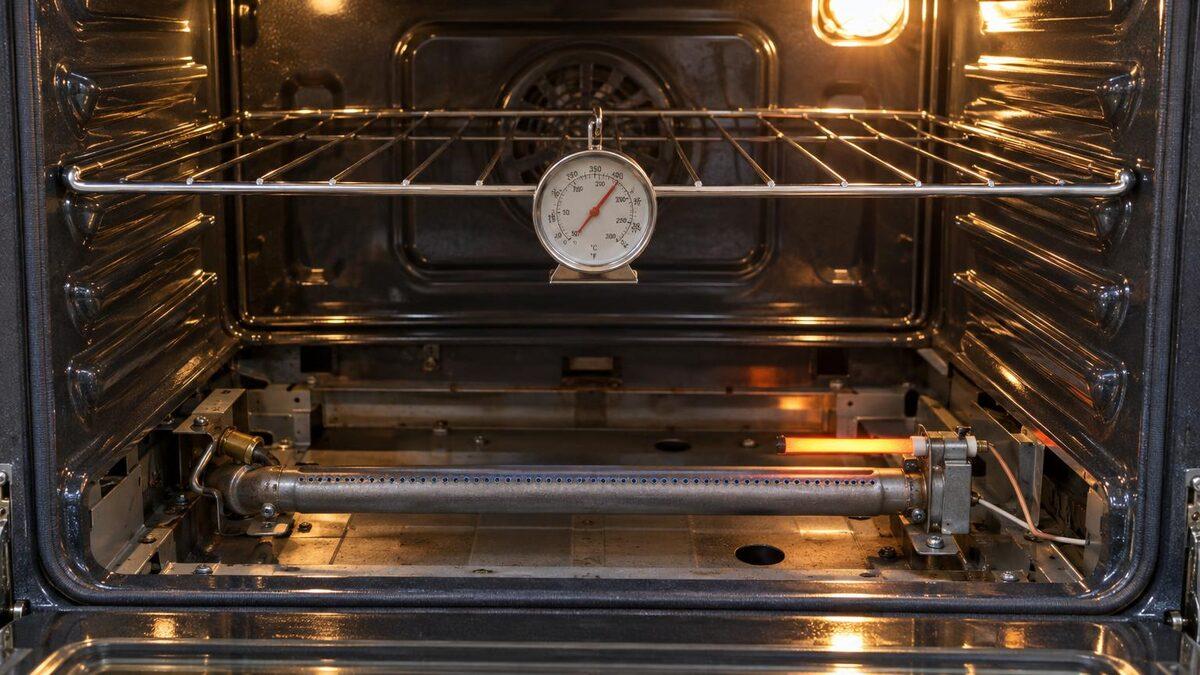
Many gas ovens use a hot surface igniter, a gray or silver glow bar mounted next to the bake burner under the oven floor. It does two jobs at once.
It gets hot enough to light the gas, and it draws electrical current through a safety valve wired in series with it. That valve opens only when the igniter pulls enough current, which happens only when the igniter is fully hot. The design is deliberate: no hot igniter, no gas.
As a glow bar ages, its resistance climbs and the current it draws drops. It still glows bright orange, which is why owners assume it is fine, but it takes longer and longer to pull enough current to open the valve. Eventually it glows and the burner never lights at all.
Why a Weak Igniter Slows the Whole Bake
A weak igniter costs time twice. On the first preheat the burner lights late, so an oven that used to reach 350°F in ten to fifteen minutes takes twenty-five or thirty.
Then it costs you again during the bake. The burner shuts off when the oven reaches temperature and relights when it drops. Each relight now waits on the slow igniter, so the oven dips further below the set point before the flame returns. That is the oven that says 350 and bakes like 320.
How to Time Your Gas Oven Igniter
Start with a cold oven. Take the racks out, and if your model has a removable floor panel, lift it out so you can see the burner tube and the glow bar beside it.
Set the oven to bake at 350°F. Start a timer the moment the igniter begins to glow and stop it when the burner lights with a whoosh and a blue flame along its length.
On a healthy igniter that takes well under a minute and a half. If yours runs past about 90 seconds, or glows for several minutes with no flame, the igniter is weak.
Then put an oven thermometer on the center rack and close the door. Note how long the oven takes to reach temperature and whether it holds there through a few burner cycles. Some swing is normal; around 25 degrees either way is typical as the burner cycles. A thermometer that keeps sagging well below the dial confirms what the timer told you.
Other Causes Worth Ruling Out
The igniter causes most slow preheats, but not all of them. Three others show up often enough on an appliance repair visit to check first.
- Clogged burner ports: spills from a holiday past bake onto the burner tube and block the small holes, so the flame comes up short or uneven. Look for a flame that runs only part of the burner.
- A failing temperature sensor: the thin probe on the back wall of the oven tells the control when to cycle. A sensor reading wrong makes the oven stop short or overshoot, even with a healthy igniter.
- A worn door gasket: a flattened or torn seal leaks heat at the top of the door. You can see it, and on many ovens you can feel heat on your hand near the top edge during a bake.
Convection mode is not a cause, but it changes the numbers. Many ovens lower the set temperature on their own in convection, so compare like with like when you test.
A Typical Pre-Holiday Oven Call
A typical mid-November call from a Fair Oaks kitchen goes like this: a freestanding gas range, about twelve years old, that "takes forever to preheat" and has been browning cookies on top while the bottoms stay pale. The igniter glows bright, which is why the owner assumed it was fine.
Timed from the first glow, the burner takes a little over two minutes to light. The oven thermometer settles around 320°F with the dial at 350. A new igniter brings the light-off back to well under a minute, and the oven holds its set point through the next bake.
The swap takes about half an hour. Waiting until the burner stops lighting entirely usually means finding out on a holiday morning.
Replace the Igniter Before It Fails Completely
Our position: replace a slow igniter now rather than nursing it through the season. A glow bar that has started to slow down does not recover, and it fails completely without warning. On an oven older than ten years, an igniter is a routine oven repair, and it is almost always worth doing.
Use the igniter specified for your model. Glow bars look alike across brands, but the current they draw is matched to the safety valve, and the wrong one leaves you with the same slow oven. Older ranges are also worth a quick look on the Consumer Product Safety Commission recall search by model number before you invest in repairs.
When to Call a Pro
Call a pro when the igniter takes longer than about 90 seconds to light the burner, when it glows and never lights it, or when the oven thermometer runs well below the dial after a full preheat. Those point to the igniter, the temperature sensor or the gas valve, and all three are behind panels that a technician should open. Leave anything involving the gas supply or the valve to a professional.
PRO MAX HVAC & Appliance Repair fixes slow gas ovens across the Sacramento area, often in a single visit with the igniter on the truck. Call (916) 234-5925 or book a visit on our contact page to have your oven ready before the holiday.
How to time a gas oven igniter
Start with a cold oven
Let the oven cool fully, remove the racks and lift out the oven floor panel if your model has one, so you can see the bake burner.
Set the oven to bake
Set the oven to 350°F and start a timer the moment the igniter begins to glow.
Time the flame
Stop the timer when the burner lights. Note the time and whether the flame runs the full length of the burner.
Check the temperature
Hang an oven thermometer on the center rack and note how long the oven takes to reach 350°F and whether it holds there.
Compare the numbers
If the burner took more than about 90 seconds to light, or never lit, the igniter is weak and needs replacing.
Sources
Need appliance repair in the Sacramento area?
Same-day service, 180-day warranty, all major brands. PRO MAX HVAC & Appliance Repair — Carmichael, CA.