Reviewed by PRO MAX HVAC & Appliance Repair technicians, EPA 608 certified
If you want to run your oven's self-clean cycle before Thanksgiving, do it one to two weeks ahead, not the night before. The cycle heats the cavity far past any baking temperature, and owner manuals from makers like Whirlpool put a typical cycle at two to four hours, plus cool-down before the door unlocks. That is a long stretch of heat on parts that have been quiet all year.
Most ovens come through it fine. The ones that fail usually go right then, during or just after the cycle, and the calendar is the reason that matters. A fuse or lock that dies on November 12 is a repair visit. The same failure on Thanksgiving morning is a turkey with nowhere to go.
Why the Self-Clean Cycle Is Hard on an Oven
The self-clean cycle is hard on an oven because it runs hotter and longer than anything else you ask of it. It burns food residue down to ash at temperatures well above the broil setting, and it holds that heat for hours.
Three parts take most of the punishment.
The thermal fuse sits behind the back panel or under the cooktop and cuts power if the oven runs too hot. Under self-clean heat, an aging fuse blows even when nothing is wrong. The oven then goes dead or will not heat.
The door lock motor and switch drive a latch that keeps the door shut during the cycle. A worn motor or a switch that no longer reports "unlocked" leaves the door stuck closed.
The control board sits close to the oven's heat, and an older board with a weak relay or a tired solder joint gives up during the long hot stretch. Some boards show an error code; others just go dark.
Ovens that are ten or more years old, or that have never run a self-clean at all, carry the most risk. A newer oven that cleans itself every few months is a much safer bet.
When to Run Self-Clean, and When to Skip It
The best time to run self-clean is one to two weeks before a big cooking day, on a day you will be home for the whole cycle and the cool-down. That gap is enough time for a repair visit and for most common parts to arrive if something fails.
Skip it if the oven is only lightly dirty. A paste of baking soda and water left overnight, then wiped out with a damp cloth, handles splatters and a drip or two without any heat at all. Save the full cycle for real buildup.
Our position: if your oven is more than ten years old and you are hosting this year, clean it by hand. The risk of the cycle taking out a fuse or a board in the last week before the holiday is not worth a shinier oven floor.
When you do run it, pick the shortest soil setting that fits the mess. A longer cycle adds heat stress without much extra benefit on a lightly soiled oven.
Prep That Keeps the Cycle Short and Clean
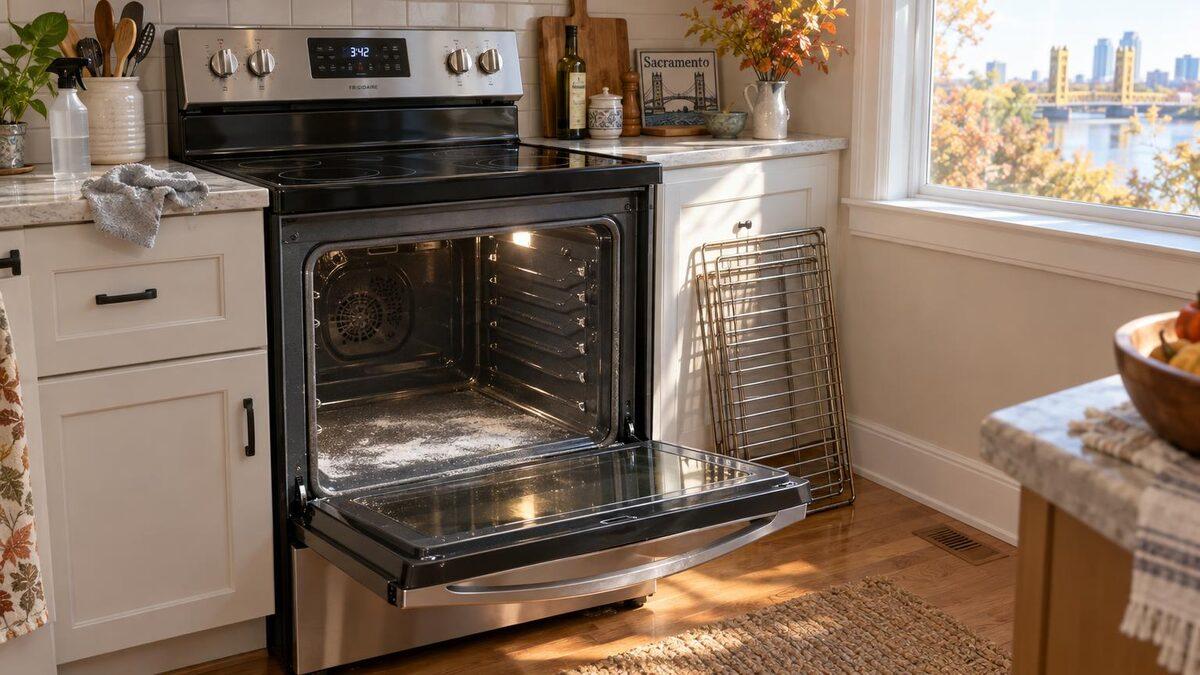
Good prep keeps the cycle short, cuts the smoke and makes cleanup easier. Pull out the racks unless your manual says they are rated for self-clean, because the heat discolors standard chrome racks and makes them stick in their slides. Take out the broiler pan, any oven thermometer and every scrap of foil.
Scrape up loose food and grease puddles first. A cup of burned-on pie filling makes far more smoke than the thin film the cycle is designed for.
Turn on the range hood or crack a window. Burning off a year of residue gives off an odor, and in a closed Sacramento kitchen in November, with the windows shut against cool mornings, it lingers.
Here is a typical pre-holiday call: a ten-year-old freestanding electric range, a self-clean run the weekend before Thanksgiving, and a display that went blank partway through. The usual cause is a blown thermal fuse, a small part and a short repair when it is in stock. Run that same cycle the night before the holiday and the story ends differently.
If the Door Lock Is Stuck After Self-Clean
A door that stays locked right after the cycle is normal. The lock holds until the cavity cools, and that can take an hour or more after the cycle ends.
If the oven is cool to the touch and the door is still locked, turn the oven's breaker off for a minute and back on. That resets the control and often releases the lock.
A door that stays locked after a reset points to a failed lock motor, a broken latch or a switch that no longer tells the board the door is clear. Do not pry it. Forcing the latch bends the door hinge or breaks the lock assembly, which turns a small repair into a bigger one.
Oven Not Working After Self-Clean
An oven that stops working after a self-clean has usually lost its thermal fuse or a relay on the control board. Check the breaker first, since a tripped breaker looks exactly the same.
If the breaker is on and the display is dark, the fuse or the board is the likely culprit. If the display works but the oven will not heat, a relay on the board or a bake element weakened by the cycle is next. GE Appliances and most other manufacturers list error codes in their owner manuals, and the code on the display narrows it down fast.
When to Call a Pro
Call a technician when the oven will not heat after a breaker reset, when the door stays locked once the oven is cool and the breaker has been cycled, or when the display shows an error code that comes back. Those repairs mean opening the back panel or the cooktop, and a fuse that blows twice is pointing at a deeper problem that a new fuse will not fix.
PRO MAX HVAC & Appliance Repair handles oven repair across the Sacramento area, and November is the month to book before the holiday rush fills the schedule. Call (916) 234-5925 or book a visit on our contact page.
How to run an oven self clean cycle safely before a holiday
Pick the right day
Run the cycle one to two weeks before the holiday, on a day you will be home for the whole cycle and the cool-down.
Empty the oven
Take out the racks, the broiler pan, the thermometer and any foil, unless the manual says your racks are rated for self clean.
Wipe out loose debris
Scrape up spilled food and grease puddles with a plastic scraper so the cycle burns less and makes less smoke.
Start the cycle and ventilate
Choose the shortest soil setting that fits the mess, start the cycle and run the range hood or open a window.
Let it cool and wipe the ash
Wait for the door to unlock on its own, then wipe the pale ash out with a damp cloth before you put the racks back.
Sources
Need appliance repair in the Sacramento area?
Same-day service, 180-day warranty, all major brands. PRO MAX HVAC & Appliance Repair — Carmichael, CA.