Reviewed by PRO MAX HVAC & Appliance Repair technicians, EPA 608 certified
Furnace maintenance in Sacramento comes down to two jobs: the homeowner part, which is mostly airflow, and a professional fall tune-up that tests the parts that fail. Do your part through the season, book the tune-up before the first nights in the 30s, and most of the "no heat" calls that fill up December never happen.
The filter is where it starts. ENERGY STAR maintenance guidance says to check the filter every month and change it at least every three months, and in heating season a house with pets or a smoky summer behind it needs the shorter end of that range.
How Often a Furnace Needs Maintenance Here
Once a year, in the fall, is the right default even with Sacramento's short heating season. A furnace here might run three or four months a year, so it wears slower than one in a cold climate. The parts that fail most do not care about run hours, though.
A flame sensor collects a film whether the furnace runs 400 hours or 1,000. Igniters crack with age and heat cycling. Drain lines on high-efficiency furnaces grow algae all summer while they sit idle. Those are exactly the failures a tune-up catches.
Our position: annual service is the default. A furnace under five years old with a clean record can stretch to every other year, but read the warranty first, since some manufacturers tie coverage to documented yearly maintenance.
The Homeowner Part of Furnace Maintenance
Most homeowner furnace maintenance is about letting air move. Change the filter to the correct size with the arrow pointing toward the furnace. Move rugs, couches and storage bins off the return grilles and supply registers.
Keep the space around the furnace clear. In Sacramento-area homes the furnace usually sits in a hall closet, the garage or on an attic platform, and all three collect boxes, paint cans and laundry over a summer of not thinking about heat.
On a high-efficiency furnace, the kind with white PVC vent pipes, find where the condensate drain exits and make sure it is not blocked or kinked. If there is a condensate pump, pour a cup of water in and confirm it empties.
Then test the heat on a mild afternoon, before the first cold night. Fifteen minutes of run time shows whether it lights, whether air comes out warm, and whether anything sounds wrong while there is still time to book a visit.
What a Professional Furnace Tune-Up Should Include
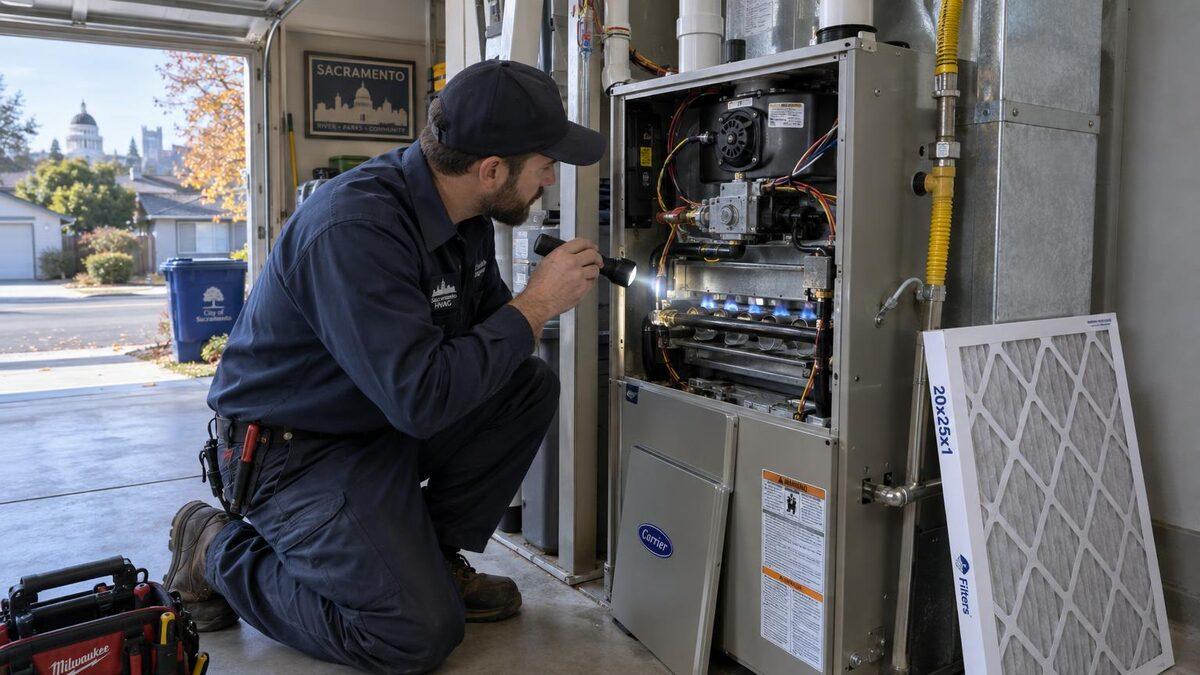
A real furnace tune-up tests and measures, not just looks. Here is what the visit should cover:
- Flame sensor: cleaned and checked, since a dirty one is the most common reason a furnace lights and then shuts off.
- Igniter: inspected for cracks and tested, because a weak hot surface igniter fails without warning.
- Burners and heat exchanger: inspected for rust, debris and proper flame.
- Inducer and blower motors: checked for noise, bearing wear and correct operation, with the blower wheel cleaned if it is caked with dust.
- Electrical: connections tightened and the capacitor tested.
- Safety switches: the limit, rollout and pressure switches tested to confirm they do their jobs.
- Condensate drain: flushed on high-efficiency furnaces.
- Temperature rise: measured across the furnace and compared to the range on its rating plate.
That last measurement separates a tune-up from a quick look. A furnace running outside its rated temperature rise is either starving for air or overheating, and both shorten its life.
Ask for the numbers. A technician who measured the temperature rise and tested the capacitor can tell you what they read, and those readings are the baseline for next year's visit.
A Typical Fall Tune-Up Finding
Here is what a typical October or November visit turns up in a Rancho Cordova tract home: the furnace lights and runs, the homeowner has had no complaints, and the flame sensor has a dull white coating that makes the furnace hesitate on some starts. A cleaning takes a few minutes. Left alone, that is the same furnace that shuts off three seconds after lighting on the coldest morning of the month.
Maintenance or Replacement
A tune-up is also the right moment to ask about age. The U.S. Department of Energy notes that older low-efficiency furnaces run at roughly 56 to 70 percent efficiency, while modern high-efficiency models reach 90 percent or more. A furnace in its third decade with a growing repair list is worth pricing out, even if it passes the tune-up.
When to Call a Pro
Book the tune-up for September through early November, before the first cold snap fills repair schedules. Call sooner if the furnace short cycles, smells unusual after the first few runs of the season, makes new noises, or blows lukewarm air with a fresh filter in.
PRO MAX HVAC & Appliance Repair handles HVAC maintenance and furnace tune-ups across the Sacramento area. Call (916) 234-5925 or book a visit on our contact page to get your furnace checked before winter.
How to do the homeowner part of furnace maintenance
Replace the filter
Put in a fresh filter of the correct size, arrow toward the furnace, and check it monthly through the heating season.
Clear the returns and registers
Move rugs, furniture and boxes off return grilles and supply registers so the furnace can move air freely.
Clear space around the furnace
Keep storage, paint cans and laundry well away from the furnace in its closet, garage or attic platform.
Check the condensate drain
On a high-efficiency furnace with white PVC pipes, make sure the drain line exits freely and the pump, if there is one, runs when water fills it.
Test the heat before you need it
Run the heat for 15 minutes on a mild day before the first cold night so any problem shows up while there is time to book a visit.
Sources
Need appliance repair in the Sacramento area?
Same-day service, 180-day warranty, all major brands. PRO MAX HVAC & Appliance Repair — Carmichael, CA.