Reviewed by PRO MAX HVAC & Appliance Repair technicians, EPA 608 certified
A condensate pump beeping or leaking is almost always full of water it cannot move, and the fix is usually cleaning, not a replacement. Turn the AC off first so no more water arrives, then work through power, the reservoir, and the tubing. Do it the same day. The U.S. EPA advises drying water-damaged materials within 24 to 48 hours to keep mold from growing, and a reservoir that overflows under a furnace soaks drywall, a closet floor or a garage shelf faster than most people notice.
What a Condensate Pump Does
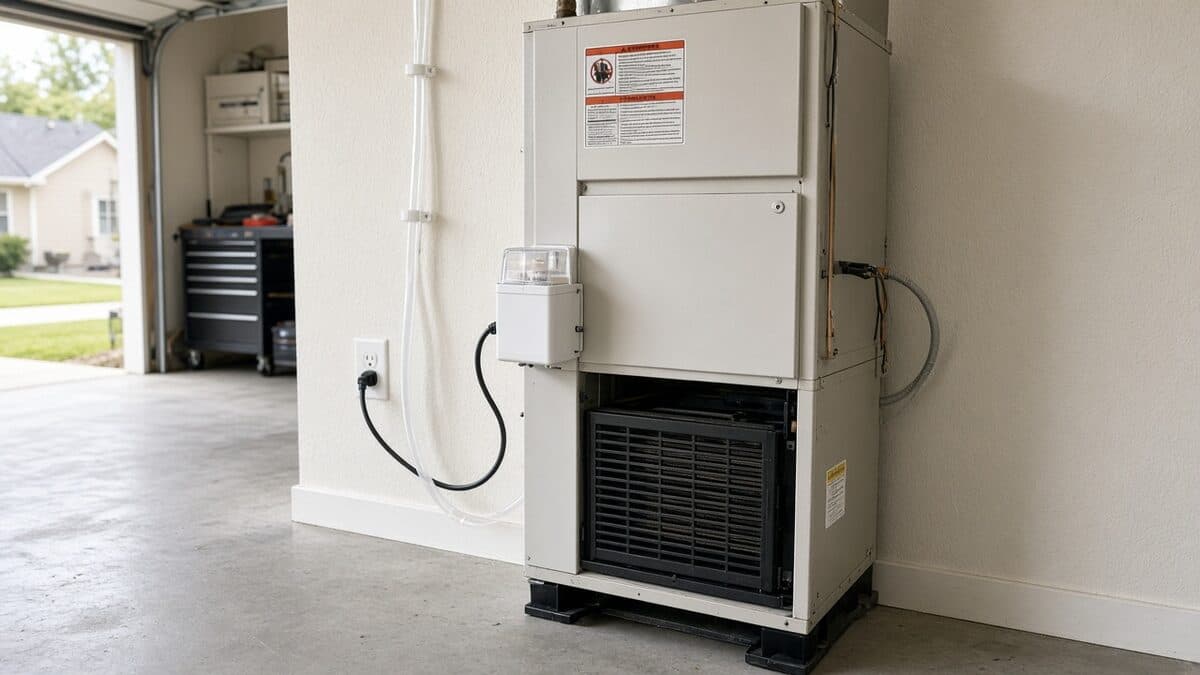
Your air conditioner pulls water out of the air as it cools, and that water has to go somewhere. When the furnace and indoor coil sit where a drain line cannot run downhill to the outside, a condensate pump does the job. It is the plastic box, about the size of a shoebox or smaller, mounted next to the furnace with a clear vinyl tube running up the wall.
Water drips into its reservoir. When the level lifts a float, the motor kicks on, pushes the water out through the tubing, and shuts off. In a heat wave, with the AC running from late morning until well after dark, that cycle repeats all day.
Most pumps also have a safety switch. When the water rises too high, the switch opens, and if its two wires are connected to the AC's control circuit, that shuts the AC off before the reservoir overflows. If they were never connected, the switch trips but nothing stops, so the reservoir can overflow. Some newer models add an alarm that beeps at the same point.
High-efficiency furnaces produce condensate too, so in a lot of homes the same device handles water in winter as well. A failure can show up in either season.
Why It Beeps
On pumps with a built-in alarm, beeping means the water level in the reservoir is too high. The motor is either not running or not getting the water out.
That is useful, because it narrows the problem to four things: power, a stuck float, a blocked discharge line, or a dead motor. If your AC also stopped cooling at the same time, the safety switch most likely did its job and shut the system down. If the pump is overflowing and the AC keeps running, the switch may not be wired in, which is worth having a technician check.
Check the Power
Start with power, because it is the easiest fix. Make sure the cord is plugged in all the way.
Many condensate pumps plug into a GFCI outlet, especially in garages. A GFCI can trip in a heat wave for reasons that have nothing to do with the drain, and when it does, everything on that outlet just stops. Press the reset button on the outlet. If the outlet is controlled by a wall switch, make sure that switch is on.
Clean the Reservoir and Float
If it has power and still will not run, the float is the next suspect. Algae and slime build up in the reservoir over a season, and a coated float sticks in the down position, so the motor never gets the signal to start.
Turn the AC off and unplug the cord. Lift off the lid, which usually unclips, and look inside. On most pumps the lid carries the motor, the float and the wiring, so set it somewhere dry. If you see a gray or green film, that is your problem. Clean the tank and float with warm water and a little dish soap, and rinse out the loose sludge. Some models let the reservoir come off the motor for easier cleaning.
ENERGY STAR includes inspecting and clearing the condensate drain in its routine maintenance checklist for central air, and this little box is part of that drain.
Clear the Discharge Tubing
If the motor runs but water keeps rising, the water has nowhere to go. Follow the vinyl tubing to where it ends, whether that is a sink drain, a standpipe or the outside wall.
Look for kinks, especially where it bends over a furnace cabinet or through a shelf. Check the end outside. In a lot of garage-furnace homes around Citrus Heights, that tube ends in a flowerbed where soil, mulch or a mud dauber nest can plug it. Flush the line with water or blow it clear.
Most models also have a small check valve where the tubing connects, and slime can glue it shut. Many of them pop out for cleaning.
Test It With Water
Once everything is clean, reinstall the lid and make sure it is seated and clipped, so the float hangs in the tank and nothing electrical is exposed. Then plug it back in and slowly pour water into an inlet opening. A working motor starts when the water lifts the float and empties the tank in a few seconds.
If the reservoir fills and the motor does not start, or it hums without moving water, the motor has failed. At that point replace the whole assembly. They are a common replacement part, and trying to repair the motor is not worth it.
Why It Leaks
A leak usually means the reservoir is overflowing, which means one of the problems above. If it runs and empties normally but you still find water, look for a cracked reservoir, a loose tubing connection, or a split in the tubing itself. Wipe everything dry, run the AC, and watch where the first drop shows up.
When to Call a Pro
Call a technician when a new or cleaned one still cannot keep up, when water is coming from somewhere other than the reservoir, or when you find water damage to drywall or flooring near the furnace. Also call if the safety switch keeps shutting the AC down after you have cleaned everything.
A typical call for this during a heat wave: the house has a furnace in the garage, the AC has been running almost nonstop for days, and the owner finds a puddle under the pump and a system that will not cool. The float is stuck in a reservoir full of slime, and cleaning it gets the AC back on the same afternoon.
Our position: clean it yourself every spring, because slime is the cause behind most of these calls. Replace it when it fails the water test, and have the drain line and the rest of the system checked if it keeps happening.
PRO MAX HVAC & Appliance Repair handles AC repair and condensate drain problems across the Sacramento area. Call us at (916) 234-5925 or book a visit online on our contact page.
How to troubleshoot a beeping or leaking condensate pump
Turn off the AC
Set the thermostat to off so the system stops sending water to the pump while you work.
Check the power
Make sure the pump is plugged in and reset any tripped GFCI outlet it is plugged into.
Clean the reservoir and float
Unplug the pump, lift off the lid, and clean slime from the tank and float with warm water and a little dish soap. On most pumps the lid carries the motor and float, so keep it dry.
Clear the discharge tubing
Check the vinyl tubing for kinks and flush it or blow it clear so water can leave the pump freely.
Reassemble, then test with water
Reinstall and secure the lid and reservoir so the float sits in the tank and no electrical parts are exposed. Then plug the pump in and slowly pour water into an inlet opening. It should start and empty the tank within seconds.
Sources
Need appliance repair in the Sacramento area?
Same-day service, 180-day warranty, all major brands. PRO MAX HVAC & Appliance Repair — Carmichael, CA.