Reviewed by PRO MAX HVAC & Appliance Repair technicians, EPA 608 certified
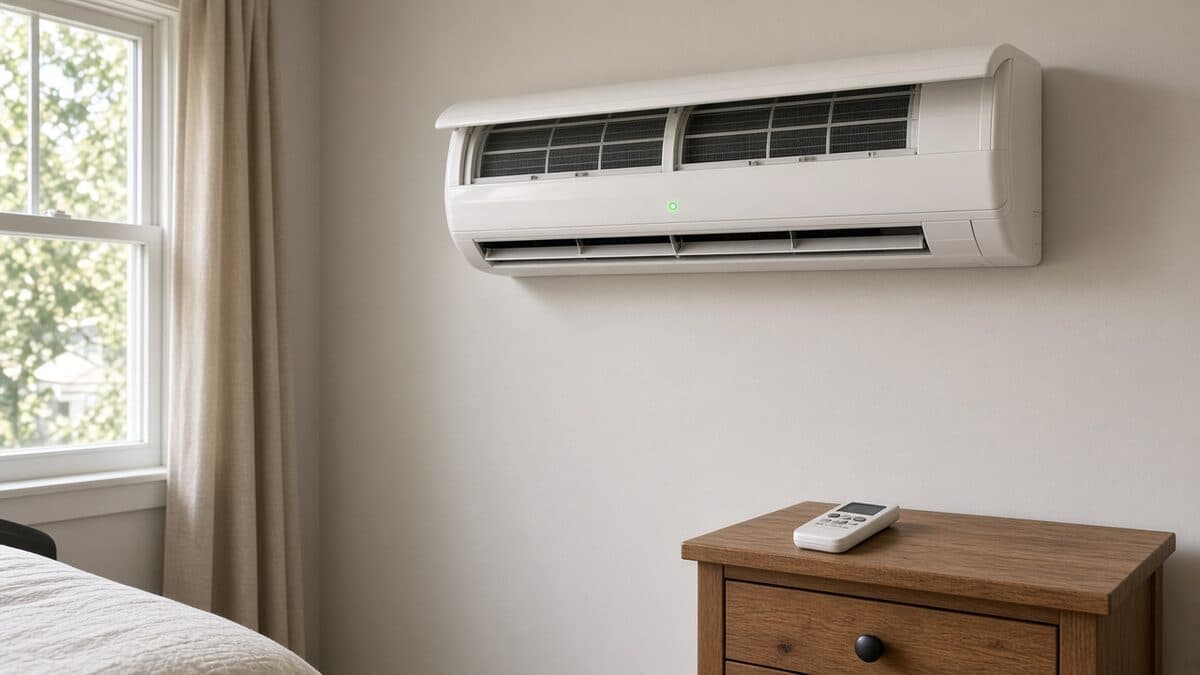
A mini split blinking light is the wall-mounted indoor head telling you it stopped itself, and the pattern of blinks is a code you can read. Most of the time the cause is simple: dirty filters, a condenser that overheated, or a coil that iced over. Filters come first for a reason. ENERGY STAR advises checking your system's filter every month during heavy-use seasons, and a ductless head in a Sacramento bedroom runs hard from June through September. Mesh filters that go a whole summer without a rinse are one of the most common reasons these units shut down.
Work through the checks below before you call anyone. They take about half an hour, and the first thing a technician will ask for is the blink pattern anyway.
What the Blinking Light Is Telling You
The blinking light is a diagnostic code, not a random glitch. Every major brand uses its indicator lights or display to report why the system stopped, and the manual for your model lists each pattern.
Count the blinks between pauses. Five blinks, a pause, five blinks is a different message than two blinks and a pause. Note which light is flashing, too, since many heads have separate operation, timer and standby lamps. If the display shows letters or numbers instead, write those down exactly. A ten-second phone video solves the problem of a pattern too fast to count.
Some remotes also have a check or diagnostic button that reads the stored code back to you. Look for it in the manual before you reset anything, because a power reset on some models clears the stored code.
Blinking Green Light: Normal or a Fault?
A blinking green light is often normal and stops by itself. On many brands green is the operation light, and it blinks briefly at startup, while the system preheats its coil in heat mode, or during a defrost cycle.
In cooling mode there is no defrost or preheat to explain it, and during a Sacramento summer that is the mode these heads run in. A green light that keeps blinking in cooling mode while the head blows room-temperature air, or no air at all, means the unit has stopped on a fault and is flashing its code.
CL on the Display Usually Means Clean the Filter
On several brands, CL is a filter-cleaning reminder, not a failure. The head counts running hours and flags the filters when that count runs out.
Turn the head off, lift the front cover, and slide out the two mesh filters. Rinse them in lukewarm water from the back side so dust pushes out instead of deeper in. Let them dry completely before they go back in. Clear the reminder with the remote or by cycling power.
Smoke season makes this worse here. Fine particles from regional fires load up a mesh filter in weeks, and the U.S. EPA notes that Americans spend about 90 percent of their time indoors, so what that filter catches is air you are breathing. If the filters look gray and felted after a smoky August, rinse them now even if the unit never showed CL.
Check the Outdoor Condenser
If the head is blinking and nothing is coming out cold, walk outside next. On most home ductless systems the indoor head gets its power through the condenser, so a tripped breaker or a pulled disconnect usually leaves the head completely dark, not blinking. A head that blinks while the condenser sits silent points at a fault between the two: the communication wire, a sensor, or a protection shutdown in the condenser itself.
Still check the breaker in your main panel and the disconnect box on the wall next to the condenser, because a disconnect half-pulled by a string trimmer can cause odd, intermittent behavior. Then look at the condenser itself. It needs clear space around it to shed heat. On a 100°F afternoon, a condenser boxed in by a fence, a shrub and a stack of patio cushions runs hot enough that its temperature sensors shut it down to protect the compressor.
A typical pattern around Carmichael: a ductless head added to a converted garage or a 1960s back-room addition, the condenser tucked on the west wall where it takes full afternoon sun, and a system that runs fine every morning and quits around 4 p.m. That points at heat and airflow at the condenser, not at the indoor head.
Look for Ice
If the system ran for a while before it stopped, check the indoor coil and the copper lines at the condenser for frost. Ice means the coil got too cold, usually from restricted airflow or low refrigerant. Clogged filters are the fixable version. Turn cooling off, run the unit in fan mode for a couple of hours to thaw it, and clean the filters before you try cooling again.
If it ices up a second time with clean filters, the refrigerant charge is the next suspect, and that is not a homeowner job.
Do One Full Power Reset
Once the filters are clean, the condenser is clear and any ice has melted, do one reset. Turn the head off with the remote, switch off the breaker, and wait about five minutes. Then restore power and start it in cooling mode.
That clears a one-time electronic hiccup, like the kind a brief SMUD outage or a power flicker during a heat wave can cause. One reset is the limit. If the same pattern comes back within a day, cycling the power again only hides the fault while whatever caused it keeps happening.
When to Call a Pro
Call a technician when the same blink pattern returns after clean filters and one reset, when the coil ices up again with clean filters, or when you see water dripping from the indoor head. Those point to a sensor, a control board, a drain or a refrigerant problem, and each one needs testing with gauges or a meter.
Our position is simple: clean the filters and check the outdoor power yourself, because that is where most of these calls start. Leave the codes that come back to someone who can test the board and the refrigerant circuit, since a mini split with a real fault that gets reset over and over can turn a small repair into a big one.
Give the technician the pattern you recorded. It saves a lot of time.
PRO MAX HVAC & Appliance Repair handles mini split repair for ductless systems across the Sacramento area. Call us at (916) 234-5925 or book a visit online on our contact page.
How to troubleshoot a mini split blinking light
Write down the pattern
Count the blinks between pauses and note which light is flashing or what the display shows. Take a short phone video if it is fast.
Clean the filters
Turn the unit off, lift the front cover, slide out the mesh filters, rinse them in lukewarm water and let them dry fully before reinstalling.
Check the outdoor condenser
Make sure the breaker and the disconnect next to the condenser are fully on and nothing is crowding the unit, then check the coil and copper lines for ice.
Do one full power reset
Switch off the breaker for five minutes, then restore power and start the unit in cooling mode.
Call if the code returns
If the same pattern comes back, leave the unit off and give the technician the pattern you recorded.
Sources
Need appliance repair in the Sacramento area?
Same-day service, 180-day warranty, all major brands. PRO MAX HVAC & Appliance Repair — Carmichael, CA.