Reviewed by PRO MAX HVAC & Appliance Repair technicians, EPA 608 certified
A SMUD rebate for attic insulation is worth checking if your attic has less than about 10 inches of insulation, and in a lot of older Sacramento homes it does. Topping it up before the heating season cuts the cost of keeping the house warm this winter and cool next summer, and a rebate takes some of the sting out of the upfront cost.
The savings are real. ENERGY STAR estimates homeowners save an average of 15 percent on heating and cooling costs by air sealing and adding insulation in attics and other accessible spots. In the Sacramento area, where attics bake through the summer and nights turn chilly by November, that work pays on both sides of the year.
What SMUD Offers
SMUD has offered rebates for attic insulation and air sealing for its residential customers. Amounts, eligible homes and required steps change during the year, so we are not going to quote a figure here.
The steps matter as much as the amount.
Skipping one can cost you the rebate.
That is the part people miss. Some programs require the work to be done by a participating contractor, and some need an inspection or approval before work starts. Check SMUD's current residential rebates page first, and ask any contractor to confirm the project qualifies before you sign. If you heat with gas, ask whether a PG&E program also applies.
How to Tell If Your Attic Needs More
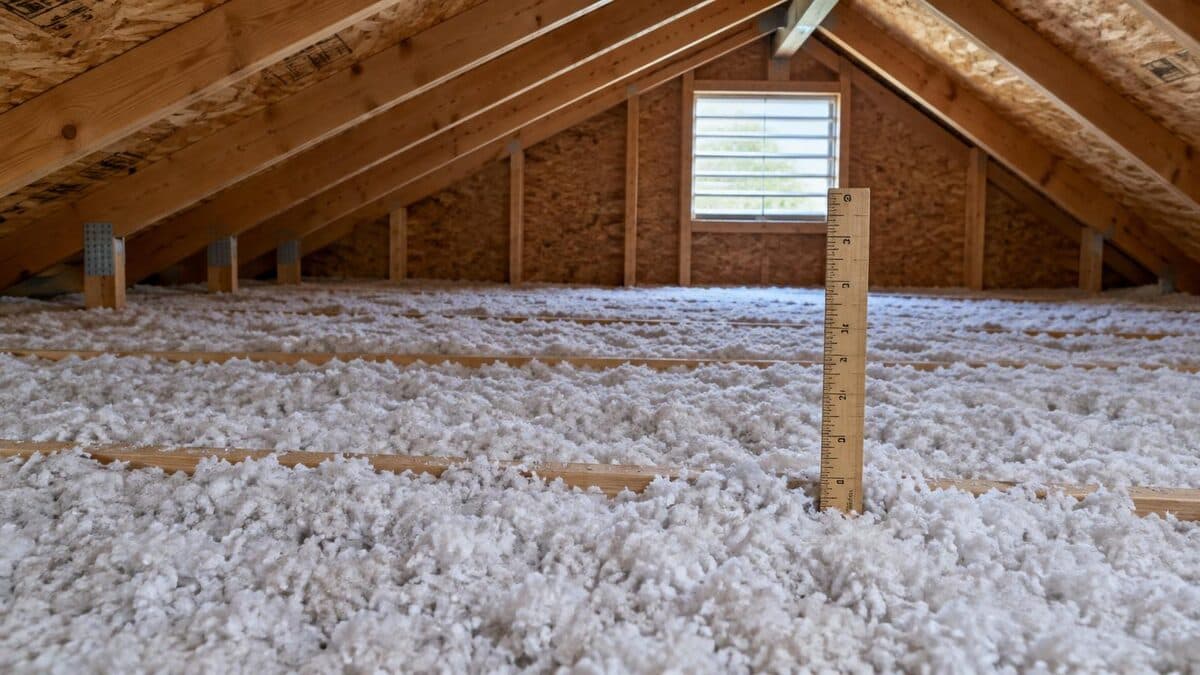
The quickest check is depth. With a flashlight, look into the attic from the hatch. If you can see the tops of the ceiling joists, the insulation is thin. Measure in a few spots with a ruler. Under about 10 inches of fluffy blown-in insulation usually means there is room to add more.
That takes two minutes.
Look for uneven coverage, too. Insulation gets pushed aside when cable, satellite or solar installers crawl through, and it gets packed down around the hatch where people step. A 1970s tract house in Citrus Heights might have a decent layer in the middle of the attic and bare patches near the eaves and the hatch.
How Much Is Enough
ENERGY STAR recommends R-30 to R-60 for an uninsulated attic in our climate, and adding R-25 to R-38 on top of a thin existing layer. R-value measures resistance to heat flow, and higher is better. For common blown-in fiberglass or cellulose, that range works out to roughly a foot or more of depth.
Going far past the top of that range brings smaller returns. Our position is to aim for the middle to upper end of ENERGY STAR's range and spend any leftover budget on air sealing, which often does more for comfort than the last few inches of insulation.
Seal Air Leaks First
Insulation slows heat that moves through it, but it does very little to stop air that moves around it. Gaps around recessed lights, plumbing and wiring holes, the attic hatch, and duct boots let conditioned air escape straight into the attic.
Seal those first.
It is much easier when the attic floor is visible, and the order matters for the rebate as well as for the result, because many programs pair air sealing with insulation and some will not pay for insulation laid over unsealed gaps. Foam sealant around pipe and wire holes and covers over open soffits and chases above kitchen cabinets are the usual targets, and recessed lights are best left for the contractor to check before insulation goes over them. Then weatherstrip the hatch and add a piece of rigid insulation on top of it, since an uninsulated hatch is a common weak spot.
Ducts in the Attic
Many Sacramento homes run their heating and cooling ducts through the attic. When you add insulation, the ducts should stay visible and accessible, and any disconnected or leaking joints should be fixed first. Burying a leaking duct under insulation hides the problem without fixing it.
If your ducts are old or poorly sealed, it is worth having them checked before the insulation goes in. A duct leak pushes heated air straight into the attic, which no amount of insulation on the floor can fix.
Related Resources
When to Call a Pro
Call a contractor for the job if you want the rebate, since many programs require a participating contractor, or if the attic is cramped, has low clearance, or has ducts and wiring you would have to work around. A good contractor will measure the existing insulation, seal leaks, check the ducts and hatch, and handle the rebate paperwork.
A typical case looks like this: a 1970s ranch with four or five inches of settled insulation, bare spots around the hatch, and a furnace that runs long on cold mornings. Air sealing plus blown-in insulation to the ENERGY STAR range makes the house hold heat noticeably better through the winter.
PRO MAX HVAC & Appliance Repair handles HVAC service and duct checks across the Sacramento area and can look at your ducts before insulation work begins. Call us at (916) 234-5925 or book a visit online on our contact page.
Sources
Need appliance repair in the Sacramento area?
Same-day service, 180-day warranty, all major brands. PRO MAX HVAC & Appliance Repair — Carmichael, CA.