Reviewed by PRO MAX HVAC & Appliance Repair technicians, EPA 608 certified
A heat pump making loud noise in winter is often just doing its job. A whoosh and a cloud of steam during defrost, a click as each cycle starts, and a louder hum from a compressor working harder in cold air are all normal. Buzzing, grinding, screeching, or a steady rattle or bang is different: those point to a failing capacitor, contactor, fan motor or loose part that needs a technician.
The sounds are worth learning, because a heat pump is the cheapest way most Sacramento-area homes can heat with electricity. The U.S. Department of Energy estimates that a heat pump can cut the electricity used for heating by about 50 percent compared with electric resistance heat. Knowing which noises are routine keeps you from shutting a healthy system off, and catching the ones that are not keeps a small repair from turning into a compressor replacement.
Normal Winter Sounds
Most of the new noise in November is the heat pump running harder, not breaking. In heat mode the outdoor coil pulls heat from cold air, and the colder it gets, the harder the compressor works. It hums louder and runs longer than it did in October. On a variable-speed system you will also hear it ramp up and down through the morning.
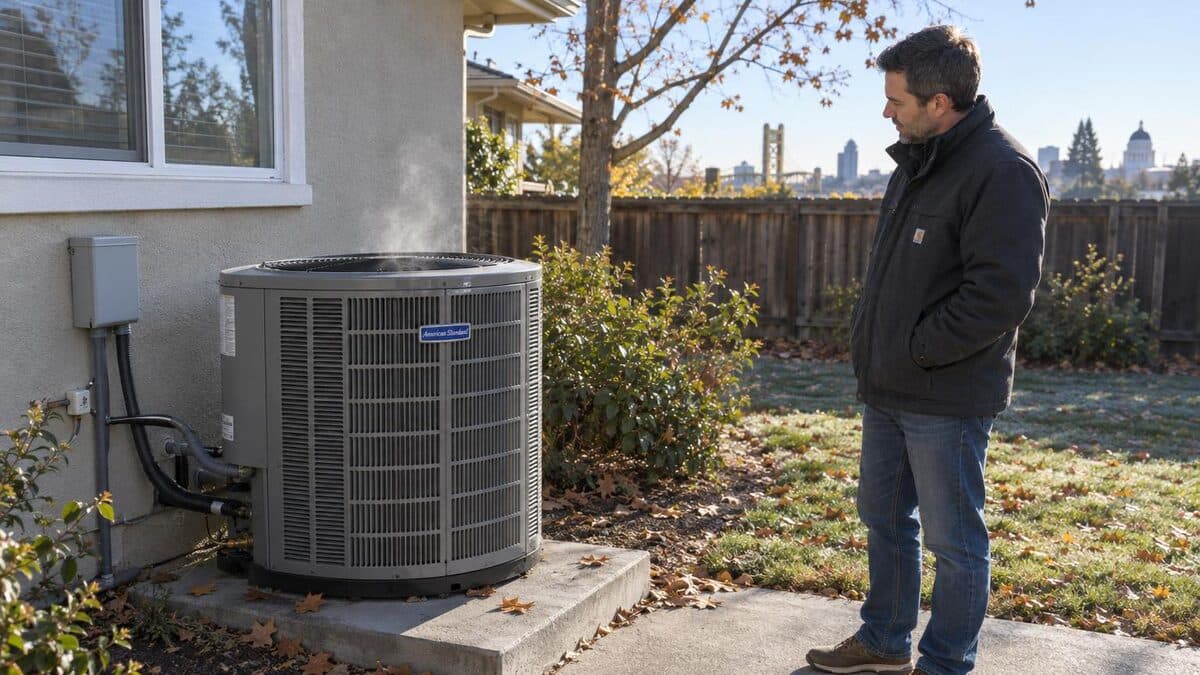
Defrost is the loudest normal sound. On damp, foggy valley mornings in the low 40s, frost builds on the outdoor coil, and every so often the heat pump reverses for a few minutes to melt it. You hear a loud whoosh or hiss as the reversing valve shifts, the outdoor fan stops, and steam rises from the top. A few minutes later there is a second whoosh as it switches back and the fan restarts. It sounds dramatic. It is routine.
A single click at the start and end of each cycle is the contactor or a relay. A gurgle or soft trickle is refrigerant moving through the lines, more noticeable right after the system shuts off.
Buzzing
A buzz that lasts while nothing starts is not normal. It usually means a weak run capacitor, a contactor with burned contacts, or a fan motor that is getting power but cannot turn. The buzz comes from the electrical panel or the fan motor on top.
Turn the system off at the thermostat and call a technician. Leave the panel closed; the capacitor holds a charge even with the power off. A heat pump that keeps trying to start against a bad capacitor wears out its compressor, the most expensive part in the system.
Rattling and Banging
Rattling usually comes from something loose or something in the fan. Look at the top grille from a few feet away with the system off. Leaves, twigs or a plastic bag caught in the fan guard rattle on every start. So does a fan blade brushing against ice that has built up around it after a hard frost.
Clear what you can reach from outside the guard. Do not chip at ice on the coil or fan with a tool; let a defrost cycle or the morning sun clear it, and call if it does not.
A rattle from inside the cabinet, or a bang every time the compressor starts or stops, needs a technician. Loose access panel screws, a loose fan blade, or worn compressor mounts all sound like that, and all are simple fixes caught early.
Grinding, Screeching and High-Pitched Noise
Grinding or screeching from the top of the outdoor side points to worn fan motor bearings. A high-pitched whine or squeal that comes from the compressor itself points to an internal problem or abnormally high refrigerant pressure. Neither is a sound to keep running through. Shut the system off and book a visit.
Here is a typical first-cold-week call in Gold River. A 2012 heat pump has started screeching for the first minute of every heating cycle, then settling down. The fan motor bearings are dry and failing. A new fan motor is a same-day repair, and it is far cheaper than the compressor damage that a seized fan would eventually cause.
When to Call a Pro
Call when a buzz lasts while nothing starts, when you hear grinding, screeching or a high whine, when a rattle comes from inside the cabinet, or when the system bangs at every start. Note when the noise happens, at startup, at shutoff, during defrost or all the time, because that narrows the repair. A short phone video of the sound, taken from a few feet away, helps even more. ENERGY STAR recommends regular professional maintenance for heating equipment, and a fall check catches worn bearings and weak capacitors before the cold sets in.
PRO MAX HVAC & Appliance Repair handles heat pump repair across the Sacramento area, including Gold River and Roseville. Call (916) 234-5925 or book through our online booking page.
Sources
Need appliance repair in the Sacramento area?
Same-day service, 180-day warranty, all major brands. PRO MAX HVAC & Appliance Repair — Carmichael, CA.