Reviewed by PRO MAX HVAC & Appliance Repair technicians, EPA 608 certified
When a furnace filter starts rattling or whistling right after a change, the filter itself is almost always the cause: the wrong size, installed backwards, a missing slot cover, or a filter too restrictive for the system. Turn the furnace off, match the exact size printed on the old filter, point the airflow arrow toward the furnace and close the slot. Most of the time the noise stops the next time the blower starts.
Filter ratings explain a lot of these calls. The EPA describes the MERV scale as running from 1 to 16, with higher numbers trapping more and smaller particles. Higher numbers also mean a denser filter, and a dense one-inch filter in an older furnace is one of the most common sources of a new whistle.
Why a Filter Rattles
A rattle means the filter is moving in its slot. Filter sizes are nominal, so a filter sold as 16x25x1 actually measures a little smaller, often about half an inch less each way. A cheap brand that runs small, or a filter one size off, shakes every time the blower starts and stops.
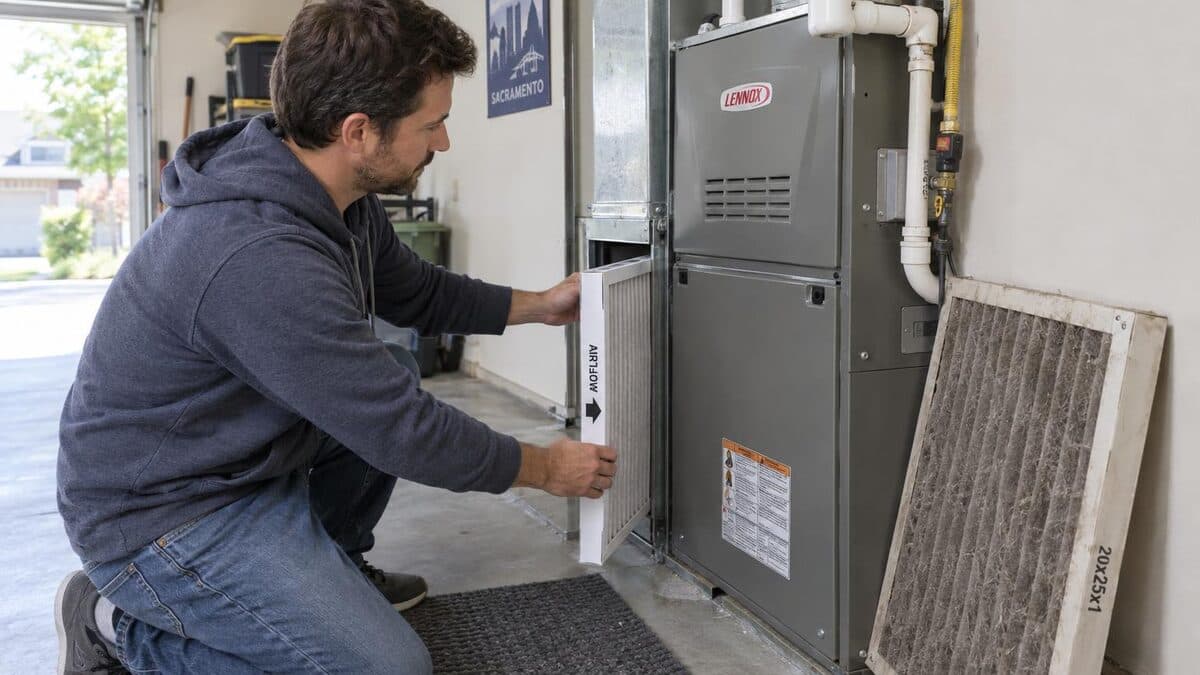
Check the size printed on the frame of the old filter, not the size you remember. Then hold the new one against the slot. If it slides around with a visible gap, it is too small. Buy the exact size printed on the old filter, not a bargain multipack in a near size; a quarter inch matters more here than the brand, and some brands run small enough to rattle even at the right label size.
Fiberglass filters flex more than pleated ones, and a filter with no stiff frame can buzz against the rack. A filter that is badly clogged also bows toward the blower and ticks or flutters.
Why It Whistles After a Change
A whistle means air is squeezing through a narrow gap or pulling hard through a restriction. Two causes cover most cases.
The first is bypass. Air rushing past the edges of an undersized filter, or through an open filter slot, makes a thin, high whistle at the furnace. Many furnaces in Sacramento-area garages and closets have a filter slot with a sliding cover or a hinged door. When the cover is left off after a change, air pulls in through the slot and whistles. Put it back or, until you find it, cover the slot with foil tape.
The second is restriction. A one-inch MERV 13 filter blocks much more airflow than the MERV 8 it replaced. On an older furnace with small return ducts, the blower pulls hard against it, and the return grille or the filter rack starts to whistle. You also feel weaker airflow at the vents.
Check the Airflow Arrow
The arrow on the filter frame points in the direction air travels, toward the furnace. Backwards, the filter still catches dust, but the wire or cardboard support ends up on the wrong side, the pleats bow toward the blower, and it is more likely to rattle. Flip it so the arrow faces the furnace.
Choosing a MERV Rating That Fits
Higher is not always better for your furnace. A MERV 8 to 11 one-inch filter is a sound choice for most older Sacramento homes. If you want MERV 13 for allergies or smoke season, a four-inch media filter at that rating restricts far less than a one-inch filter, because it has more pleated surface. That usually means a media cabinet, which a technician installs once and you never fight again.
Change it on schedule, too. ENERGY STAR recommends checking your filter every month and changing it at least every three months. A dense filter that is also dirty is the worst combination for noise and airflow.
Here is a typical first-cold-week call in Carmichael. The owner switched from a basic pleated filter to a one-inch MERV 13 before fall, and the hallway return grille now whistles every time the furnace runs. The slot cover is in place and the size is right. Going back to a MERV 8 one-inch filter stops the whistle the same day, and the owner books a media cabinet install for the spring.
When the Noise Is Not the Filter
If the filter is the right size, faces the right way, the slot is covered and the noise is still there, look beyond the filter. A rattle from inside the blower compartment points to a loose blower wheel, a worn motor mount or a loose panel. A whistle at a single supply register points to a duct or damper problem. A furnace that starts cycling off after a filter change can be overheating from too little airflow.
When to Call a Pro
Call a technician when the noise continues with a correctly fitted filter and a closed slot, when you hear rattling inside the furnace cabinet, or when the furnace short cycles after you switch to a higher MERV filter. A static pressure test tells whether the system can handle the filter you want.
PRO MAX HVAC & Appliance Repair handles furnace repair and HVAC maintenance across the Sacramento area, including Carmichael and Rocklin. Call (916) 234-5925 or book through our online booking page.
Stop a furnace filter from rattling or whistling
Turn the furnace off
Switch the furnace off at the thermostat and its service switch before you pull the filter.
Match the exact size
Compare the size printed on the new filter's frame with the old one and with the slot, and replace it if it is undersized.
Check the arrow
Reinstall the filter with the airflow arrow pointing toward the furnace.
Close the slot
Put the slot cover or filter door back on, or tape a temporary cover over an open slot until you replace it.
Listen after restart
Turn the furnace back on and listen at the furnace and the return grille; if it still whistles, try a lower MERV rating or a thicker filter.
Sources
Need appliance repair in the Sacramento area?
Same-day service, 180-day warranty, all major brands. PRO MAX HVAC & Appliance Repair — Carmichael, CA.