Reviewed by PRO MAX HVAC & Appliance Repair technicians, EPA 608 certified
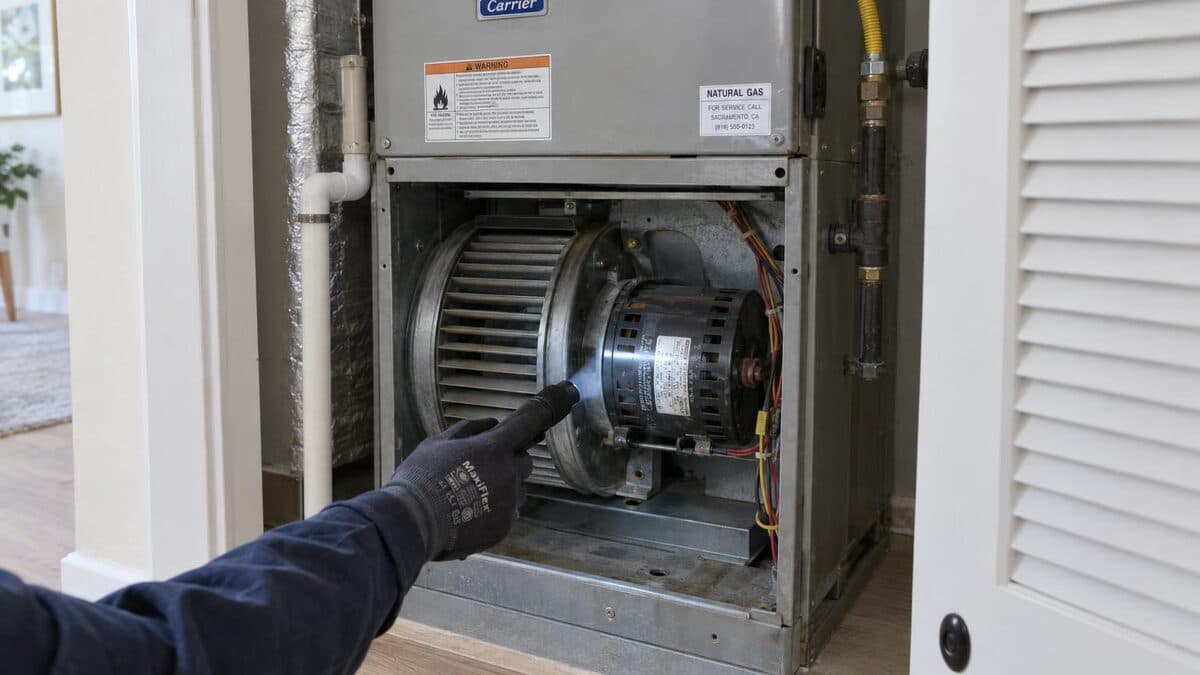
A furnace squealing when it starts and then quieting down almost always has dry or worn bearings in one of its two motors, or a worn belt on an older belt-drive furnace. The timing of the squeal tells you which part. A squeal at the very start of a cycle, before the burners light, points to the small inducer motor. A squeal that starts when warm air begins to flow points to the blower motor.
Worn bearings do not fix themselves. ENERGY STAR lists lubricating moving parts and checking belts on its routine heating maintenance checklist, and it recommends checking your air filter every month and changing it at least every three months. A clogged filter makes the blower strain against restricted airflow, which is hard on bearings that are already dry. In the Sacramento area, where the furnace sits idle from spring through October, the first heat call of the season is often when a dry bearing announces itself.
When Does It Squeal?
The timing tells you more than the sound itself. Stand near the furnace and set the thermostat to heat.
A gas furnace starts in a fixed order. First a small fan called the inducer motor kicks on and runs for a short while. Then the burners light. After a minute or so, the big blower starts and pushes warm air through the house.
If the squeal starts with that first small fan, before you hear the burners, the inducer is the likely source. If it waits until the blower starts and warm air comes out of the vents, the blower motor or its belt is the likely source.
Test With the Fan Alone
Running the blower by itself confirms most blower problems. Turn heating off and set the thermostat fan to ON. That runs only the blower, with no inducer and no burners.
If the squeal shows up now, it is the blower. If the house is quiet, the inducer becomes the main suspect, with one caveat: many blowers run on a lower speed in fan mode than when heating, so a blower that only squeals at full speed can stay quiet in this test. If the squeal clearly starts with the warm air, trust that timing over a quiet fan test.
The same logic explains a furnace squealing when the AC is on. Your furnace blower moves the air for both heating and cooling, so a blower bearing squeals in either mode. The inducer only runs for heat.
Blower Motor Bearings
The blower motor is the most common source. Most residential blower motors spin on bearings that wear and dry out over the years. The early sign is a squeal for the first minute or two that fades as the motor warms. Later, the squeal lasts longer, and eventually it runs the whole time.
Some older motors have small oil ports with caps on the motor housing, and a few drops of non-detergent motor oil can quiet them. Most modern motors have sealed bearings and no ports. Spraying lubricant on the outside of a sealed motor does not reach the bearings and attracts dust. A sealed motor that squeals is usually on its way out, and replacement is the real fix.
Belts on Older Furnaces
Furnaces from before the early 1990s often drive the blower with a rubber belt and pulleys, like an old car engine. A belt that is glazed, cracked or loose squeals as it slips, especially at startup when the blower is getting up to speed.
With power off, open the lower door and look for a belt between the motor and the blower. If you see one, check it for shine, cracks and slack. Belts are cheap and quick to replace, and a technician can check pulley alignment at the same time.
The Inducer Motor
The inducer is a small motor near the top of the furnace that runs at the start of every heating cycle. Its bearings wear like the blower's, and a dry one squeals or whines for the first few seconds of each cycle.
A failing inducer is not something to oil or patch. The furnace checks that the inducer is running before it lights the burners, so when the inducer finally quits, the furnace will not start. Replacing it while it still runs is far easier than waiting for a no-heat call.
When to Call a Pro
Call a technician when the squeal comes from a sealed blower motor, from the inducer, or from a belt-drive furnace you are not comfortable opening. Also call if the squeal turns into a grinding or scraping sound, or if the furnace starts and stops without heating. It is also worth checking the U.S. Consumer Product Safety Commission site for recalls on your furnace model before buying parts.
Our position: do not wait out a squeal through the winter. Bearings that squeal get worse, and a motor that seizes on a cold night means a rushed repair at the worst time. Replacing a motor in October, while the furnace still runs, gives you time to compare options.
A typical case in Carmichael homes: a furnace around fifteen years old in a hall closet, a squeal for the first minute of every heat cycle, and a sealed blower motor whose bearings have dried out. A new motor makes it quiet again in one visit.
PRO MAX HVAC & Appliance Repair handles furnace repair and blower motor replacement across the Sacramento area. Call us at (916) 234-5925 or book a visit online on our contact page.
How to narrow down a squealing furnace
Note when it squeals
Listen from the start of a heating cycle and note whether the squeal begins before the burners light or when warm air starts.
Test with the fan alone
Set the thermostat fan to ON with heating off. If the squeal happens with only the blower running, the blower motor or belt is the source.
Check the filter
Replace a clogged filter, since restricted airflow makes the blower work harder and can make bearing noise worse.
Look for oil ports or a belt
With power off at the service toggle, check whether the blower motor has oil port caps or is driven by a belt.
Schedule the repair
If the motor has sealed bearings or the squeal continues, have a technician confirm the part and replace it before winter.
Sources
Need appliance repair in the Sacramento area?
Same-day service, 180-day warranty, all major brands. PRO MAX HVAC & Appliance Repair — Carmichael, CA.