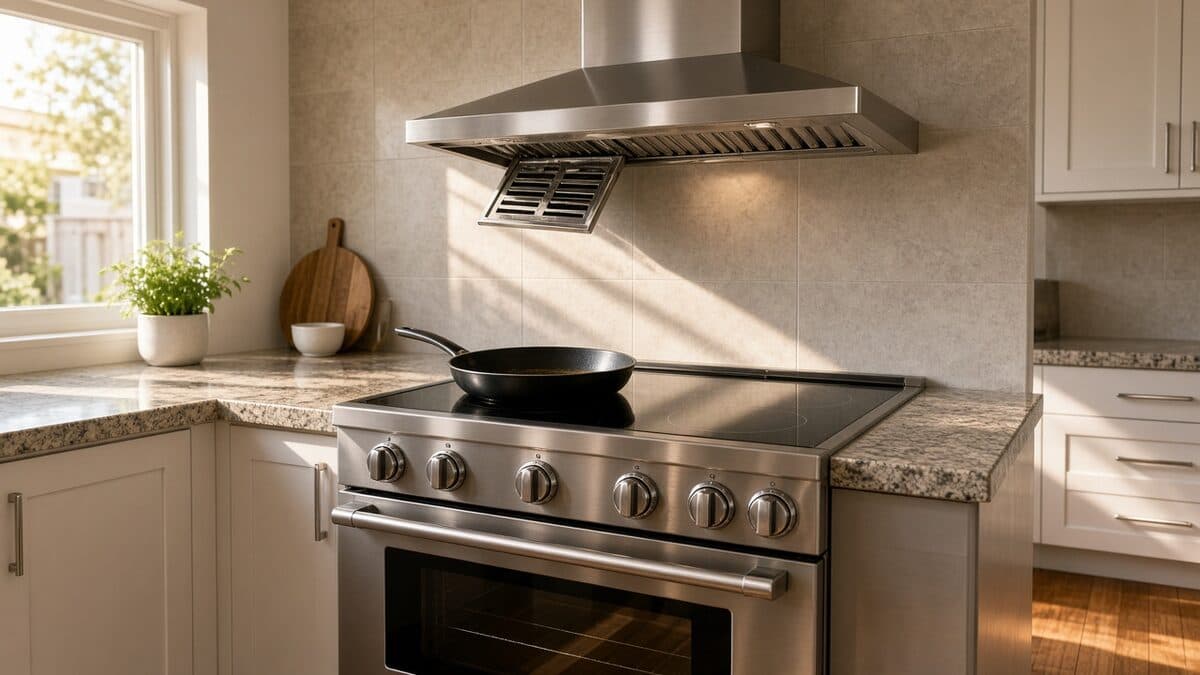
Reviewed by PRO MAX HVAC & Appliance Repair technicians, EPA 608 certified
A weak electric range hood usually fails because grease-clogged filters, undersized CFM, or restricted ducts cannot pull cooking heat out of a Rocklin kitchen. On lingering 90°F September days that leftover heat loads the rest of the house. Clean or replace filters first, confirm the fan matches your cooktop, and inspect the duct run before you buy a new hood.
Cooking is an indoor pollution source, and the U.S. EPA notes that Americans spend about 90 percent of their time indoors, so a fan that cannot capture heat and grease does not stay a kitchen-only problem. Heat that should leave through the roof or wall instead sits in the hallway and living room. That is why a weak capture system in late summer feels like the AC is losing the fight even when the thermostat is doing its job.
Why the hood leaves heat in the house
Grease-packed mesh, a fan that never matched the cooktop, or a crushed duct is what keeps cooking heat indoors. Most units we open still spin. They just cannot move enough air because the path is blocked or the blower was undersized on day one. A metal filter that no longer lets light through the mesh is already past useful service. Charcoal recirculating pads do not vent outdoors at all; they only trap odor until they saturate, then heat has nowhere to go.
Skip guessing at a new stainless canopy until you have ruled those three out. Replacement is the expensive way to learn the old duct was kinked in the attic.
When a ducted hood still leaves a heat plume after the filters are clean, treat the exhaust run as the next check. Grease-laden kitchen exhaust needs smooth metal duct, not flexible duct. Flex kinks over trusses, collects grease, and can remain a fire hazard even if someone “opens” a pinch. Replace that run with an approved smooth-metal duct of the listed size, then confirm the wall or roof cap damper opens freely so the same motor can actually pull a plume.
How to check filters, CFM, and ducts
Start with power off at the breaker, pull the grease filters, and look through the mesh. If light does not show, wash metal filters in hot soapy water or replace them. Disposable charcoal pads get swapped, not rinsed. In a busy kitchen, inspect monthly through summer so leftover heat does not load the rest of the house.
Confirm the fan rating against the cooktop. A high-BTU gas range or a wide electric cooktop needs more airflow than a small two-burner leftover from a remodel. An undersized CFM rating will hum and still leave a heat plume at the edges. Recirculating installs cannot dump heat outdoors no matter how loud they get.
Then inspect the duct. Look for crushed flex, a run that is too small, long horizontal stretches, or a damper stuck shut at the wall or roof cap. Sudden loss of suction after months of cooking is often that restriction, not a dead motor. Power-cycle the unit, clean the filter, and listen for the motor before you assume the hood itself has failed. If the existing run is flexible duct, plan to replace it with smooth metal rather than leaving flex in service.
What electric range hood clearance actually means
Follow the manufacturer’s listed electric range hood clearance above the cooktop, typically a set range in the installation manual so heat and grease reach the capture area. Too high and smoke bypasses the hood. Too low risks heat damage to the housing and wiring. Confirm the listing for your model before any electric range hood installation. Raising a hood “for looks” is a common reason a unit that used to work now leaves September cooking heat in the rooms.
Do not treat clearance as a style choice. Capture area is geometry. If the plume misses the filters, CFM on the nameplate does not matter.
How to repair a range hood fan without making it worse
Unplug or shut off the breaker, remove the grease filters, and vacuum the blower housing. If the fan still hums or will not spin, the motor or capacitor likely needs replacement rather than a DIY rewind. Sacramento-area homeowners should leave wiring and high-mounted work to a licensed technician when the fan is seized or sparking.
A tripped breaker is worth checking once. If it trips again, stop. That is not a filter job. Seized bearings and cooked capacitors show up after years of grease load; they do not get better with WD-40 from a ladder.
When replacing the filter is enough
Replace or deep-clean an electric range hood filter when light no longer shows through the mesh, grease drips, or cooking odors linger. Many metal filters can be washed; charcoal recirculating pads are disposable. That is the first move, not a new appliance.
We take a hard line here: do not buy a new hood to solve a $20 filter and a pinched duct. The trade-off is time on a ladder versus a four-figure install that still fails if the old run is restricted. If the motor is quiet, the breaker holds, and the duct is clear, a clean filter often restores capture.
When to Call a Pro
Call when the fan is seized or sparking, the duct is in a tight attic, the unit is high-mounted, or cleaning filters and confirming power did not restore suction. A crushed or too-small duct, a weak motor, and a tripped breaker can all stop capture. Licensed help is the right call for wiring and for finding a restriction you cannot see from the kitchen.
If your electric hood still will not clear cooking heat after filters and a basic duct look, PRO MAX HVAC & Appliance Repair can diagnose the blower and the run. Call (916) 234-5925 or book online on the /contact page.
Sources
Need appliance repair in the Sacramento area?
Same-day service, 180-day warranty, all major brands. PRO MAX HVAC & Appliance Repair — Carmichael, CA.