Reviewed by PRO MAX HVAC & Appliance Repair technicians, EPA 608 certified
A dual fuel heat pump heats your house with the heat pump until the outdoor temperature falls to a set switchover point, then shuts the heat pump off and lets the gas furnace take over. The two never heat at the same time. In Sacramento's mild winters, that switchover setting decides most of your heating bill, because the heat pump can carry the bulk of the season if you let it.
The case for letting it is efficiency. The U.S. Department of Energy notes that a heat pump can cut the electricity used for heating by roughly 50 percent compared with electric resistance heat, because it moves heat instead of making it. The furnace is the backup for the cold mornings when moving heat gets harder.
How a Dual Fuel System Works
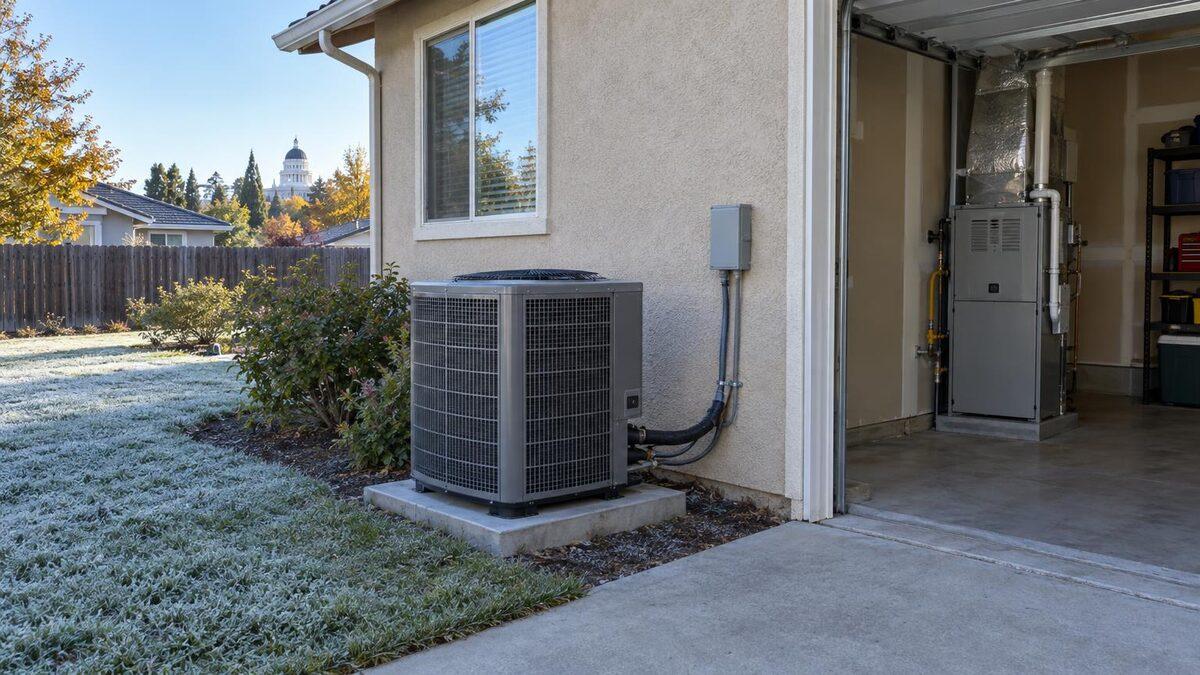
A dual fuel system is two heating sources sharing one blower and one set of ducts. The outdoor unit is a heat pump, the same machine that cools in summer. Indoors, a gas furnace sits under the evaporator coil, in a closet, garage or attic.
In heat mode, the heat pump runs first. It pulls heat from outdoor air, even cold air, and delivers it through the indoor coil. As the outdoor temperature drops, the heat pump has to work harder for the same output, and its efficiency falls.
At some point the furnace becomes the better choice, either because the heat pump can no longer keep up or because gas becomes the cheaper way to make the next unit of heat. That is the switchover point.
How the Switchover Decision Gets Made
The system needs an outdoor temperature reading to decide. On most installations that comes from a sensor wired to the thermostat or to a dual fuel control board at the furnace. Some smart thermostats pull it from a weather service instead.
Above the switchover temperature, the heat pump runs. Below it, the control locks out the heat pump and calls the furnace. Many thermostats also switch to the furnace when the heat pump runs too long without reaching the set temperature, which covers a big setback in the morning.
The heat pump and furnace never heat together. The furnace sits upstream of the indoor coil, so running both in heating mode would blow furnace heat across a coil full of hot refrigerant and push pressures too high. The controls prevent it.
The one handoff is defrost. On a frosty morning, the outdoor unit briefly runs in reverse to melt ice off its coil. A dual fuel system brings the furnace on during those few minutes so the house does not get a blast of cool air.
Setting the Switchover Temperature for Sacramento
The right switchover temperature balances three things: your electricity price, your gas price and how well your heat pump holds capacity in the cold. Many installers start somewhere in the mid-30s and adjust from there.
In the Sacramento area, winter lows rarely stay below freezing for long, so a lower setting lets the heat pump run most of the season. A setting in the 40s hands a large share of mild mornings to the furnace and burns gas the heat pump could have saved.
Utility pricing matters too. SMUD uses time-of-day electricity rates, so heat pump hours during the evening peak cost more than overnight hours. Some homeowners set a slightly higher switchover during the peak window and a lower one the rest of the day, which many smart thermostats support.
Our position: start in the mid-30s, live with it for two or three weeks, and look at both bills before you change it. Comfort matters as much as cost. If the house feels drafty when the heat pump runs on the coldest mornings, raise it a few degrees.
Common Dual Fuel Setup Problems
Most dual fuel complaints come from setup, not failed parts.
- A switchover set too high: the furnace runs most of the winter, and the heat pump barely gets used.
- A missing or misplaced outdoor sensor: a sensor in direct sun or against a warm wall reads high and keeps the heat pump on when it should not be.
- A thermostat set to emergency or auxiliary heat: the heat pump is locked out entirely, and the furnace does all the work.
- A thermostat set for electric backup heat: some thermostats ship expecting electric strips and need to be set for a gas furnace before the switchover logic works.
A Typical Dual Fuel Setup Call
A typical November HVAC call from a Carmichael ranch house goes like this: the homeowners added a heat pump to their existing furnace a year ago and their gas bill barely moved. The thermostat is new, the heat pump works, and the outdoor unit hardly runs.
The thermostat's switchover sits at 50°F. Every morning below 50, which is most of November through February here, the furnace does the job. Moving it into the mid-30s puts the heat pump back to work on most days.
That is the pattern worth knowing. When a heat pump seems idle in winter, check the switchover before you schedule heat pump repair.
When to Call a Pro
Call a pro when the heat pump never runs in heat mode even above the switchover temperature, when the furnace and outdoor unit seem to run together outside of defrost, or when the system blows cool air during heating cycles. Those point to a wiring, sensor or control problem. A technician can also check the heat pump's capacity in cold weather and help you pick a switchover that fits your equipment.
PRO MAX HVAC & Appliance Repair sets up and services dual fuel systems across the Sacramento area. Call (916) 234-5925 or book a visit on our contact page to get your heat pump and furnace working together.
Sources
Need appliance repair in the Sacramento area?
Same-day service, 180-day warranty, all major brands. PRO MAX HVAC & Appliance Repair — Carmichael, CA.