Reviewed by PRO MAX HVAC & Appliance Repair technicians, EPA 608 certified
Closing vents in unused rooms rarely saves money on a central forced-air system, and closing several of them makes the system work harder. The furnace or heat pump makes the same amount of heat either way. Closing registers raises the pressure inside the ducts, so more of that heat leaks out into the attic instead of reaching the rooms you use.
Duct leakage is the part most people never see. ENERGY STAR estimates that in a typical house, about 20 to 30 percent of the air moving through the duct system is lost to leaks, holes and poorly connected ducts. In Sacramento-area homes, those ducts usually run through an attic that sits near the outdoor temperature on a winter night. Push more pressure into that system and the leaks get worse.
Why Closing Vents Does Not Lower the Bill
The equipment does not know a register is closed. A central system is sized for the whole house, and its blower moves a set amount of air whenever it runs. Shut a register and that air does not disappear. It goes somewhere else, and in most homes a good share of it goes out through leaky joints and boots in the attic.
Meanwhile, the closed room keeps losing heat through its walls, window and ceiling. It pulls warmth from the rooms around it through the shared walls and the gap under the door. The thermostat in the hallway sees the house cooling a little faster and runs the furnace a little longer. The savings you expected never show up on the bill.
What It Does to the Furnace or Heat Pump
Closing many registers is hard on the equipment, not just neutral. Less open register area means higher static pressure in the ducts, and that reduces airflow across the furnace heat exchanger or the heat pump's indoor coil.
On a furnace, low airflow makes the inside of the cabinet run hotter. When it gets too hot, a high-limit switch shuts the burners off, then lets them restart once things cool. That pattern sounds like a furnace that starts, runs a few minutes and stops over and over. On a heat pump, low airflow cuts heating output and makes the outdoor side work harder. On a newer variable-speed blower, the motor ramps up to push air through the restriction, which uses more electricity and makes more noise at the registers that are still open.
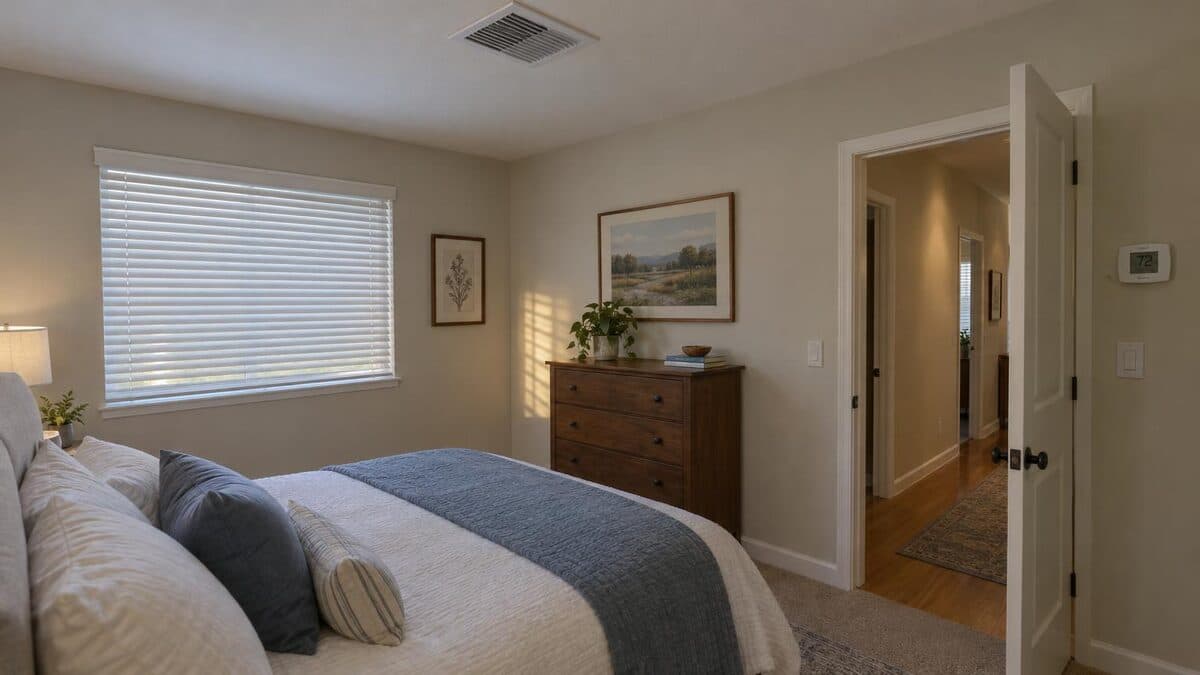
Here is a typical late-fall call. A 1980s two-story in Carmichael has four bedrooms upstairs and two empty since the kids moved out. The owners closed both registers and the bathroom register too, to "send the heat downstairs." The furnace now short cycles on cold mornings, the remaining registers whistle and the gas bill has not dropped. Opening the registers fixes the cycling the same day.
When Closing a Register Is Fine
Closing one or two registers on a large system is harmless. If a guest room over the garage runs a few degrees warmer than you like, partly closing that one register to balance the house is a normal adjustment. What causes trouble is closing a quarter or a third of the house in the hope of heating less of it.
Closing the door to an unused room, with the register open, is a reasonable middle ground. Many homes have a central return in the hallway, so a closed door with no return path can pressurize the room; leave the door open an inch or two if you hear whistling around it.
What Saves Money Instead
A lower setpoint saves more than any register adjustment. Drop the thermostat a few degrees when you are asleep or away. Every degree you lower the setpoint cuts the work the furnace or heat pump has to do, and a programmable or smart thermostat does it without you thinking about it.
Seal the ducts next. Leaky attic ductwork in older Sacramento ranch homes and two-stories is common, and the U.S. Department of Energy recommends sealing and insulating ducts that run through unconditioned spaces like attics and crawl spaces. That saves energy every hour the system runs, in every room.
Replace a clogged filter. A dirty filter restricts airflow the way closed registers do, and the fix costs a few dollars.
If part of the house truly needs a different temperature, use a tool built for it. A zoning system with motorized dampers controls separate areas from separate thermostats, and the equipment is set up to handle the airflow change. A ductless mini split heats one wing or a converted room on its own, without touching the main system. Both cost more than closing a vent, and both actually work.
When to Call a Pro
Call a technician when the furnace short cycles, when registers whistle, or when some rooms stay cold with every register open. Those point to airflow problems, duct leaks or a system that needs balancing, and a static pressure test shows which one. An annual check also catches a slipping blower, a dirty coil or a failing limit switch before the first cold snap.
PRO MAX HVAC & Appliance Repair handles HVAC maintenance, furnace repair and duct work across the Sacramento area, including Carmichael and Roseville. Call (916) 234-5925 or book through our online booking page.
Sources
Need appliance repair in the Sacramento area?
Same-day service, 180-day warranty, all major brands. PRO MAX HVAC & Appliance Repair — Carmichael, CA.